

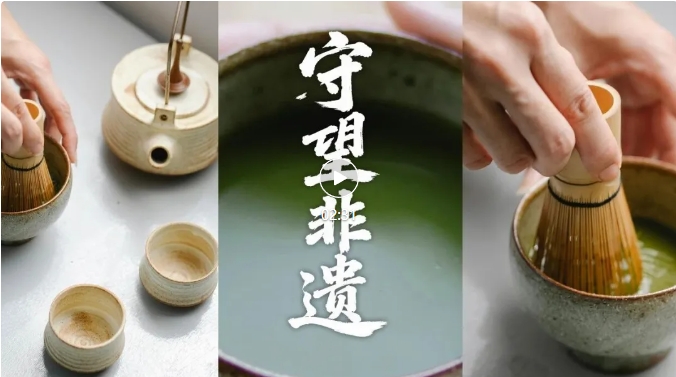
Intangible Cultural Heritage | Tea
In this issue of the Watch for Intangible Cultural Heritage column, we will step into a cup of tea that has accumulated a thousand year cultural heritage. A piece of tea, spanning thousands of years of time, has already surpassed the beverage itself. It is the most gentle philosophical expression of the Chinese people, not as strong as wine or as excited as coffee. It nourishes the spiritual world of the Chinese nation for thousands of years with a cup of warm bitterness.
China is the hometown of tea and the birthplace of tea culture. As early as the Western Han Dynasty, there were records of "Wuyang buying tea" in Sichuan. In the Tang Dynasty, drinking tea became popular. The "Tea Saint" Lu Yu wrote a monograph on tea studies called "The Classic of Tea", and literati and poets recorded the process and interests of drinking tea in countless poems. In the Song Dynasty, tea culture developed to its peak. Wang Anshi once wrote, "Fu tea is for civilian use, equivalent to rice and salt, and cannot be consumed in a day." This shows the universality of tea drinking among the people at that time. The tea culture in the palace places more emphasis on etiquette and aesthetics, with tea ceremonies at Spring and Autumn banquets, among which the most exciting is undoubtedly the "Tea Hundred Plays". A complete set of tea operas involves multiple processes such as roasting, crushing, grinding, steeping, steaming, adjusting paste, and pounding. First, make a white and thick "Congee noodles" on the surface of the tea soup, and then paint on it with clear water as ink and teaspoon as pen. With only tea and water, patterns of animals, insects, fish, flowers, and words can be transformed on the surface of the tea soup, delicate and picturesque, fleeting and of high artistic value.
The tea making technology has also undergone several iterations. During the Tang and Song dynasties, the main drink was Tuan tea. The tea leaves were steamed and mashed, mixed with spices, pressed into cakes, dried and stored, and presented to the court in the shape of "Tuan Long" and "Tu Feng". Later, with the abolition of the tribute system for group tea by Ming Taizu Zhu Yuanzhang, loose tea emerged, and loose tea with intact tea buds and leaves was directly brewed, emphasizing the original flavor of the tea leaves.
People have also found that different degrees of fermentation can give tea different flavors. Green tea is fresh, white tea is elegant, yellow tea is mellow, oolong tea is rich in layers, black tea is sweet and mellow, and black tea is aged and fragrant. These are the six major types of tea in China today. There are four major tea regions in China: Southwest, South, Jiangnan, and Jiangbei. Each tea region has its own unique geographical and climatic characteristics, resulting in teas such as Yunnan Pu'er, Fujian Tie Guan Yin, Zhejiang Longjing, and Shaanxi Fu tea with different colors and flavors.
From replacing wine with tea, to court etiquette, to the art of tea opera, a strand of tea fragrance has continued for thousands of years to this day. Elegance and vulgarity, birth and entry into the world, are all miraculously reconciled in this leaf. Watch over intangible cultural heritage, watch over a cup of Chinese tea.
Intangible Cultural Heritage:
The new video program "Watch for Intangible Cultural Heritage" specially planned by the UNESCO Chair in the Inheritance and Innovation of World Traditional Handicrafts and the Cultural Heritage Creative Industry Research Institute of Jinan University has been officially launched. We have built a cultural bridge with Hong Kong's "China Tourism" magazine, introducing an intangible cultural heritage technique in each issue and using images to experience the warmth and power of traditional culture.
