2026 Beijing Culture Forum
Professional Salon on "Protection of Traditional Villages and Traditional Buildings"
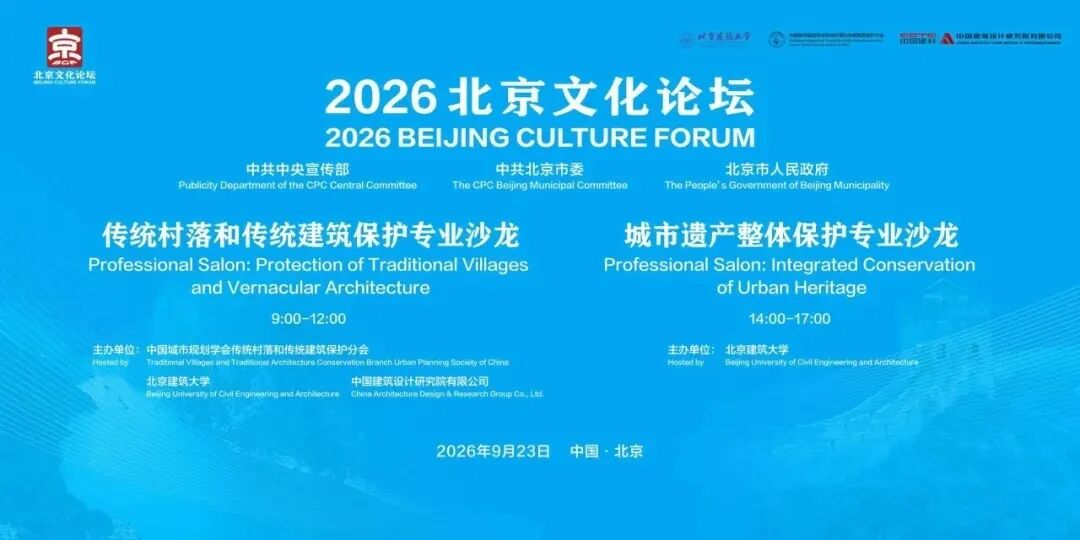
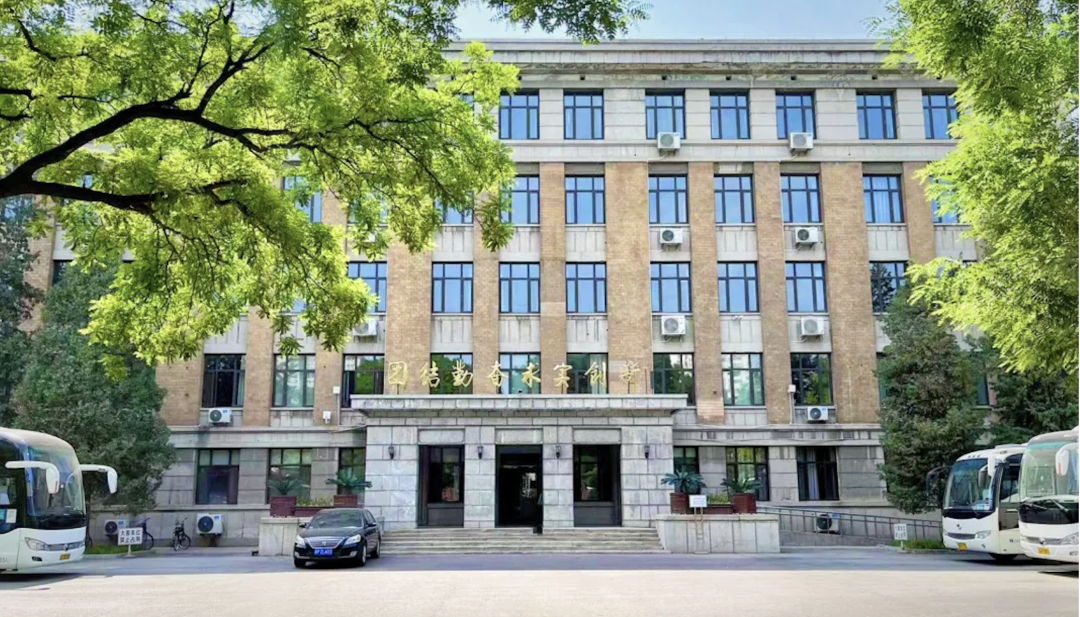
On September 23, 2026, the professional salon on "Protection of Traditional Villages and Traditional Buildings" of the 2026 Beijing Culture Forum was held at Beijing University of Civil Engineering and Architecture. Experts and scholars from the fields of cultural heritage protection, urban and rural planning, architecture, folklore studies and related areas gathered together. Under the theme "Promoting the Systematic Protection of Cultural Heritage through Traditional Village Conservation," the salon centered its exchanges on traditional village protection, historical and cultural inheritance, and sustainable development. Featuring keynote speeches, guest dialogues and other sessions, and grounded in both concrete cases and macro perspectives while combining local practice with international experience, the salon explored the pathways and methods of traditional village protection from multiple, mutually reinforcing dimensions, and looked toward the future in a spirit of openness and mutual learning.
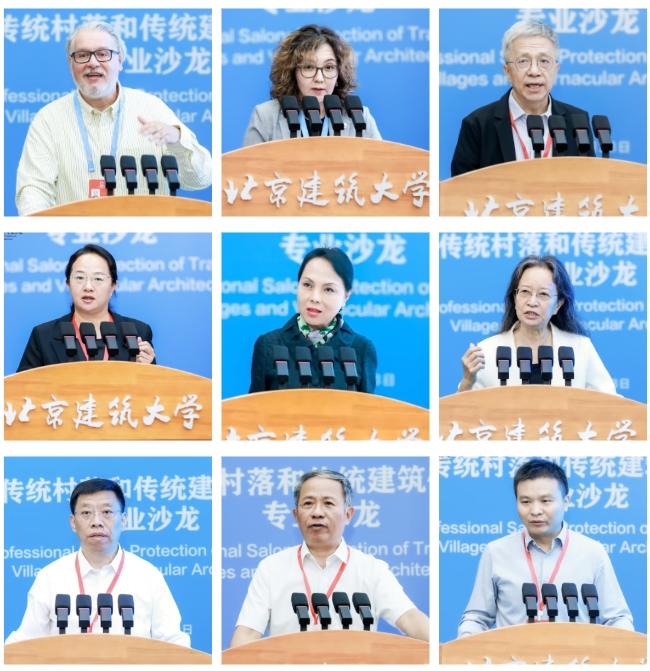
Experts and scholars from cultural heritage protection, urban and rural planning, architecture, folklore studies and related fields gathered for exchange
Professor Chen Ping, Global President of the International Organization of Folk Art (IOV), Chief Moderator of the UNESCO Chair on the Transmission and Innovation of World Traditional Handicrafts, and Dean of the Institute of Cultural Heritage and Creative Industry Research at Jinan University, was invited to attend the forum and delivered a keynote speech entitled "Letting Traditional Villages Continue Their Life: Chinese Practices in Traditional Handicrafts, Community Transmission and Sustainable Development." From the perspectives of traditional handicrafts, community transmission, women's development and youth education, she shared the practice of and reflections on the living conservation of China's traditional villages.
The following is the content of Professor Chen Ping's speech:
Protecting Villages While Preserving Life
Traditional village protection is a discussion not only about the countryside, but also about how we understand development today.
Can modernization leave room for local culture? Can young people find dignified careers in their hometowns? Will the knowledge and skills accumulated by generations of women receive the respect they deserve? Can the villages handed down by history continue to be places where people are willing to live and to create?
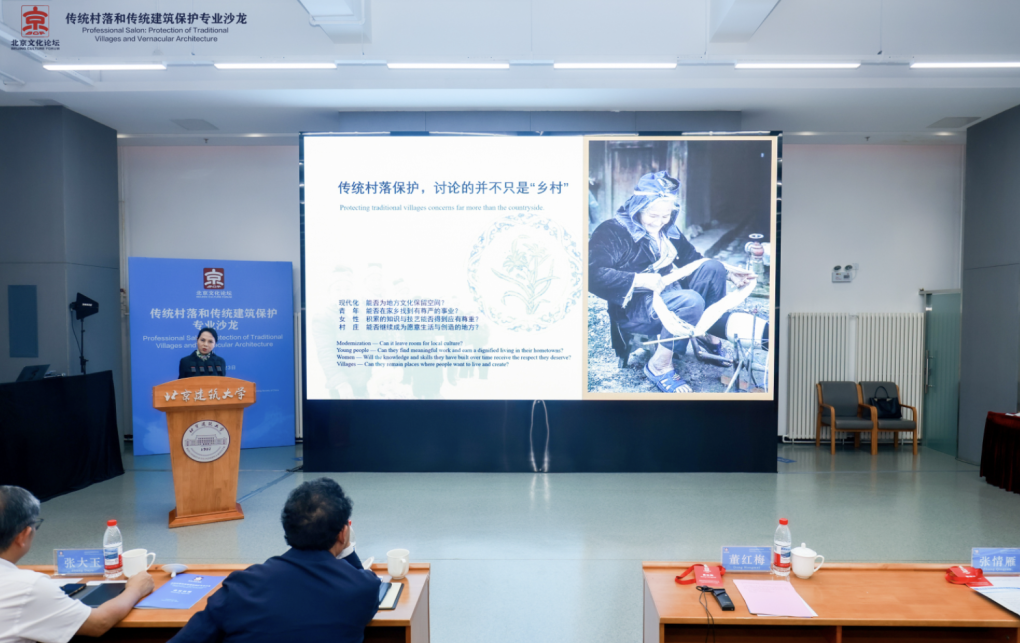
These questions belong to China, and they belong to the world as well.
In China, 8,155 villages have been inscribed on the national list of traditional villages. After many years of sustained protection, a large number of historic buildings, traditional spaces and rural cultural heritage assets have been systematically conserved. How to build on these achievements so that traditional villages continue to carry the life of today is a question that deserves further attention.
A traditional village has its streets and lanes, courtyards, dwellings and historic environment, but it also has the labor in the workshops, the songs at festival time, the patterns worn in everyday dress, and the everyday relationships slowly formed between people.
Buildings preserve space; life gives it content. Together they constitute the cultural life of a village.
A building can be protected through restoration; whether a culture can endure, however, ultimately comes back to people. Who lives here, who holds this knowledge, whether young people are willing to stay, and whether the community is able to face new changes — all of these bear on the sustainability of traditional village protection.
Traditional handicrafts are precisely the thread that connects these questions.
Behind a piece of handwoven cloth, a pair of cloth shoes or an embroidery often lie local plants, the seasons of production, family memories, aesthetic values and community relations. Handicrafts have never been isolated objects: they take shape in life, and they need to be carried on in life.
"Songs Nurture the Heart, Food Nourishes the Body":
Community Transmission in Rural Guizhou
The forum speech shared two real cases from China's countryside.
The first case comes from Qiandongnan in Guizhou.
Local residents sum up life in a plain saying: "Songs nurture the heart; food nourishes the body."
A person needs food to sustain the body, but also needs song, memory, emotion and a life shared with others to settle the heart.
Gao Xuan, a young practitioner long engaged in rural community development in Guizhou, and her partners, since launching the "Homeland Watch Initiative" in 2015, began by supporting village women in learning and passing on traditional handicrafts, and have gradually extended their attention to ecological agriculture, land and community life.
From 2022 to 2023, the related community transmission practices were carried out in five villages. A new project plan further supports song masters, villagers and young people in jointly recording and singing local songs, promoting learning and exchange among different villages.
Why should a discussion of traditional handicrafts also pay attention to folk songs?
Because in many villages, singing, dress, labor and festivals already belong to one and the same cultural world. The meaning conveyed by an embroidery pattern, or the memory carried by a piece of handwoven cloth, can often be truly understood only through language, stories and ritual.
Some local songs also preserve knowledge of water sources, the solar terms, mountain forests and farming. This knowledge comes from the community's long observation of nature, and from the life experience of generation after generation.
The community is not only a participant in cultural heritage protection; it is also the owner of the knowledge. Outside supporters can provide resources and help, but they cannot decide in the community's place which traditions deserve to be cherished and how they should be carried on.
"Songs nurture the heart; food nourishes the body" is, in the end, a plain view of life. Villages need to improve livelihoods, and they also need to preserve emotion, language and a sense of belonging. Only when these two sides support each other can a community face change and go on creating a life of its own.
Starting from a Pair of Cloth Shoes:
Seeing Rural Women's Labor and Creativity
The second case comes from Shanxi, and extends to Guizhou.
In 2009, on a return visit to her hometown, the young designer Chen Jing noticed the "nadi lahua" technique of stitching decorative patterns onto layered cloth soles, practiced by the local shoemaker Ji Siheng.
In this technique, fine, dense patterns are stitched with hemp cord onto layered cloth soles. Once deeply embedded in the clothing and daily labor of ordinary people, it had rarely been seriously documented.
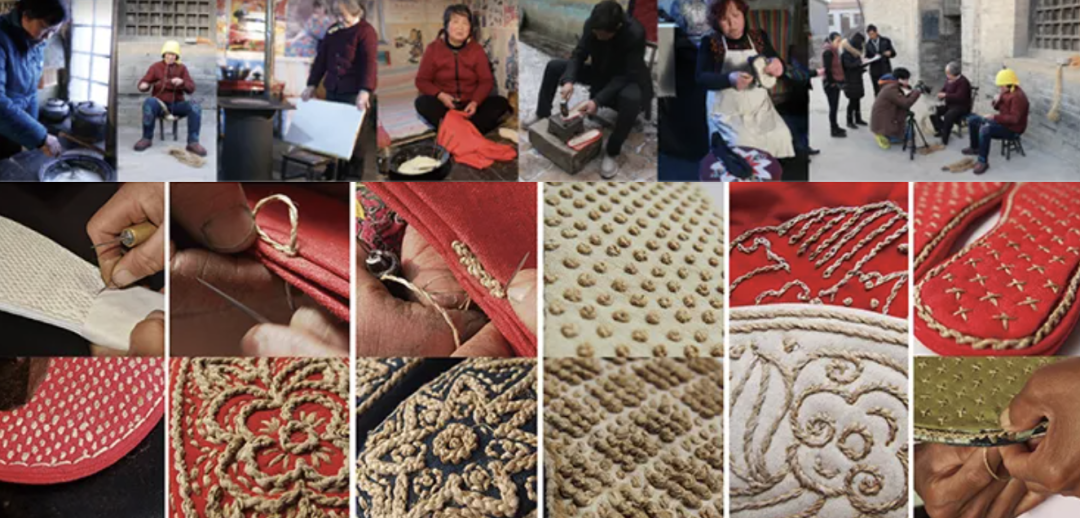
The "Nadi Lahua" Sole-Stitching Technique
From interviews and the mapping of work processes, to video documentation and then new design applications, Chen Jing and her collaborators have kept exploring, bringing the patterns and stitches once confined to cloth shoes into clothing, bags and household goods.
In 2019, this practice also entered into collaboration with the Dong cloth and indigo dyeing of Rongjiang, Guizhou, allowing traditional handicrafts from different regions to build new connections on the basis of mutual respect.
This case has led people to recognize anew the traditional knowledge held by rural women and the value of their labor.
When a traditional craft receives professional documentation, thoughtful design and access to the market, it becomes possible for it to turn from easily overlooked household labor into work that generates income, builds confidence and expresses cultural identity.
But women's participation must not remain confined to the production stage. They should also take part in discussing how products are designed, how labor is valued, how proceeds are distributed, and which cultural content may be used, and how.

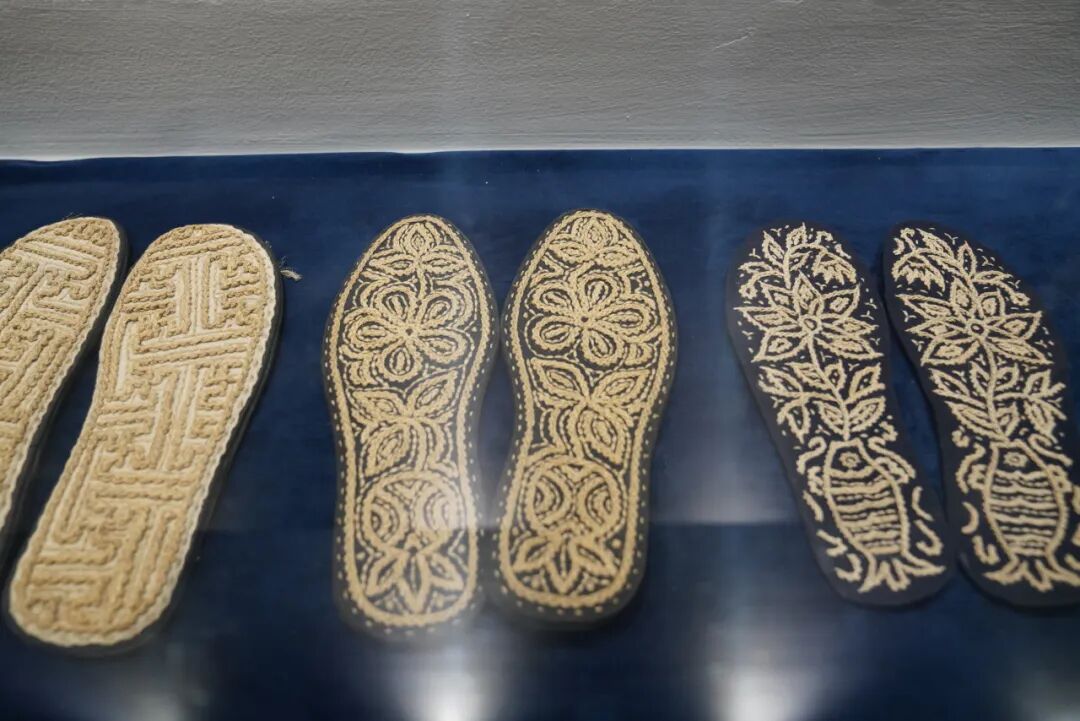
Young designer Chen Jing applies the "nadi lahua" technique to contemporary products
The transmission of traditional handicrafts has not been without difficulties.
A cloth shoe factory that Chen Jing had followed continuously since 2009 finally ceased operation in 2022. Production costs, market shifts and organizational capacity can all affect whether a craft endures.
Cultural heritage entering the market does not mean the market will naturally protect it. Professional training, quality management, brand building, sales channels, and sustained, practical cooperation among governments, universities, industry organizations and communities all influence how far a traditional craft can go.
Bringing Young People into the Villages,
to Learn in an Authentic Cultural Environment
The future of traditional villages, too, cannot do without young people.
Since 2020, with the support of the Beijing Chen Jianghe Charity Foundation, the Institute of Cultural Heritage and Creative Industry Research at Jinan University has planned and continuously advanced the "Guangdong-Hong Kong-Macao Greater Bay Area Youth Creative Design (Creative 100) Talent Training Program," organizing young designers, researchers and participants from various professional backgrounds to enter communities and learn within authentic cultural environments.
Through classroom teaching, field research, community exchange, design practice, the presentation of results and international exchange, the program explores the integration of traditional culture with contemporary design, youth education and local development.
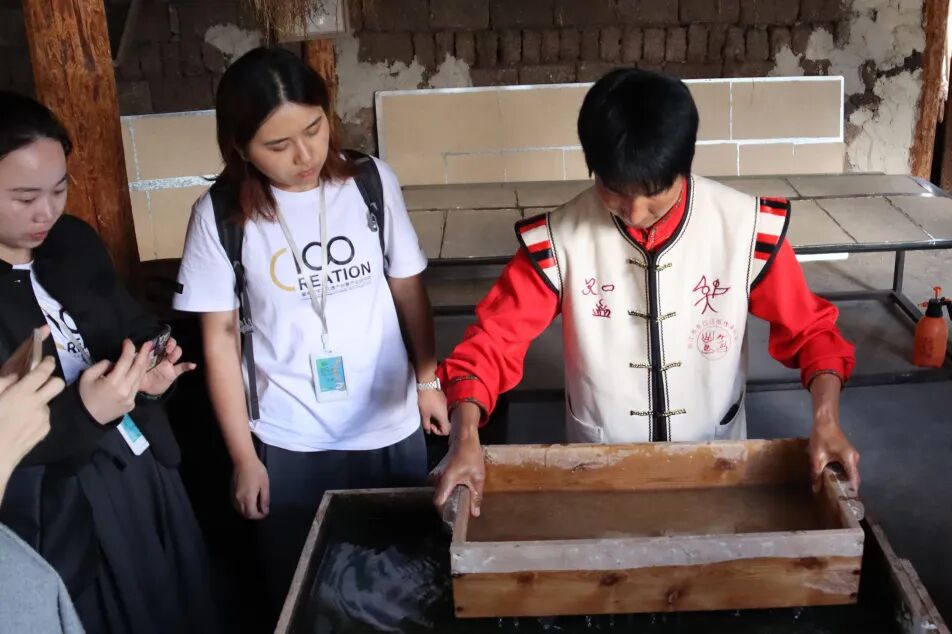
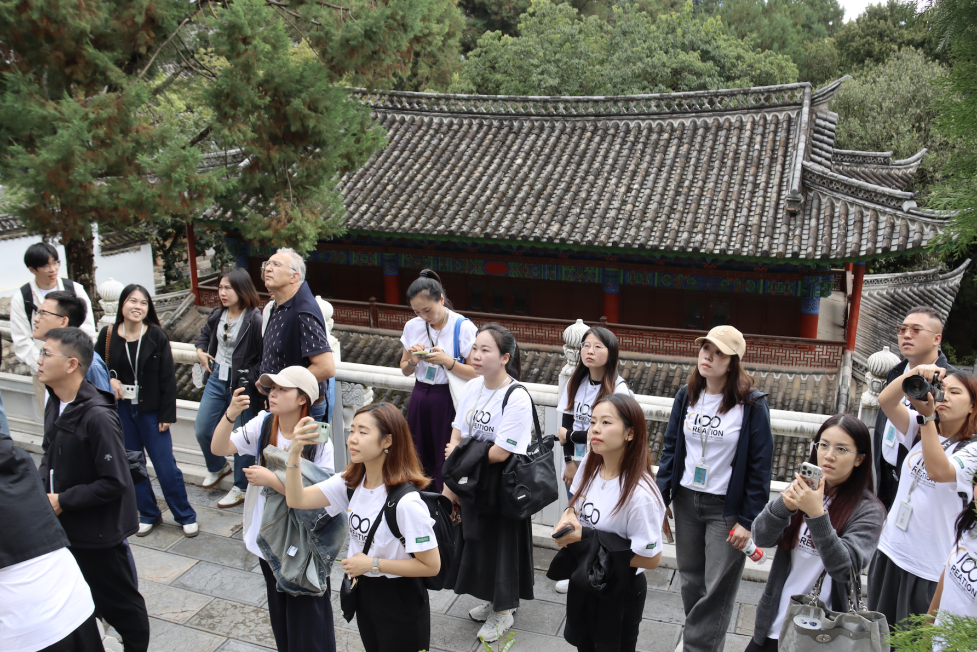
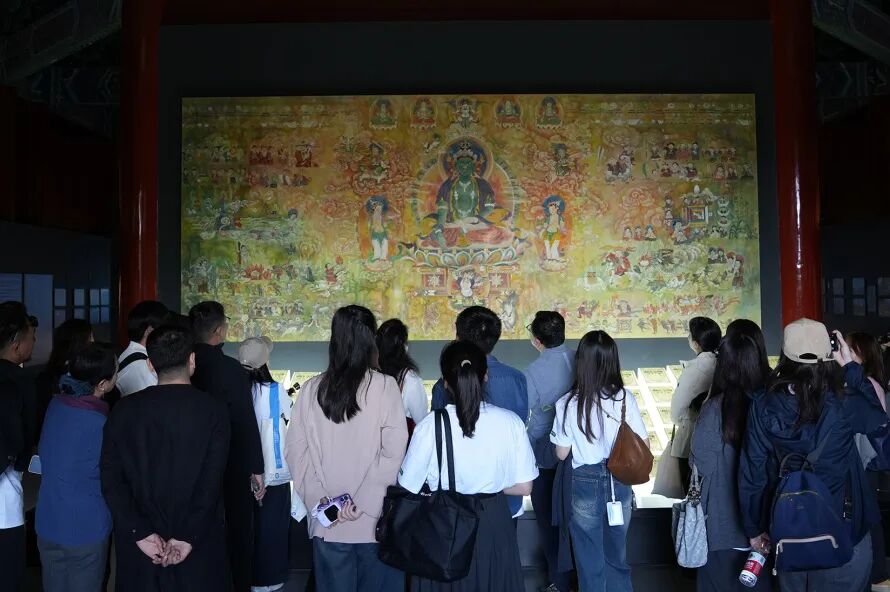
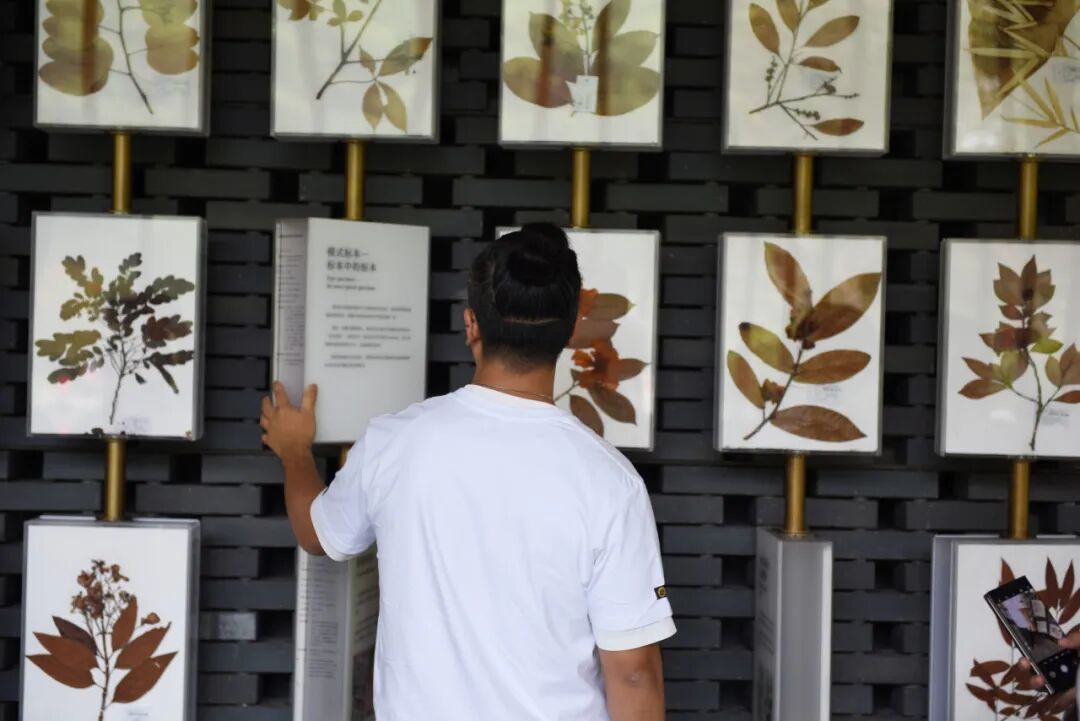
Young participants in the (Creative 100) Talent Training Program explore the integration of traditional culture and contemporary design through field research and community exchange
Over the past six years, program participants have visited villages and communities in Guangzhou, Shenzhen, Zhuhai, Lijiang and elsewhere, exchanging with inheritors, craftspeople and local residents to understand the living environments and cultural traditions behind the crafts.
Young people entering the countryside does not mean simply transplanting fashionable urban ideas into villages.
What matters is not taking a few patterns away from a village, or shooting a set of pretty photographs, but coming to understand, through exchange, that every craft has its own history, every inheritor has their own knowledge and judgment, and every community has the right to decide how to tell the story of its own culture.
Video documentation, the organization of local knowledge, digital preservation and remote exchange can all help more people come closer to rural culture. But technology is not the end in itself. Who does the recording, what is recorded, how the materials are used, and whether the community benefits from them equally deserve attention.
Digitalization can carry culture farther, but it must not take culture away from its owners.
From Chinese Practice to International Exchange
Traditional village protection is also a topic of global significance.
Climate change, population movement and urbanization are changing long-established ways of life in many places. Across Asia, Europe, Africa and Latin America alike, communities face the question of how to sustain local cultures amid social change.
UNESCO's 2003 Convention for the Safeguarding of the Intangible Cultural Heritage emphasizes the participation of communities, groups and individuals in the protection of cultural heritage. Education, gender equality, decent work, sustainable communities and partnerships — the concerns of the United Nations' 2030 Agenda for Sustainable Development — are also closely linked to the development of traditional villages.
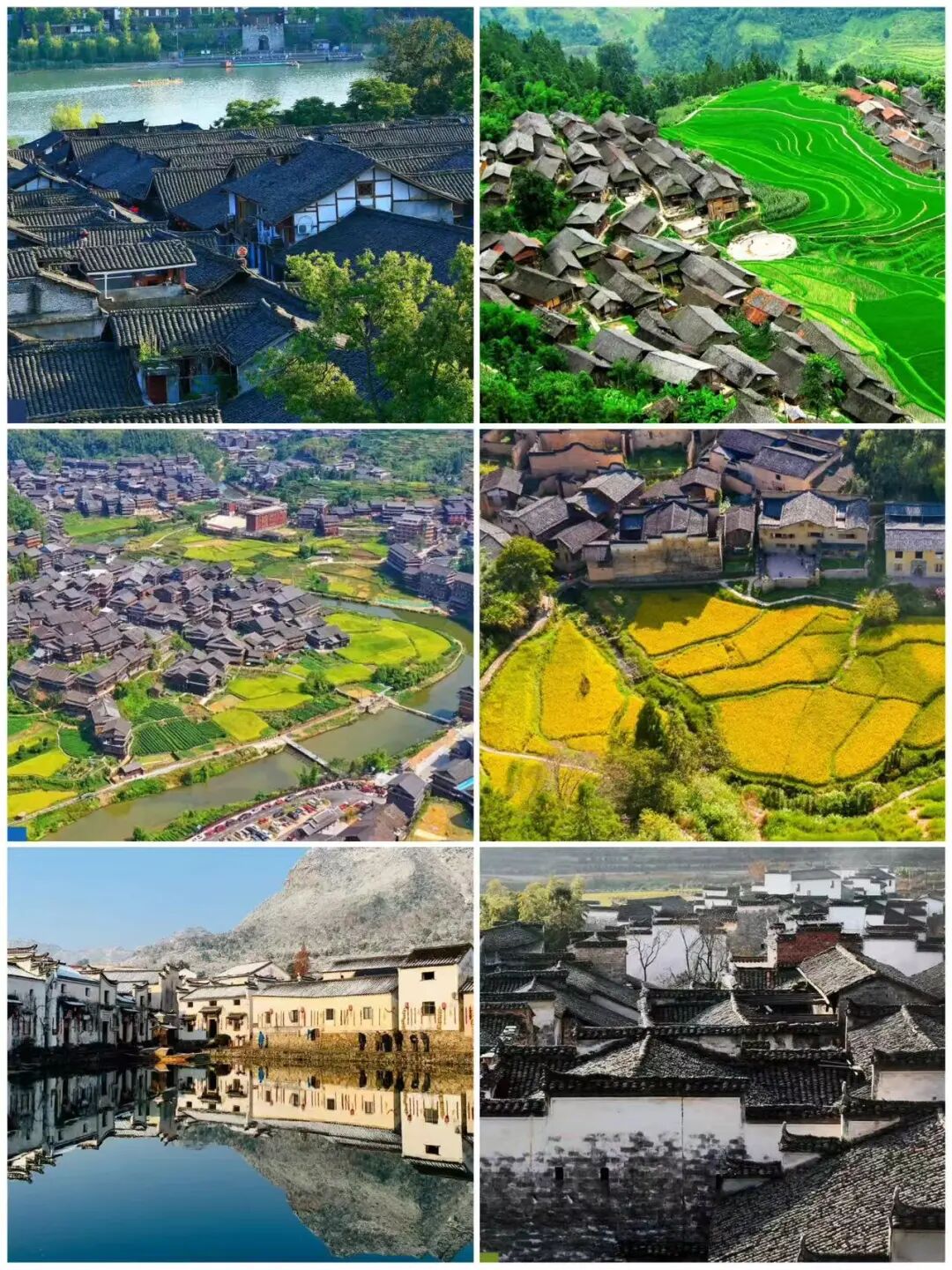
Demonstration counties (cities, districts and banners) for the concentrated, connected protection and utilization of traditional villages, 2023. Photo/Xinhua News Agency
The international significance of China's traditional village protection lies not only in the vast number, rich variety and long history of its villages, but also in the experience accumulated through long-term practice of combining public policy, local society, professional expertise and youth participation.
Different countries have their own histories, institutions and social conditions; there is no single answer to cultural heritage protection that fits every place.
The meaning of international exchange is to let different experiences see one another, to let good practices be shared, and to let the problems encountered be discussed candidly.
The International Organization of Folk Art (IOV) and the UNESCO Chair on the Transmission and Innovation of World Traditional Handicrafts will continue to promote exchanges between Chinese rural communities and international researchers, young scholars, cultural institutions and creative practitioners, building more lasting connections in joint research, youth training, case sharing, community cooperation and international communication.
Bringing Different Professions Together,
Letting Culture Keep Growing
This professional salon also provided a platform for exchange and cooperation across disciplines on traditional village protection.
The establishment of the Traditional Villages and Traditional Architecture Protection Branch of the Urban Planning Society of China offers a new opportunity for cooperation among planning, architecture, cultural heritage, rural development and community practice, and adds another bridge for exchange between Chinese and international experience.
Traditional village protection calls for the joint participation of many disciplines — architecture, planning, folklore studies, anthropology, design, and economics and management. The protection of buildings and spaces is an essential foundation, yet local knowledge, community life and people's development equally demand sustained attention.
During the forum, experts and scholars from different professional fields exchanged views on the practical issues of traditional village protection, opening up more possibilities for future interdisciplinary research, talent cultivation and international cooperation.
Villages are worth protecting not only because the buildings and memories of the past remain there, but even more because people still live there today — people who labor, who sing, and who hope that their children will still come to know this land.
An old house may be fully repaired, but without life it remains mere architecture; a craft may be preserved, but if no one is willing to learn and use it, it can hardly endure in any real sense.
What traditional village protection must ultimately confront is not merely how to preserve the past, but how to keep a place capable of continuing to live and to create.
This is what "letting traditional villages continue their life" truly means to say.
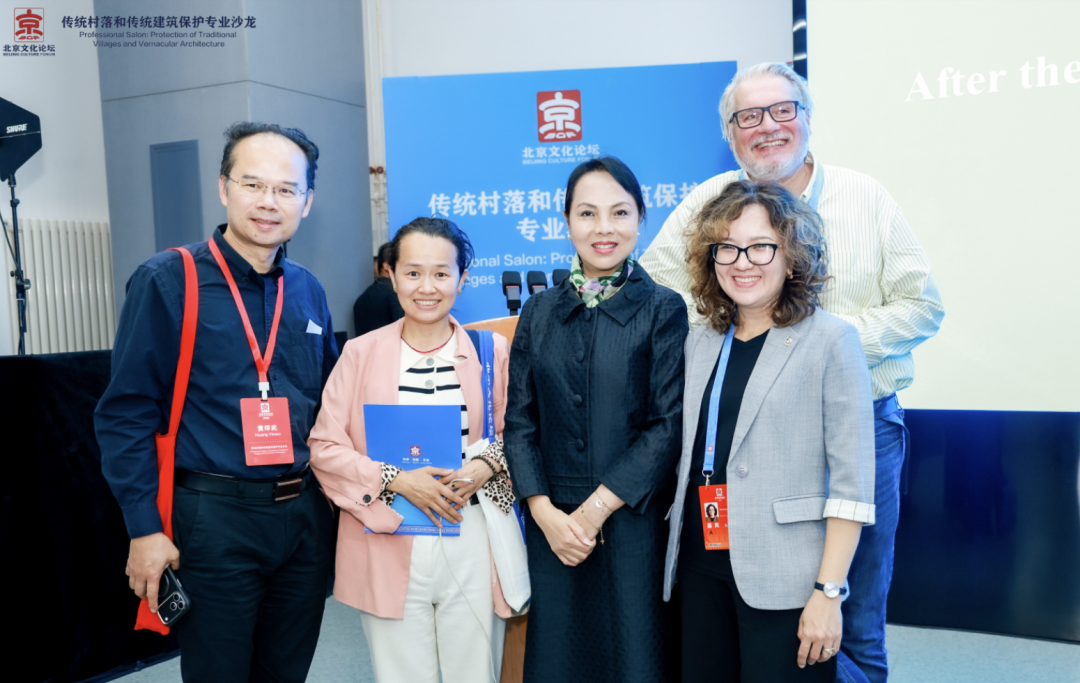

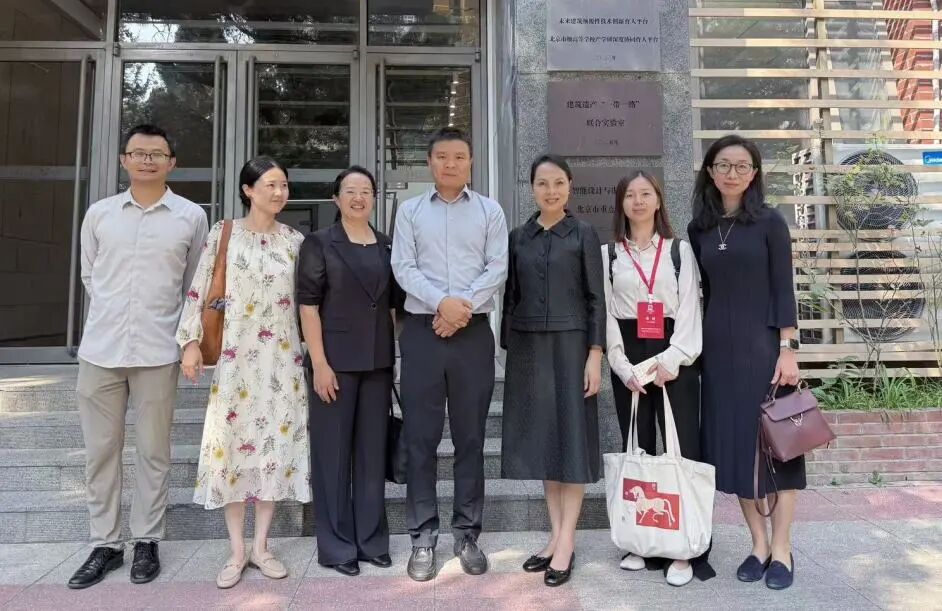
Professor Chen Ping exchanges with experts and scholars (group photo)