

Special Column

Professor Chen Ping
Global President of the International Organization of Folk Arts (IOV), Chief Chair of World Heritage and Innovation in Traditional Handicrafts at UNESCO, Dean and Professor of the Cultural Heritage Creative Industry Research Institute at Jinan University, and Editor in Chief of the "Blue Book of Intangible Cultural Heritage: Report on the Development of China's Intangible Cultural Heritage"
This article was published by Yangcheng Evening News and Yangcheng Faction:
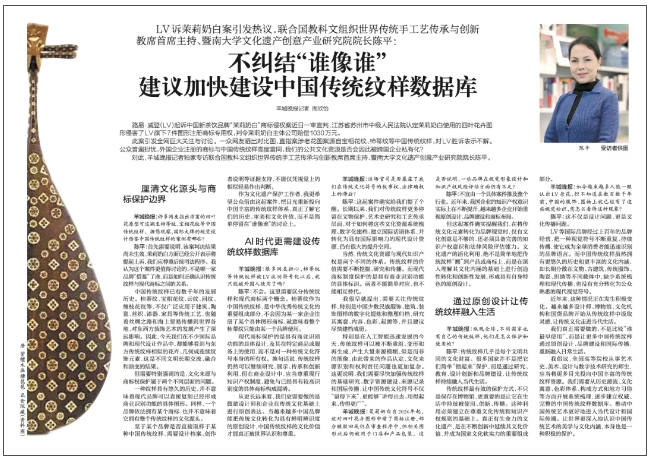
Clarify the cultural origins and boundaries of trademark protection
Yangcheng Evening News: The first instance judgment of LV's lawsuit against Jasmine Milk White trademark infringement clearly determines that cultural tracing cannot constitute an exemption for trademark infringement. The prototype of the Four Leaf Flower can be traced back to traditional Chinese patterns such as persimmon stem patterns. Based on your observation, what other cases have international brands sampled their visual designs, trademarks, etc. from traditional Chinese patterns?
Professor Chen Ping: First of all, it should be noted that the first instance judgment of this case has not yet come into effect. Jasmine Milk White has publicly stated that they will appeal, and we should still respect the subsequent judicial procedures. I think what is more worth discussing in this case is not which brand "borrowed" from whom, but how to correctly understand the relationship between traditional patterns and modern trademarks.
From a cultural history perspective, traditional Chinese patterns have a development history of thousands of years. Persimmon stem pattern, treasure pattern, cloud pattern, loop pattern, entwined branch pattern, etc., are not only widely used in traditional crafts such as architecture, ceramics, silk weaving, lacquerware, furniture, but also spread to various parts of the world along the Silk Road and maritime trade, exerting a profound influence on the development of decorative arts in the East and the West. Therefore, today we can see floral, geometric, or continuous decorative elements similar to traditional Eastern patterns in many international brands and modern design works, which is the result of long-term communication, integration, and evolution of different civilizations.
However, it should be emphasized that cultural origins and trademark protection belong to two different levels of issues. A pattern with a long history does not mean that modern brands can directly replicate specific graphics that have already formed commercial identity functions; Similarly, the fact that a brand legally owns a trademark does not necessarily mean that it has the cultural origin of the entire traditional pattern. As for whether a brand directly samples from a certain traditional Chinese pattern, it requires evidence such as design files and creator explanations to support it, and cannot be easily judged based solely on visual similarity. As a cultural heritage protection worker, I hope that the public can use this case to refocus their attention on China's rich traditional pattern system, truly understand their history, aesthetics, and cultural value, rather than simply staying at the discussion of "who is like whom".
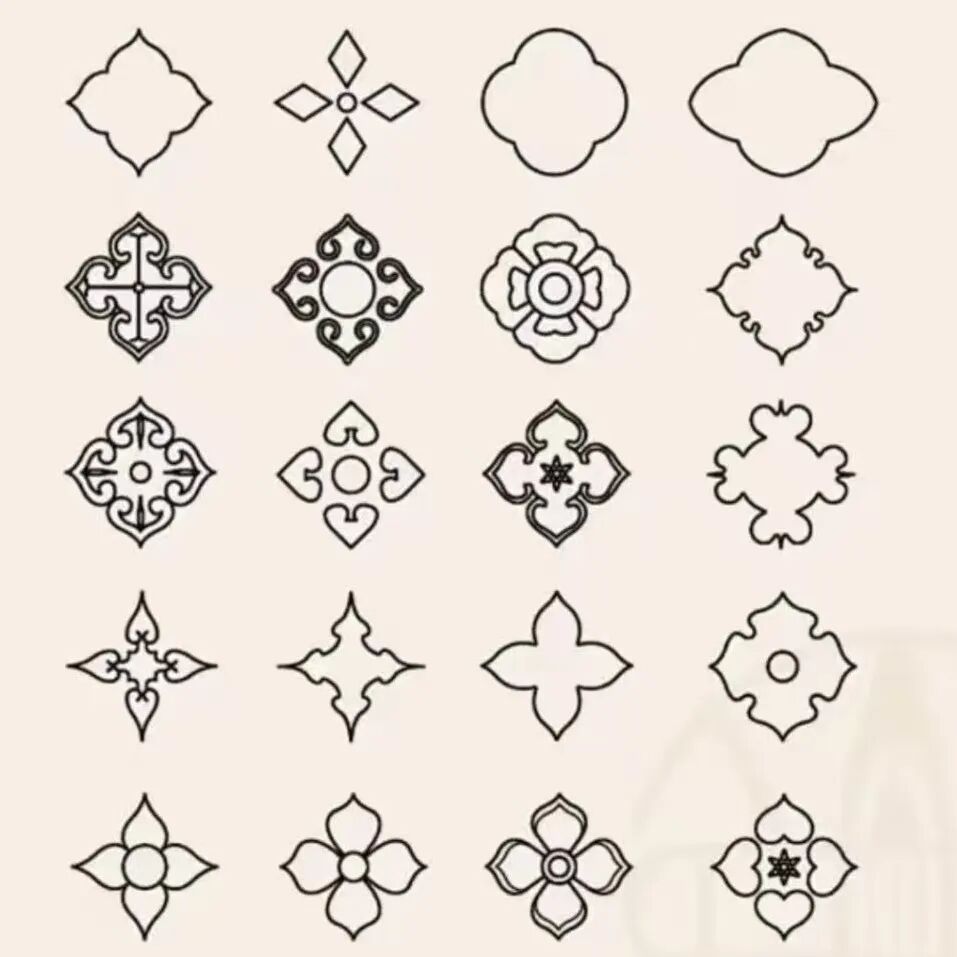
Traditional Chinese patterns
Yangcheng Evening News: Can you introduce the historical origins, types, and styles of traditional Chinese patterns, their role in ancient times, and the values they embody? We can use persimmon stem patterns and treasure shaped patterns as examples to discuss.
Chen Ping: Traditional Chinese patterns are not simply decorative patterns, but a visual language formed by the long-term accumulation of Chinese civilization. As early as the Neolithic Age, people drew various geometric patterns on pottery; In different historical periods such as the Shang and Zhou dynasties, Qin and Han dynasties, Sui and Tang dynasties, Song, Yuan, Ming and Qing dynasties, distinctive pattern systems were formed. They not only reflect the level of craftsmanship at that time, but also embody people's understanding of nature, life, auspiciousness, and a better life.
There are a wide variety of traditional patterns in China, including natural floral, plant, and animal patterns, as well as geometric patterns such as cloud patterns, loop patterns, and thunder patterns. There are also decorative patterns with cultural symbolic significance, such as dragon and phoenix, auspicious clouds, and the Eight Treasures. They are widely used in various objects such as architecture, clothing, embroidery, ceramics, lacquerware, furniture, etc. They not only have decorative functions, but also undertake multiple functions such as identity and etiquette, aesthetic expression, cultural identity, and spiritual sustenance.
Taking persimmon stem pattern as an example, it is usually believed to be related to the natural shape of persimmon stem or calyx. After long-term refinement, it gradually evolved into a four petal symmetrical geometric pattern. Due to its stable composition and strong sense of order, it is widely used in architecture, brick carving, fabric and ceramic decoration. The Baoxiang pattern gradually developed during the diverse cultural exchanges from the Southern and Northern Dynasties to the Sui and Tang Dynasties, and matured during the Tang Dynasty. It combines various flower forms such as lotus and peony, and is an idealized pattern that embodies the characteristics of Chinese culture's inclusiveness, integration, and innovation. It also carries beautiful meanings such as wealth, auspiciousness, and completeness.
I believe that the most precious aspect of traditional Chinese patterns is not only their beauty, but also the fact that each pattern embodies the wisdom, aesthetic concepts, and value pursuits of the Chinese people. Today, we study and apply these patterns not only to inherit a design element, but also to continue a cultural memory and civilization spirit.
AI is more necessary relied on a traditional pattern database
Yangcheng Evening News: Has this lawsuit exposed our lag in the narrative and legal recognition of traditional cultural symbols?
Professor Chen Ping: I think this case has indeed given us a wake-up call, but it reflects not only legal issues, but also a topic that cultural research, dissemination, and industrial transformation need to face together.
For a long time, we have focused more on cultural relic protection, art history research, and craft inheritance of traditional patterns. However, there is still great room for improvement in how to systematically sort out, digitize, establish an international discourse system, and transform these cultural resources into modern design resources with international influence. We have conducted in-depth research on many traditional patterns ourselves, but there is insufficient public awareness and limited understanding in the international design community. This has to some extent affected the dissemination and influence of excellent traditional Chinese culture.
It should also be made clear that traditional cultural resources and modern intellectual property are two different systems. Traditional patterns, as a cultural heritage formed by the long-term accumulation of Chinese civilization, require continuous exploration, research, and dissemination of their value; The modern trademark system protects specific signs with commercial identification functions, which cannot be simply corresponded to or replaced by each other.
I have long proposed the need to pay attention to the digital extraction, organization, and archiving of traditional patterns, especially Chinese ethnic minority clothing, architecture, and decorative patterns, and to study their meanings, content, colors, origins, etc. I also suggest that they be archived as soon as possible.
During my recent visit to Jingdezhen, I also discussed with local colleagues that many ceramic workers in Jingdezhen focus on replicating and imitating historical masterpieces, but there is still a lack of overall sorting of the origins, composition, colors, and patterns of ceramic patterns throughout history. Especially with the rapid development of artificial intelligence today, traditional patterns can be constantly reorganized, deformed, and regenerated, resulting in a large number of images with blurry and seemingly ambiguous sources. This brings about more complex issues of work identification, cultural source recognition, and rights and responsibilities. This further indicates that we need to strengthen the basic research, digital archiving, and source recording of traditional patterns as soon as possible.
I hope this case can further strengthen our basic research on traditional patterns, digital resource construction, and international dissemination, so that more traditional Chinese cultural symbols can not only be "preserved", but also "spoken out, used, and spread more widely". Only in this way can we truly transform our rich cultural resources into cultural soft power and international influence.
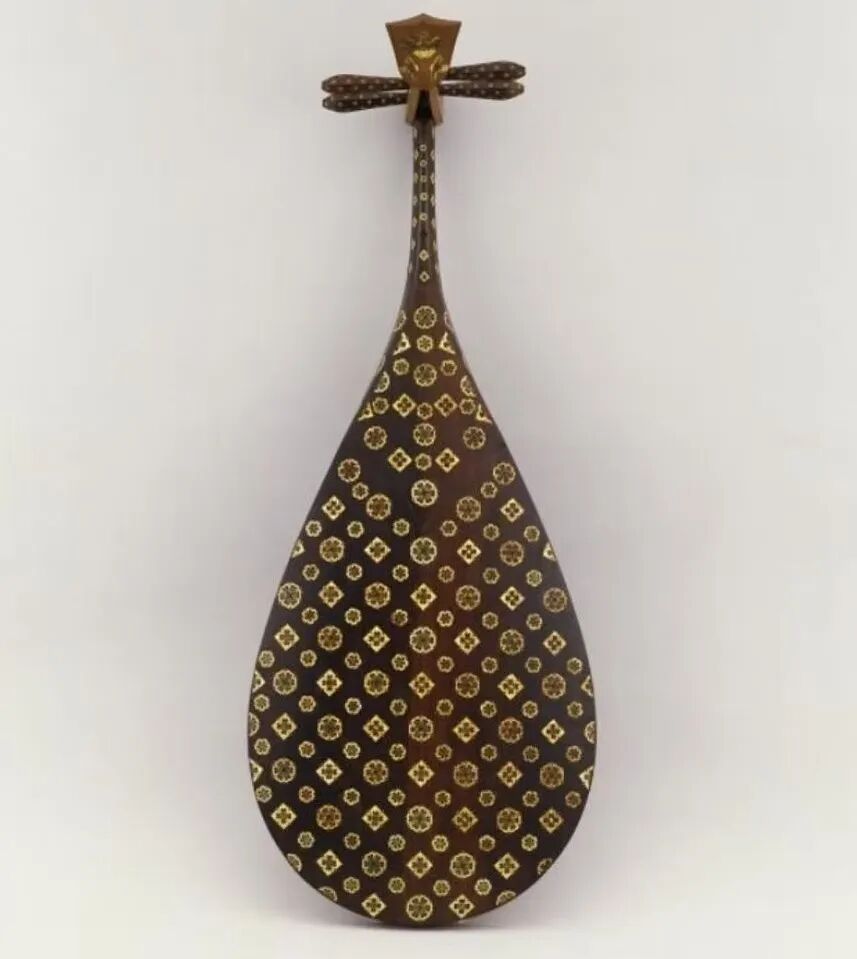
Chinese Tang Dynasty Purple Sandalwood Painting Trough Pipa Now Hidden in Japan
Yangcheng Evening News: Some of the graphic trademarks applied for by Jasmine Milk White since 2024 have been rejected or are still under review, but the related graphics have been used in stores and product packaging since then. Does this indicate that some brands still have shortcomings in visual image design and intellectual property risk assessment? What insights does this provide for the revitalization and utilization of cultural heritage?
Chen Ping: I think it is not appropriate to generalize the entire industry from a specific case, let alone simply draw the conclusion that "Chinese brands generally underestimate intellectual property rights". In recent years, the intellectual property awareness of Chinese enterprises has been continuously improving, and more and more companies have begun to attach importance to original design, brand building, and trademark layout.
But this case does remind us that when transforming traditional cultural elements into brand visuals, cultural creativity alone is not enough. We must also have a sound awareness of intellectual property rights and legal risk assessment capabilities. The revitalization and utilization of cultural heritage is not simply about "transferring" traditional patterns to products or trademarks, but about creatively transforming and innovatively developing them based on a deep understanding of their cultural connotations, forming original designs with their own characteristics.
For enterprises, traditional culture is a source of inspiration, not a reason to lower the requirement for originality. A truly competitive brand can draw nourishment from excellent traditional Chinese culture and form a distinct brand identity through original design, which respects both cultural heritage and intellectual property. Only when cultural innovation is synchronized with legal norms can traditional culture truly achieve sustainable revitalization and utilization, becoming the core competitiveness of long-term brand development, rather than the material for short-term marketing.
Yangcheng Evening News: If the persimmon stem pattern is successfully symbolized and monopolized by LV, can it only be used by foreigners? How to deal with it?
Chen Ping: No. Here, it is necessary to distinguish between the concepts of traditional patterns and modern trademarks. As a traditional Chinese pattern, persimmon stem pattern is an important part of China's excellent traditional culture. Just because a company registers a specific graphic trademark, it does not mean that the entire persimmon stem pattern can only be used by a certain brand or country.
Modern trademark protection refers to specific designs with commercial identification functions and their use in specific goods or services, rather than ownership of a traditional cultural symbol itself. In other words, traditional patterns can still be studied, displayed, inherited, and innovatively utilized, but in commercial design, the current intellectual property system should be respected to avoid confusion with specific trademarks that already have high recognition.
In the long run, what we need to do more is to strengthen the systematic research, digital organization, design innovation, and international dissemination of traditional Chinese patterns, encourage designers and enterprises to express themselves creatively on the basis of traditional culture, and create more independent brands with Chinese characteristics and international influence. Only when more and more Chinese brands can transform traditional culture into original designs with distinct recognition, can the cultural value of Chinese traditional patterns be truly recognized and respected by the world.
Integrating traditional patterns into daily life through original design
Yangcheng Evening News: Looking at the world, different countries also have their own traditional patterns. How do they protect and use them? You can give one or two examples.
Chen Ping: Traditional patterns are almost a common cultural wealth of every civilization. Many countries do not simply "lock up" them for protection, but continue to integrate traditional patterns into contemporary life through research, education, design innovation, and brand building.
For example, Japan has organized its traditional pattern system into "wa handle", which is widely used in clothing, packaging, cultural and creative products, and public design, retaining cultural characteristics while forming a distinct national image. Nordic countries are adept at combining traditional patterns with modern design, making them an important component of furniture, household items, and lifestyle aesthetics. India's traditional textile patterns, wax printing, and printed designs have also achieved the integration and development of traditional culture and modern industries through process protection, geographical indications, design innovation, and international market promotion.
These experiences demonstrate that the most effective way to protect traditional patterns is not just to preserve them in museums, but more importantly, to enable them to be continuously used, innovated, and disseminated in modern life. Of course, this utilization must be based on respect for cultural traditions and intellectual property rules. Truly vibrant cultural heritage does not remain in the past, but continues its cultural value through continuous innovation and becomes an important component of a country's cultural soft power.
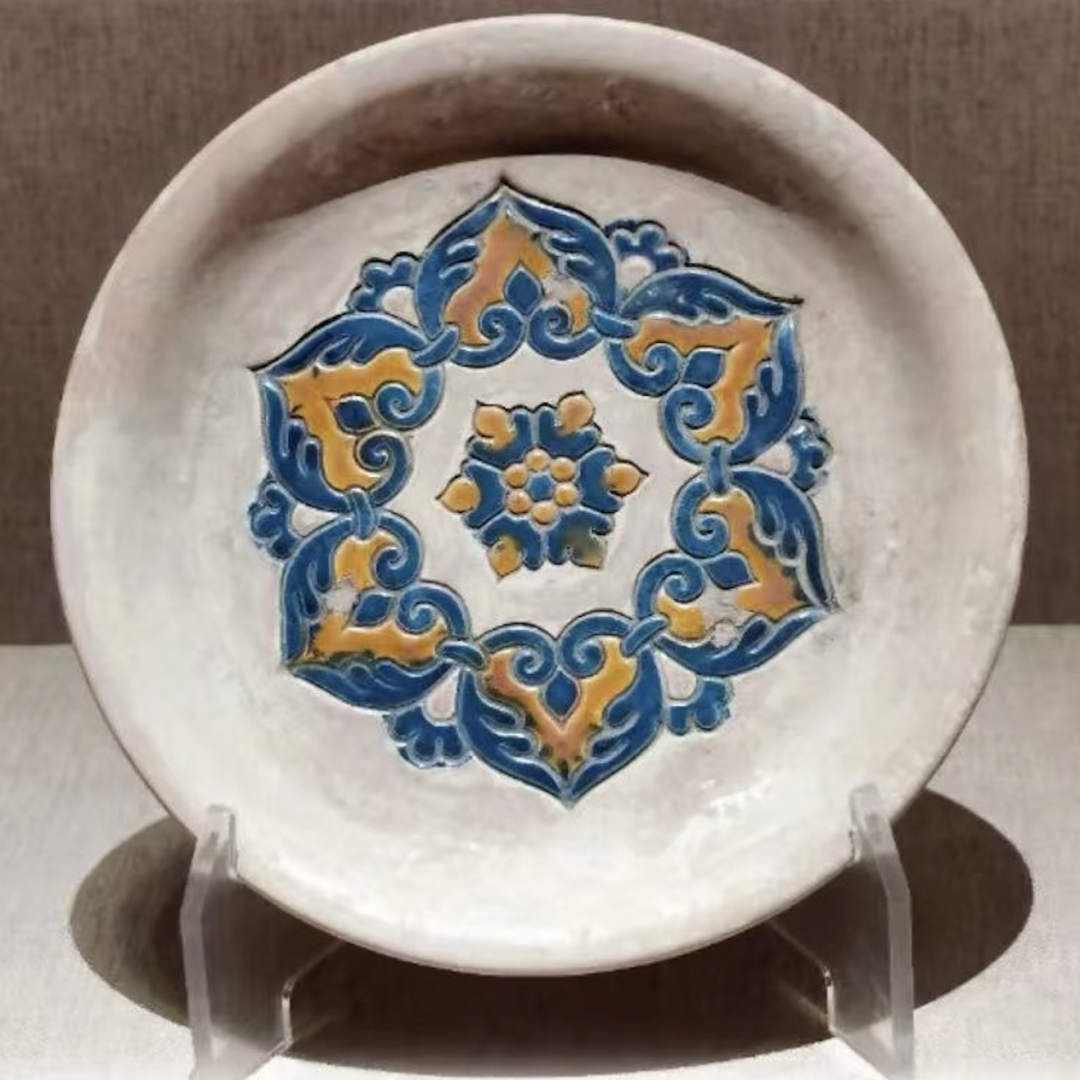
Tri colored Treasure Pattern Plate • Tang Dynasty
Yangcheng Evening News: Nowadays, more and more people can recognize LV presbyopia at a glance, but they don't know why these visual symbols have already appeared on Chinese clothing and objects hundreds or thousands of years ago. What is your opinion and viewpoint on this phenomenon?
Chen Ping: I think this reflects not only a design issue, but also a cultural dissemination issue.
After centuries of brand management, international brands such as LV have repeatedly and continuously spread a visual symbol, making it a brand language that global consumers can quickly recognize. Although traditional Chinese patterns have a longer history and richer cultural connotations, they have long been scattered in different carriers such as cultural relics, ancient architecture, traditional clothing, ceramics, and embroidery, lacking systematic sorting and modern dissemination, and have not been fully transformed into modern visual symbols familiar to the public.
In recent years, this situation is undergoing positive changes. More and more designers, museums, cultural institutions, and domestic brands are starting to draw inspiration from traditional patterns, bringing traditional culture into contemporary life. I think what we really need to do is not simply compare who has a longer history, but to allow more traditional Chinese patterns to re-enter modern people's daily lives through original design, brand building, and international dissemination. Only when people recognize both a brand and the culture behind it, can traditional patterns truly become an important carrier of international dissemination of Chinese culture, rather than just staying in museums or ancient books.
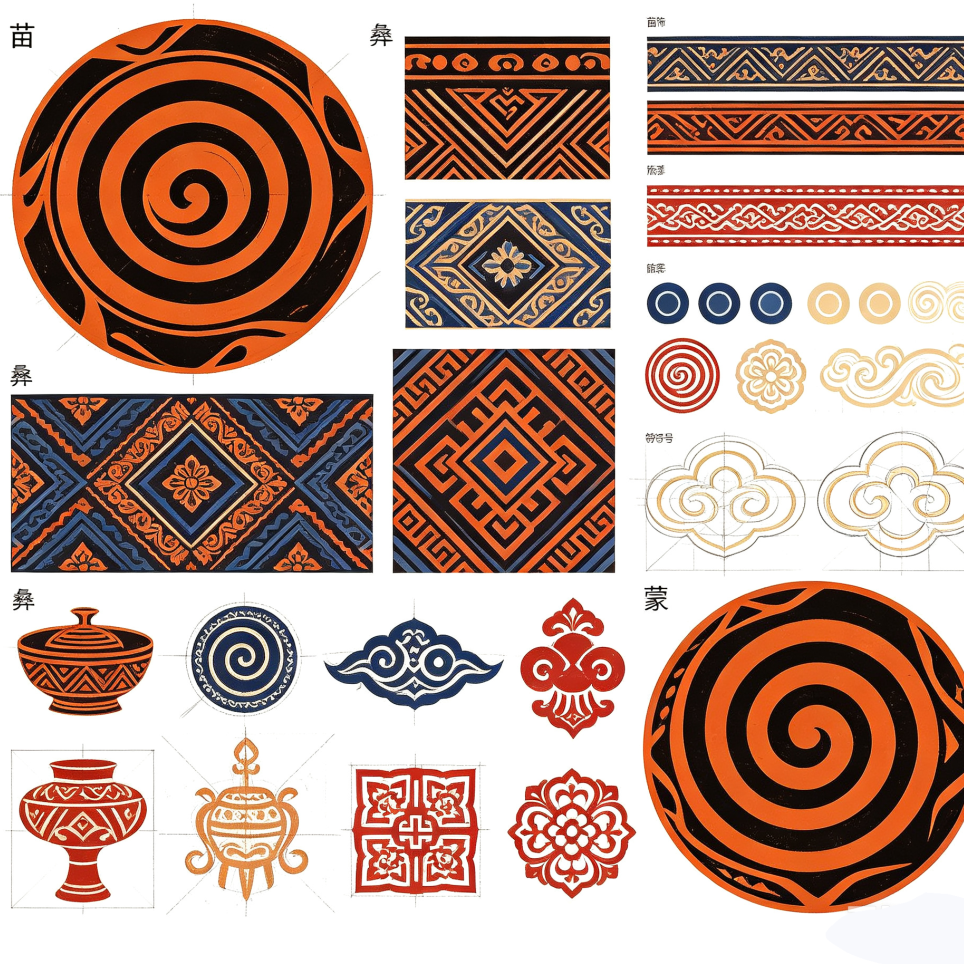
Northwest Colored Pottery and Ethnic Pattern Collection
Yangcheng Evening News: What insights does this case provide for cultural protection and revitalization, as well as strengthening cultural confidence? (For researchers, protectors, designers, brands, and the general public, insights can be discussed from multiple perspectives)
Chen Ping: I believe that the greatest significance of this case lies not in which party wins, but in its ability to draw more public attention to the value of traditional Chinese patterns and cultural heritage. In this sense, it is also a public discussion about the protection, innovative utilization, and intellectual property awareness of traditional culture.
For researchers, it is necessary to further strengthen the organization, interpretation, and digital construction of traditional patterns, and make culture "clear and understandable"; For cultural heritage conservation workers, it is not only necessary to protect cultural resources, but also to promote their creative transformation and innovative development, so that traditional culture can truly integrate into contemporary life; For designers and brands, they should have a deep understanding of the spiritual connotations of traditional culture, rather than simply borrowing pattern elements, and form a brand language with Chinese characteristics through original design; For the public, enhancing cultural confidence is not just about knowing that these patterns come from China, but more importantly, understanding the history, aesthetics, and values they carry.
I also advocate that teachers and students engaged in art history, fine arts, design, and digital technology research in higher education institutions across the country should pay more attention to China's rich traditional pattern resources, especially the Majiayao painted pottery patterns, as well as patterns in ethnic costumes, utensils, and folk art of the Miao, Yi, Mongolian, and other ethnic groups. We need to systematically sort out the historical origins, cultural meanings, color systems, composition methods, and local customs, and gradually establish an authoritative and complete database of traditional Chinese patterns. This not only helps to preserve cultural sources and historical basis, providing reference for the rational use and innovative transformation of traditional patterns, but also promotes the better entry of Chinese traditional art into contemporary design and international dissemination. To deepen the world's understanding of the aesthetic and cultural connotations of traditional Chinese art is also a positive form of protection.
Chinese excellent traditional culture is open, inclusive, and constantly evolving. Today, we must not only respect intellectual property rules, but also continuously improve the research level, design ability, and international dissemination ability of traditional culture, so that more traditional Chinese patterns can come from history, radiate new vitality in contemporary times, and truly become important cultural symbols to showcase Chinese civilization.
Traditional patterns are not "decorative patterns" left over from a certain era, but cultural memories and visual language formed by the long-term accumulation of Chinese civilization. Today's discussion of this case, I hope that the public will not only focus on a trademark, but also on the cultural value behind these patterns. True cultural confidence is not just about tracing who first used it, but about allowing excellent traditional Chinese culture to continue to integrate into contemporary design, modern life, and international communication through creative transformation and innovative development on the basis of respecting intellectual property rules, becoming an important cultural symbol for the world to understand China.
