

Hear the heartbeat of Cape Verde
Special Column

Author Chen Ping
Global President of the International Organization of Folk Arts (IOV), Chief Chair of World Heritage and Innovation in Traditional Handicrafts at UNESCO, Dean and Professor of the Cultural Heritage Creative Industry Research Institute at Jinan University, and Editor in Chief of the "Blue Book of Intangible Cultural Heritage: Report on the Development of China's Intangible Cultural Heritage".
This article is reprinted from Yangcheng Evening News and Yangcheng Faction:
The most touching part of the World Cup sometimes lies not in the ownership of the championship, but in the names that are suddenly seen by the world.
Cape Verde is such a name.
1
For many ordinary viewers, Cape Verde was originally just an island nation in the Atlantic Ocean on the map, and many people even needed to look up the map first to know where it was. But when this team from off the west coast of Africa first stood on the World Cup stage and showed their courage and dignity in front of strong teams, the world suddenly began to pay serious attention to this country.
People first remember its jersey, flag, players, and cheers from the stands, and then ask: What kind of history does this small country have? Why are its people so enthusiastic? What is its culture?
So, an old song was turned over.
That song is called 'Sodade'. The person who sings it is Ces á ria é vora, the most famous singer in Cape Verde. She is known as the 'Barefoot Queen', singing the Morna of Cape Verde throughout her life - a music that carries the sea breeze, farewell, nostalgia, and a sense of destiny. It's not noisy, doesn't show off its skills, and doesn't try to please anyone. It just sings slowly, like a person sitting by the harbor, watching the ships sail away, and waiting for the people in the distance to return.
It is interesting that football allows the world to understand Cape Verde, while music allows the world to understand Cape Verde.
This is precisely the most thought-provoking aspect of international events. The World Cup is, of course, primarily a sports event, involving scores, wins and losses, rankings, and elimination. But beyond sports, it is also a huge world communication machine. A country that rarely enters the center of global news attention may be seen by billions of people at the same time due to a game, a goal, a celebration, or a photo of a fan shedding tears. For many countries, such opportunities may not be obtainable even with a large amount of promotional resources.
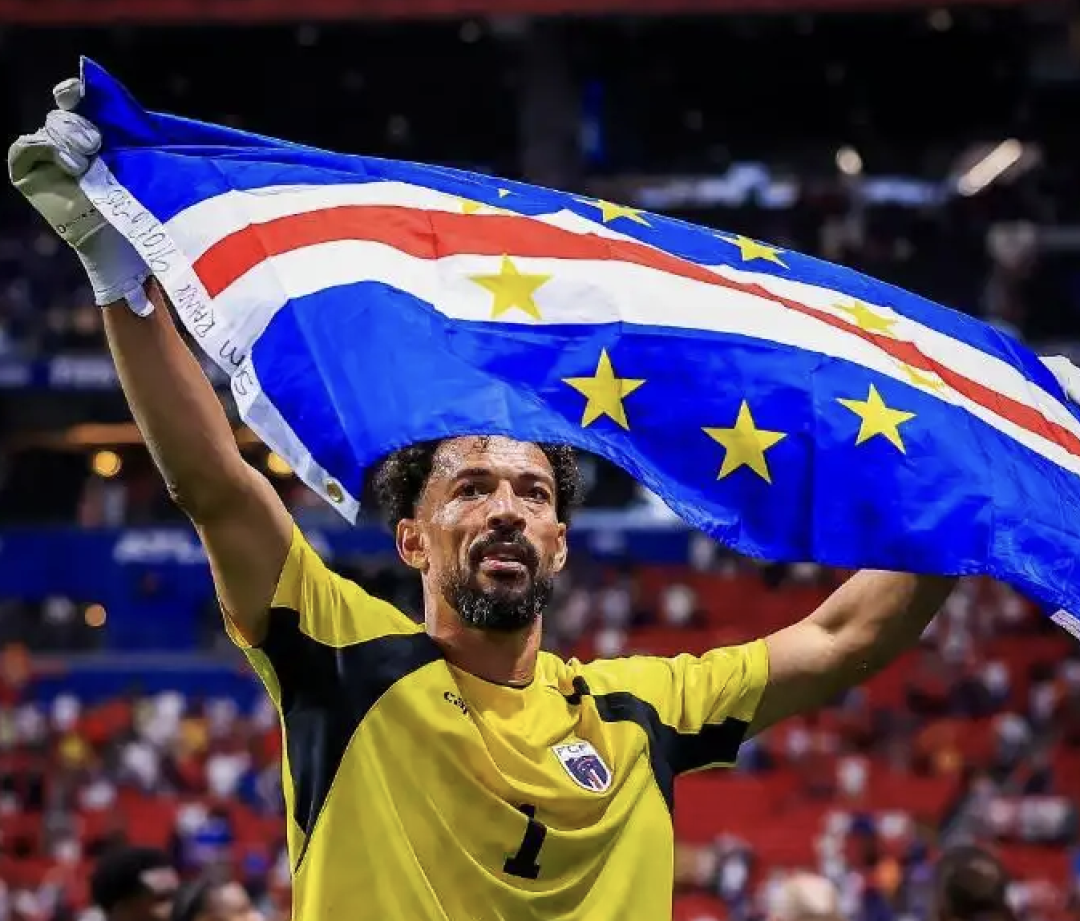
Fode Footballer Volzinia
2
But being seen is only the first step. What really matters is whether a country can be remembered after being seen; Can it be understood after being remembered.
The value of Cape Verde lies here. It doesn't just stop at the football miracle itself. With the attention brought by the World Cup, people have begun to listen to its songs, watch its seas, understand its immigration history, and feel a national emotion composed of small countries, oceans, dispersion, and nostalgia. Football opens the door, culture leaves people behind. Running on the field is instantaneous, but emotions in music can go far.
The reason why 'Sodade' moves people is not because everyone understands the language of Cape Verde, but because it sings an emotion that almost everyone can feel: the longing for their hometown for those who have left their homeland; The longing for return for those who wander outside; The kind of self affirmation that small country people have when facing the big world, which is not ostentatious but very resilient. This emotion does not require complex explanation. When music starts, the world naturally quiets down.
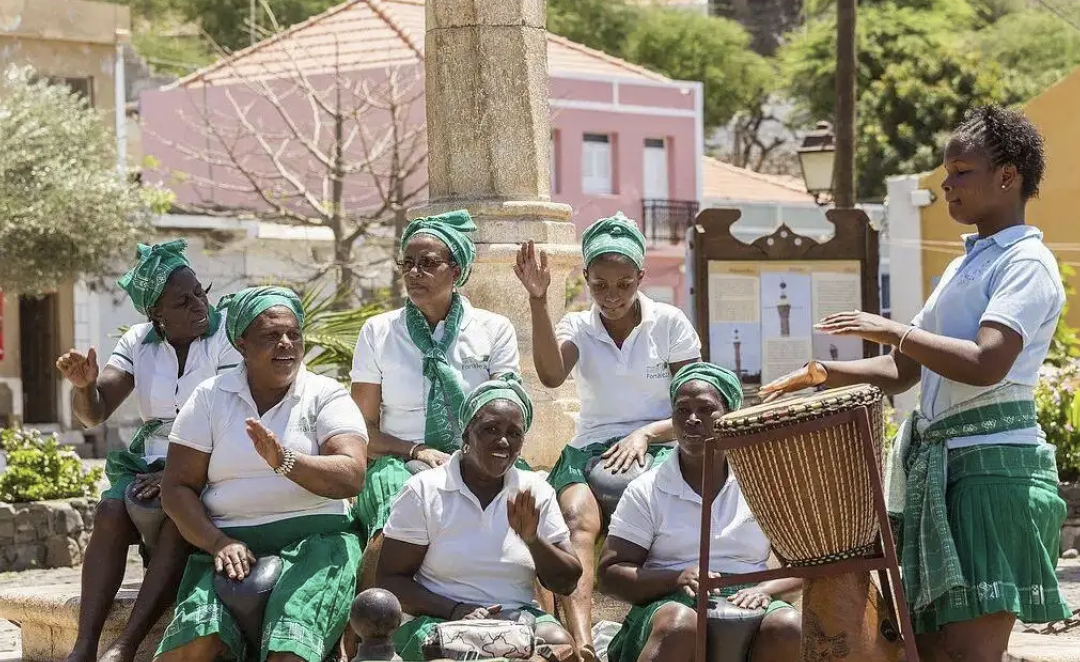
This also indicates that cultural dissemination is not always accomplished through grand introductions. Many times, the truly effective way to spread is to first impress others with a specific thing. It could be a song, a dish, a handicraft, a dance, a street celebration, or a moment when an athlete cries under the national flag after a race. People may not remember a formal introduction, but they may remember a country because of a melody, a photo, a scent, or a way of life.
3
This also reminds me of a viewpoint that I have always emphasized during my years of research on international communication of cultural heritage: to make good use of cultural heritage and tell the story of China well. Cultural heritage is not a past quietly placed in display cabinets, nor is it a symbolic background used to decorate scenes. Its true value lies in its ability to transform a nation's long-term historical memory, way of life, aesthetic experience, and spiritual temperament into stories that the world can perceive, be willing to approach, and empathize with.
From the perspective of communication studies, the international dissemination of cultural heritage is not a one-way "telling others what we have", but rather establishing a mutually understandable common context between different cultures. The more specific the cultural expression, the easier it is to overcome language barriers; The more cultural details with a warm living temperature, the easier it is to enter people's hearts. Morna in Cape Verde is just like that. It doesn't rush to explain the national image, but it lets people hear the emotions of a country first.
In this sense, the value of international events is not only to "showcase strength", but also to "open the door". The World Cup opened an entrance for Cape Verde, while Morna opened it up to deeper cultural memories. People approach Cape Verde because of football and are willing to continue learning about Cape Verde because of music. The transformation from sports popularity to cultural cognition is the most natural and dynamic part of the process of forming national influence.
4
This also inspires us.
Today, China is participating in and hosting an increasing number of international events. Sports events, international exhibitions, urban forums, cultural exchanges, and tourism festivals are all important windows for the outside world to understand China. Sometimes, people tend to focus their attention on scale, venues, ceremonies, and data. They are certainly important, but they may not be the most deeply ingrained part in people's hearts. What can truly be taken away by ordinary people is often something more concrete, softer, and more lifelike: a piece of Cantonese music, a piece of Cantonese embroidery, a cup of Chinese tea, an old street, a festival, a bowl of hot soup, or the warmth left behind when a person meets a city.
The so-called 'telling the Chinese story well' does not mean telling the Chinese story more and more full, bigger, or more complex. On the contrary, it requires finding cultural media that can reach people's hearts, allowing the world to understand China through concrete and tangible experiences.
Cape Verde reminds us that the big event itself is just an opportunity, and what truly determines the dissemination effect is whether the opportunity is transformed into a story, the story into emotion, and the emotion into lasting memory.
That's why an old song will play again after a game.
This is the significance of large-scale international events: it is not just about letting the world watch a game, but about letting the world hear the heartbeat of a country.
The original article was published in the A7 Huadi edition of Yangcheng Evening News on July 14, 2026
