

From inheritance to assets
Empowerment and Transformation of Cultural Heritage and Creative Industries
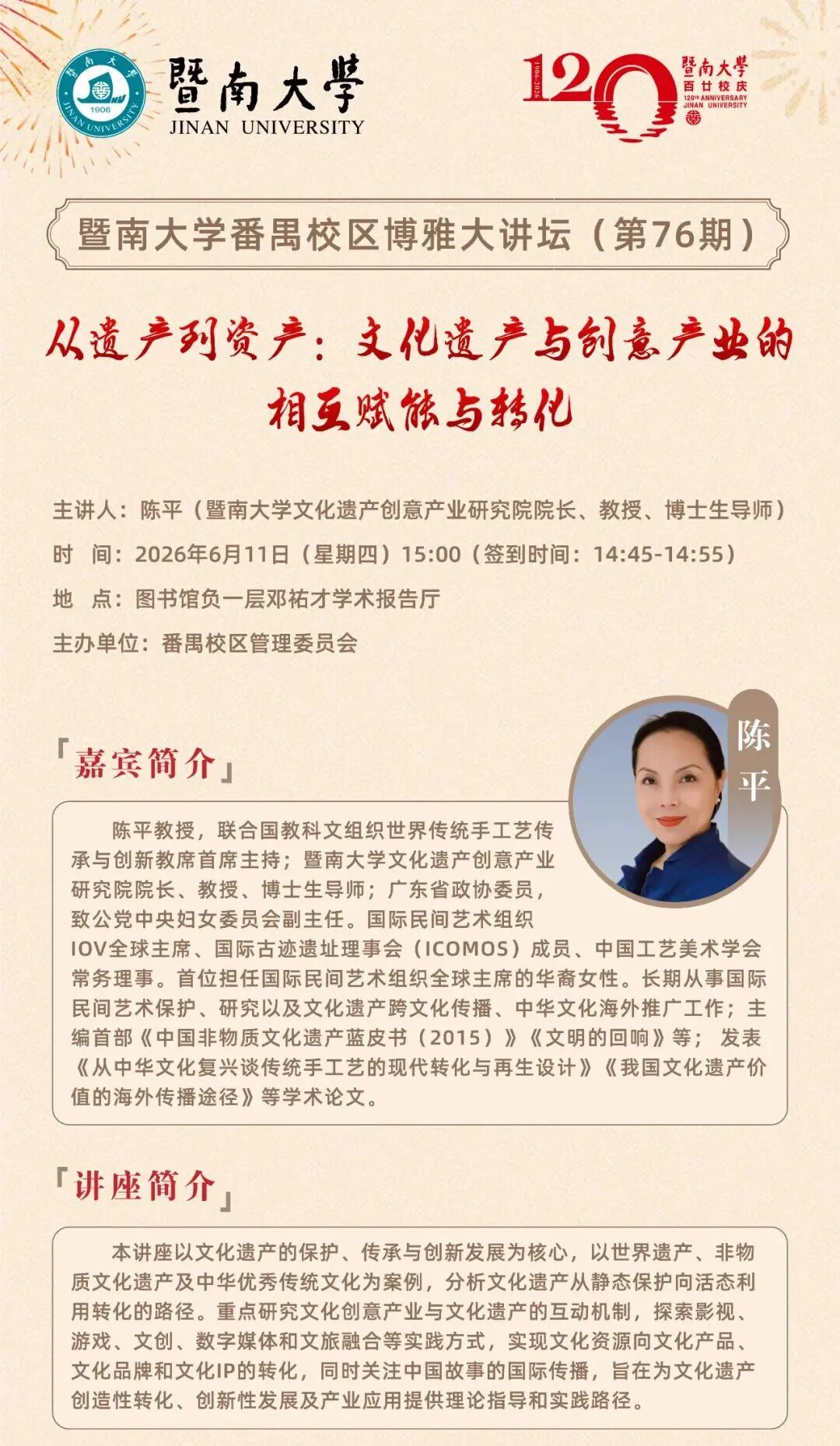
On the afternoon of June 12th, the Boya Lecture Hall hosted by the Panyu Campus Management Committee of Jinan University was held in the Deng Youcai Academic Lecture Hall of the library. Professor Chen Ping, Dean of the Institute of Cultural Heritage and Creative Industries at Jinan University and Chief Chair of the UNESCO Chair on the Inheritance and Innovation of Traditional Handicrafts, was invited to give a special academic lecture entitled "From Heritage to Assets: The Mutual Empowerment and Transformation of Cultural Heritage and Creative Industries". Liu Jinshun, Secretary of the Party Committee of Panyu Campus, presided over the lecture.
The core topic of this lecture is the creative transformation and innovative development of cultural heritage, focusing on the protection of cultural roots and the mission of overseas Chinese schools. It revolves around five dimensions: re understanding the historical reasons for cultural heritage, typological definition of cultural heritage, unique endowment of Chinese cultural heritage, the path from static protection to dynamic utilization, and the construction path of cultural heritage as a national cultural expression capability.
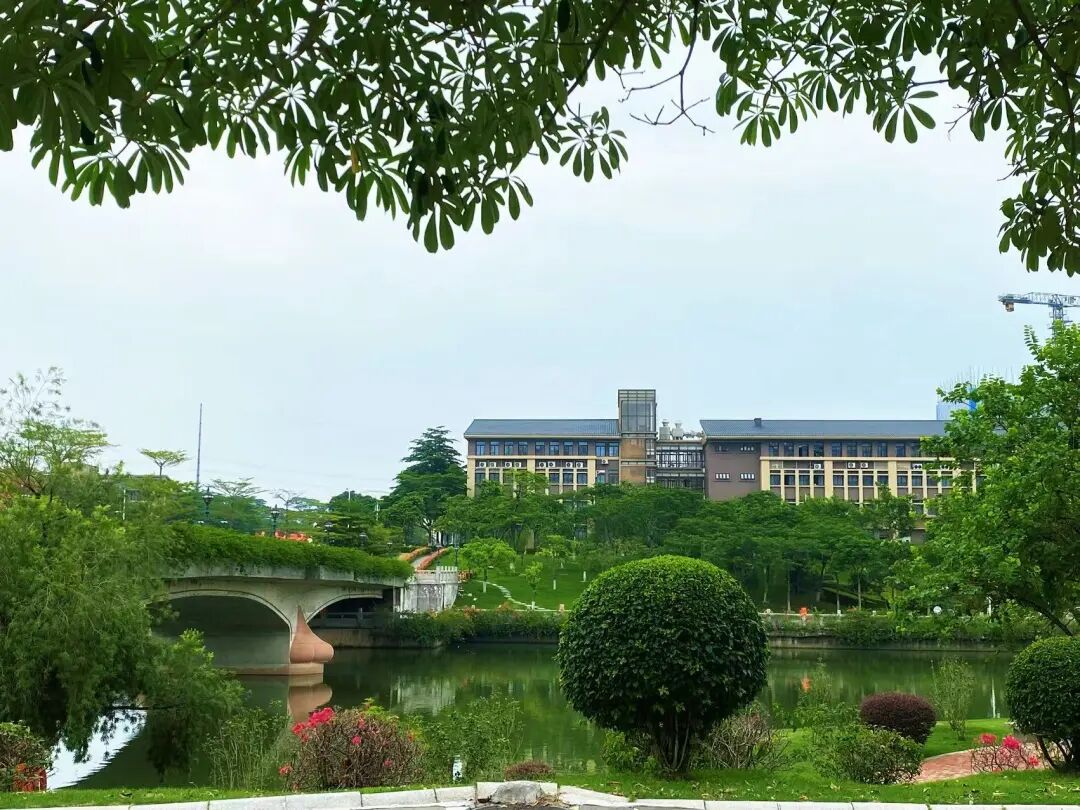
Jinan University Panyu Campus
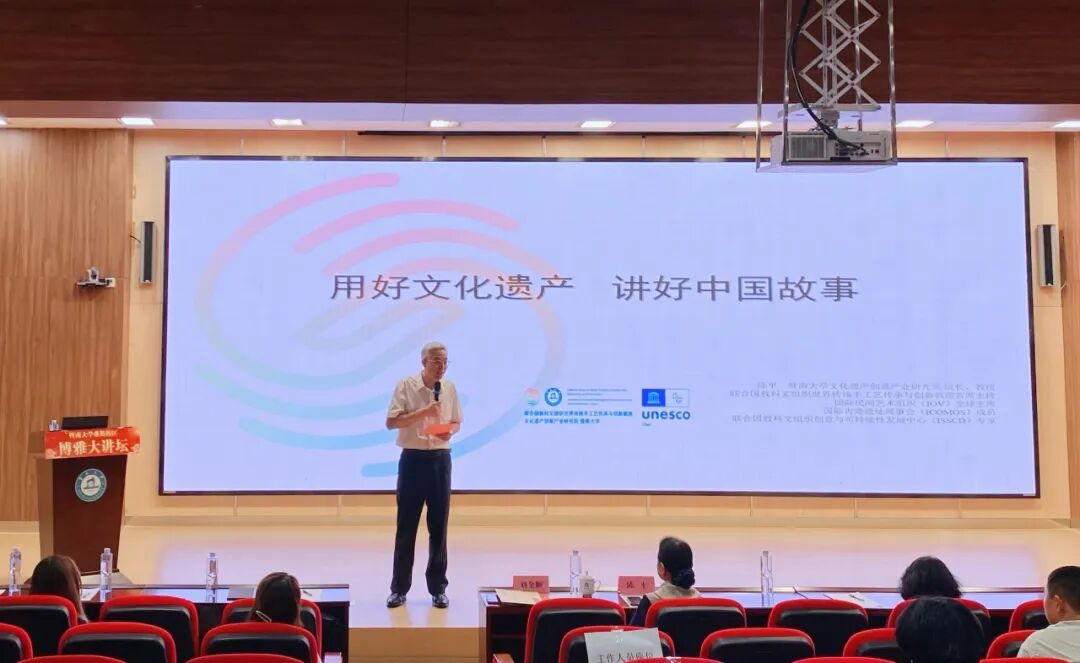
Liu Jinshun, Secretary of the Party Committee of Panyu Campus, presided over a lecture
Cultural Heritage: The Realistic Foundation of Civilization Subjectivity
Chen Ping used the movie "A Love Letter to Grandma" as a starting point to reveal the deep meaning of cultural heritage as a carrier of civilized memory through the interpretation of the national narrative and emotional context carried by the Chaoshan overseas Chinese criticism. She pointed out that cultural heritage is not a remnant of past eras, but the current reality foundation of Chinese cultural subjectivity. Protecting heritage is the protection of the roots of civilization; Revitalizing heritage is opening up space for contemporary cultural production. The lecture system sorted out the process of world heritage protection promoted by UNESCO, as well as the core mechanism of intergenerational inheritance of intangible cultural heritage, clarifying the conceptual boundaries and internal relationships of world heritage, natural heritage, cultural and natural dual heritage, and intangible cultural heritage. Chen Ping emphasized that all intangible cultural heritage is based on material forms, and its essence lies in the dynamic evolution and intergenerational transmission. The understanding of these classification systems is essentially an understanding of the logic and continuity of a nation's civilization construction.
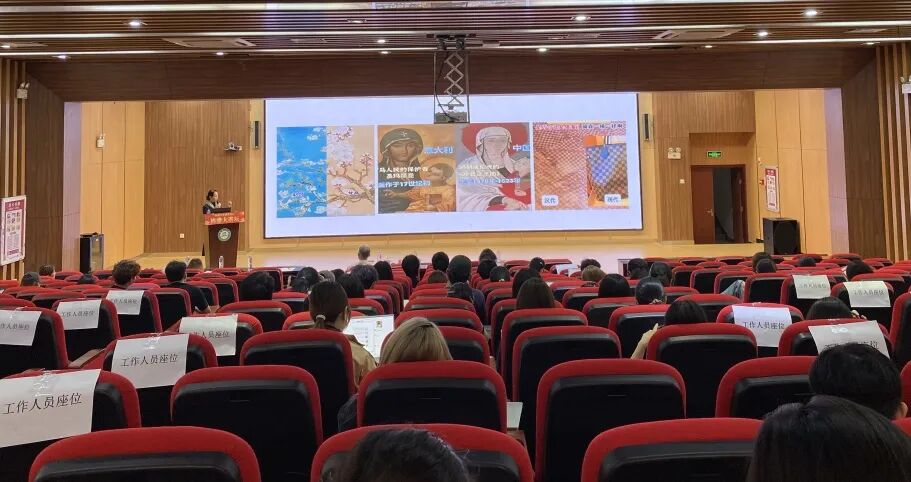
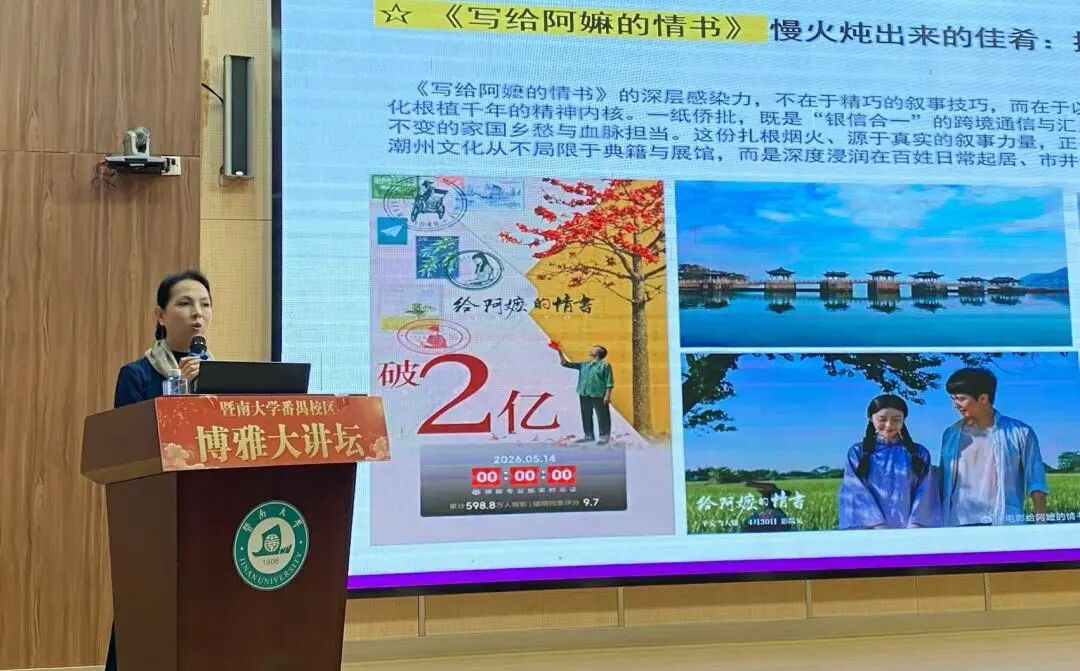
Professor Chen Ping's Academic Lecture on "From Heritage to Assets: The Mutual Empowerment and Transformation of Cultural Heritage and Creative Industries"
Activation Path: Paradigm Shift from Heritage Protection to Creative Empowerment
The lecture focused on explaining the practical path of transforming cultural heritage from static protection to dynamic utilization. Chen Ping analyzed international and domestic cases such as the post-war reconstruction of Heidelberg in Germany, the renovation of the industrial site of Tate Modern in the UK, the rural revitalization practice of the Echigo Women's Land Art Festival in Japan, and the creative transformation of Miao embroidery in Guizhou, systematically demonstrating the deep interaction mechanism between cultural heritage and creative industries. Chen Ping believes that protection should not lead to a tendency towards museum like preservation of heritage, but should be activated in protection and innovated in inheritance. Diversified practices such as film and television storytelling, digital media, cultural and creative design, and cultural tourism integration are transforming dormant cultural resources into perceptible, consumable, and communicable cultural products, cultural brands, and cultural IPs, enabling cultural heritage to truly realize the contemporary value of "living in the present and used in daily life".
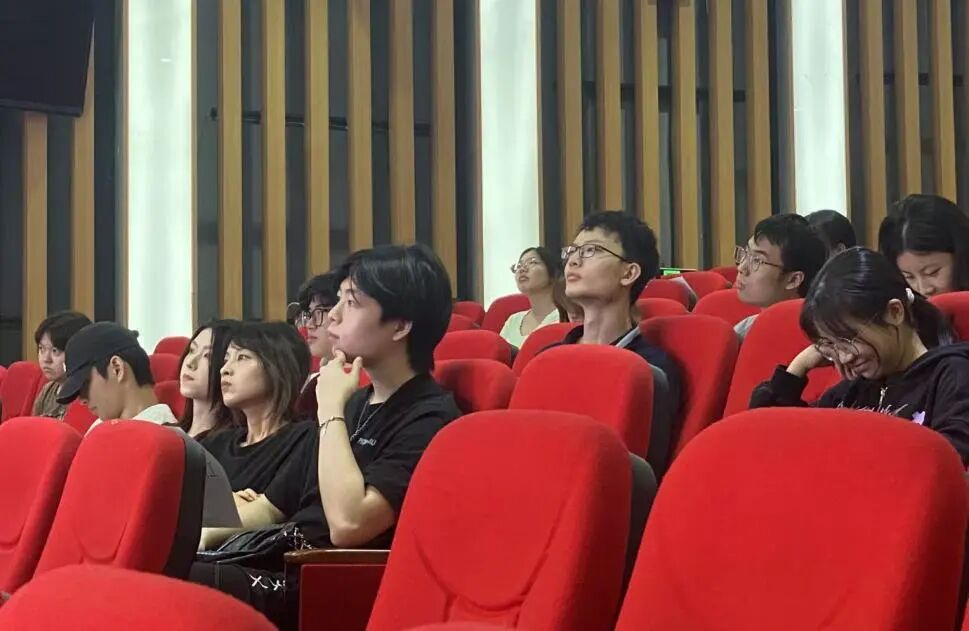
At the academic lecture, students listened attentively
Youth and Roots: Being a New Generation of Chinese Youth with Souls
Chen Ping pointed out that the continuation of the 5000 year civilization relies on the soil cultivated, the space for growth, and the context of inheritance. In the face of technological iteration and cultural change, the cultural consciousness and identity recognition of the younger generation are crucial to the intergenerational succession of cultural heritage. She sent a message to the students present: the "awakening" of the "lion awakening" does not come from external awakening, but from internal cultural consciousness - there is drum beats in the heart, light in the eyes, and strength in the soul. She encouraged young students to step out of campus and into the fields, to perceive the roots of civilization through a dual path of academia and practice. Only by establishing a conscious cultural subjectivity can a cultural expression with roots, soul, and responsibility be formed in global dialogue.
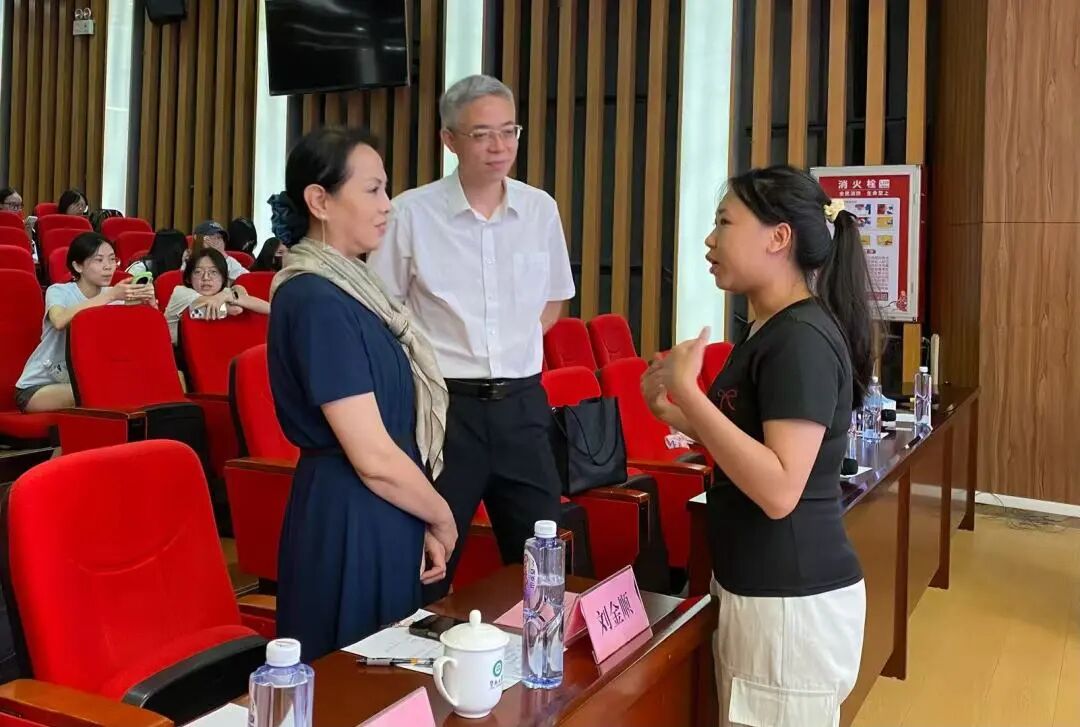
Professor Chen Ping and Secretary Liu Jinshun exchanged ideas with students
Secretary's message: Spread Chinese culture with the mission of overseas Chinese schools
In his summary, Secretary Liu Jinshun reviewed the instructions given by General Secretary Xi Jinping during his inspection of Jinan University in 2018 regarding the dissemination of excellent traditional Chinese culture to the five continents and four seas. He pointed out that this year marks the 120th anniversary of the founding of Jinan University. Professor Chen Ping's lecture integrates a global perspective and ancient and modern dimensions, combined with his long-term academic cultivation and practical achievements in the fields of cultural heritage protection, revitalization, inheritance, and innovation, providing theoretical guidance and practical paths for the industrial application of cultural heritage. He specifically introduced the "Creativity 100" project promoted by the Cultural Heritage Creative Industry Research Institute: the project has trained more than 120 young designers with international perspectives, activated traditional skills through field investigations and interdisciplinary cooperation, and promoted intangible cultural heritage from museums to daily life scenes. The project results are currently on display at the Four Seas Art Space at the main campus. Teachers and students are welcome to visit and experience the contemporary transformation achievements of the integration of cultural heritage and creative design.
