

Workshop for The Village of Tomorrow:
A Global South Perspective on Rural Cultural Construction
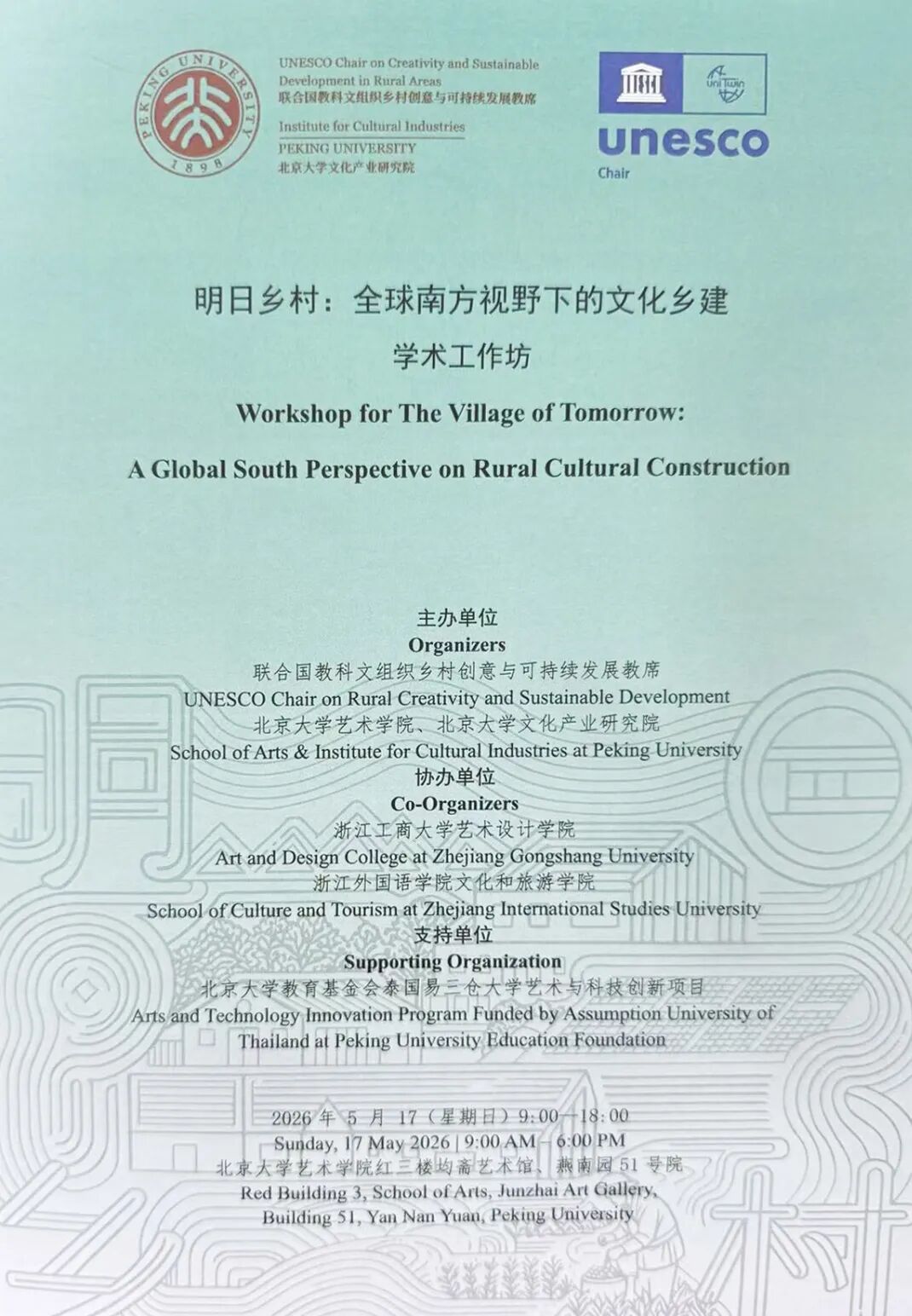
On May 17, 2026, the roundtable forum of the academic workshop "Rural Tomorrow: Cultural Rural Construction from the Perspective of the Global South" was held at No. 51, Yannan Yuan, Peking University.
The workshop was hosted by the UNESCO Chair on Rural Creativity and Sustainable Development, the School of Arts at Peking University, and the Institute for Cultural Industries at Peking University; co-organized by the School of Art and Design at Zhejiang Gongshang University and the School of Culture and Tourism at Zhejiang International Studies University; and supported by the Peking University Education Foundation and the Arts and Technology Innovation Program at Assumption University of Thailand. Chen Xianying, Associate Professor at the School of Cultural Industries Management at Communication University of China, served as the moderator of Roundtable II. Under the theme "Digital and Intelligent Empowerment and Rural Revitalization," Roundtable II aimed to pool wisdom from government, industry, academia, and other sectors, explore practical pathways for rural cultural development from the perspective of the Global South, and inject digital and intelligent momentum into comprehensive rural revitalization.
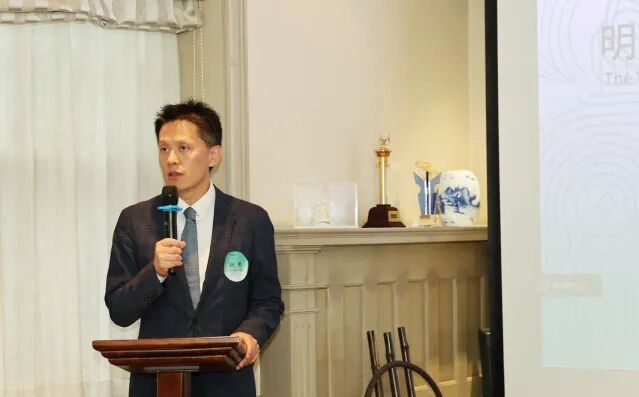
Xiang Yong Delivers Opening Remarks
In his opening address, Xiang Yong, Chairholder of the UNESCO Chair on Rural Creativity and Sustainable Development and Dean of the Institute for Cultural Industries at Peking University, noted that since its establishment two years ago, the Chair has been continuously advancing the empowerment of rural revitalization through digital intelligence. Leveraging a major project funded by the National Social Science Fund, it has initiated the "Global Alliance for Innovation and Development in Cultural and Technological Integration," and has established a collaborative foundation that spans disciplines, regions, and nations.
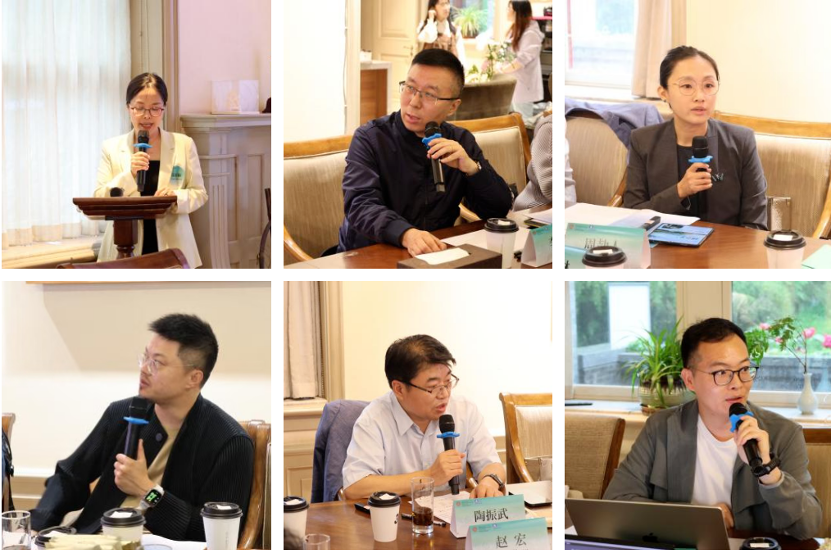
Panelists, from left to right: (Chen Xianying, Li Lin, Zhou Jieren, Song Yangyang, Tao Zhenwu, Wu Yi)
On how digital-intelligent technologies are reshaping the production, dissemination, and consumption ecosystems of rural culture, Li Lin, Deputy General Manager of Migu and Chief Expert at China Mobile Group, introduced Migu's relevant practices, noting that technology should be leveraged to empower rural revitalization and narrow the urban-rural digital divide. Zhou Jieren, Vice President of Xinhua Zhiyun, proposed that "culture is storytelling," advocating for the mining of rural cultural genes through cultural data platforms. Song Yangyang, Deputy Director of the Institute of Creative Industry Technology Research at Renmin University of China, focused on the integration of agriculture, culture, and tourism under the experience economy, proposing a shift from a "resource-oriented" approach to an "emotional gap-oriented" one, achieving a closed loop from productization to industrialization through small-scale, micro-level transformations. Tao Zhenwu, Chief Strategy Officer of Shouyi Huike, gave a detailed introduction to the "Roaming Around Beijing's Suburbs" platform, and plans to advance the project with strategies such as "peak shaving and valley filling." Wu Yi, Senior Researcher at Tencent's Digital Public Opinion Department, summarized the practices of AI large models empowering rural 内容 creation and the "The Litchi of Chang'an" IP driving consumption, while also pointing out challenges such as the computing power bottleneck.
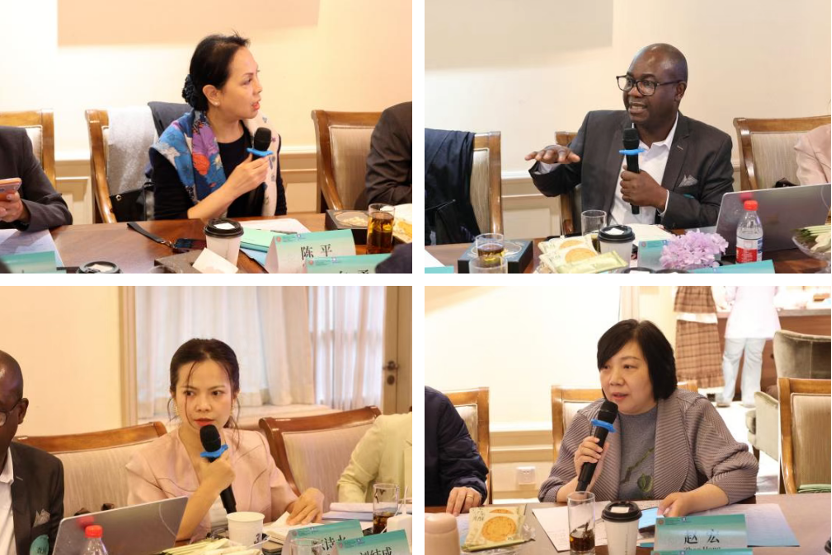
Panelists from left to right: Chen Ping, Munyaradzi Chatikobo, Tran Thi Thuy, Zhao Hong
Under the theme of comparative experiences and collaborative pathways within the "Global South" framework, Chen Ping, Chairholder of the UNESCO Chair on the Transmission and Innovation of Traditional Handicrafts and Director of the Institute of Cultural Heritage and Creative Industry at Jinan University, shared the practice of "Youth Creativity 100," proposing that cultural heritage should be transformed into capital through creativity. Munyaradzi Chatikobo, Director of Cultural Policy and Management at the Wits School of Arts, University of the Witwatersrand, South Africa, proposed that Africa's heritage and stories should be used to proactively "feed" AI, enabling technology to generate indigenous cultural genes. Tran Thi Thuy, Deputy Director of the Institute of China Studies, Asia-Pacific Institute, Vietnam Academy of Social Sciences, endorsed the "storytelling" approach to cultural tourism, and expressed hope for collaboration with China to jointly explore folk tales and promote people-to-people exchanges between the two countries. Zhao Hong, Director of the Science and Technology Department of the International Youth Leadership Development Special Fund of the China Foundation for Cultural Heritage Conservation, shared the industry-education integration model of AIGC-plus-talent cultivation, aiming to achieve a sustainable cycle of employment, entrepreneurship, and industrial incubation.
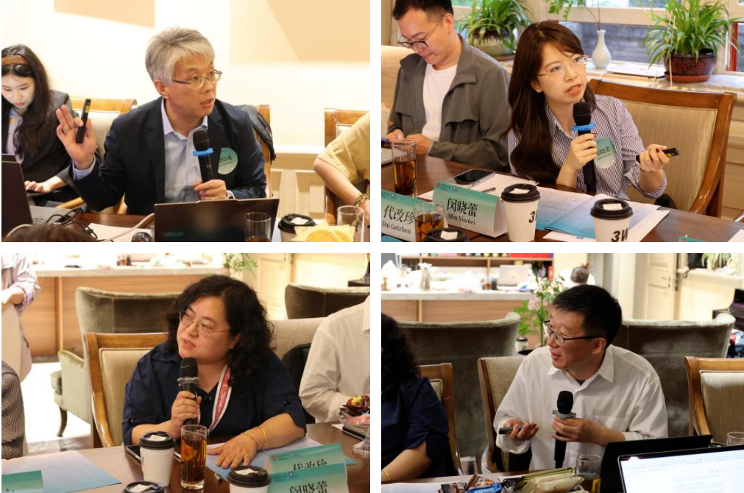
Panelists from left to right: Liu Jiecheng, Min Xiaolei, Dai Gaizhen, Hao Zhicheng
Under the theme of innovative cases and sustainable operations of digital empowerment for rural revitalization, Liu Jiecheng, Vice Dean of the Institute of Cultural Industry at Peking University, proposed the two prerequisites for digitally empowering rural areas, along with three major directions: "new drivers, new forms, and new scenarios." Min Xiaolei, Associate Professor at the School of Design, Hunan University, introduced the "New Channel" project spanning 16 years and presented a three-step pathway for design-led innovation in intangible cultural heritage. Dai Gaizhen, Vice President of the Research Travel Branch of the China Tourism Association, suggested that local cultural tourism should focus on "small traditions" narratives, leveraging digital empowerment and visitor co-creation to achieve emotional resonance. Hao Zhicheng, Director of the Tourism Practice Teaching Center at the School of Tourism, Beijing Union University, drawing on years of experience serving declining rural villages on the outskirts of Beijing, shared the practices and dilemmas of universities serving rural areas from the perspectives of ideological and political courses as well as practical teaching.
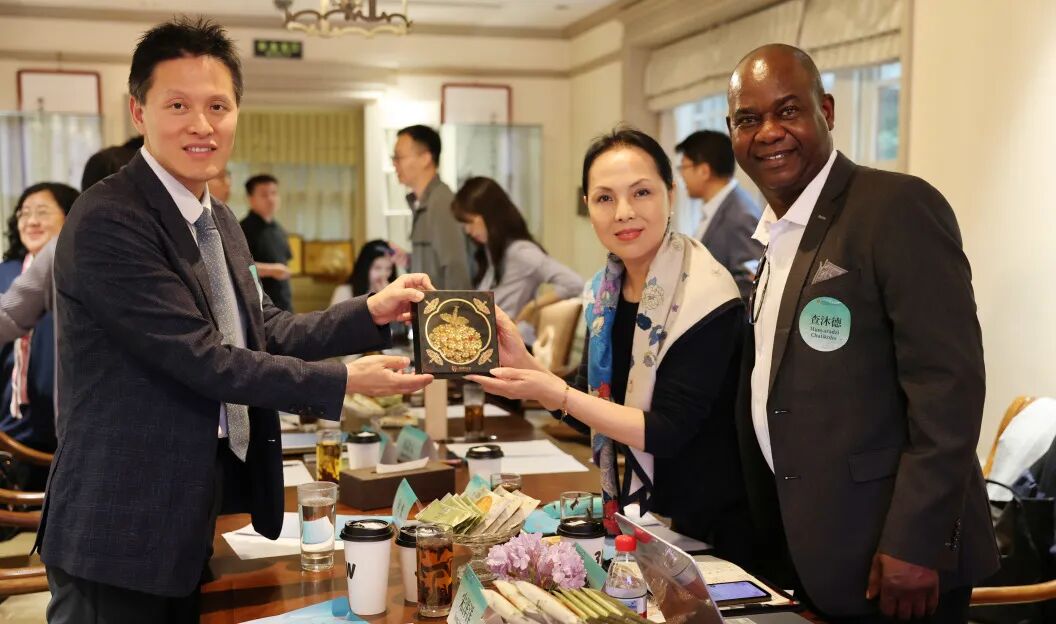
Xiang Yong、Chen Ping and Professor Munyaradzi Chatikobo
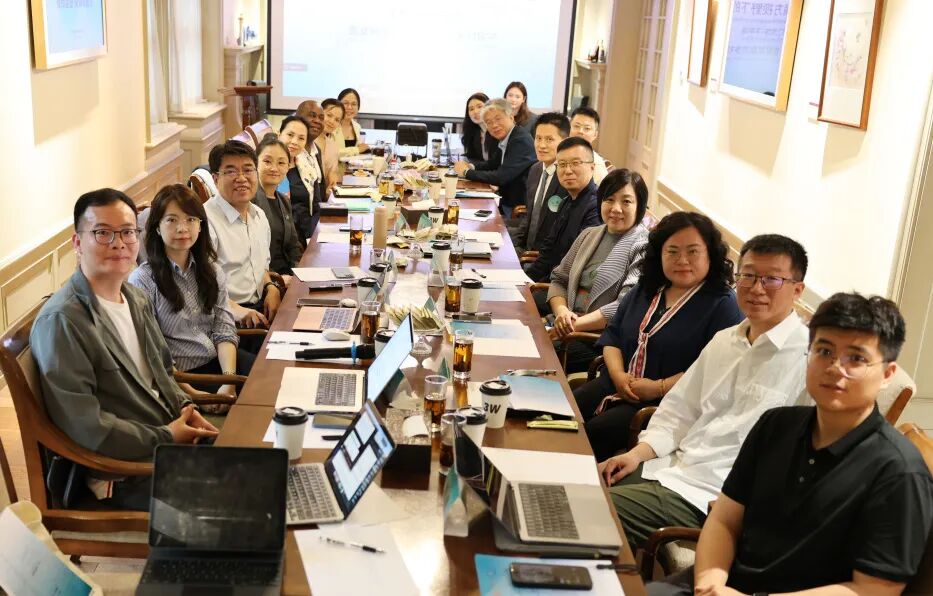
Photo of roundtable dialogue guests
At the conclusion of the conference, Liu Jiecheng summarized the event using three keywords: "gratitude, richness, and expectation," and candidly noted that digital rural development is a challenging endeavor requiring collaborative efforts from multiple parties. This roundtable dialogue, grounded in the "Global South" perspective, provided an intellectual foundation and practical reference for building transnational mechanisms for knowledge co-creation and project collaboration.
