

《Dear you》
Little delicacies, slow-simmered in mild fire
Special Column

Chen Ping
President of the Institute of Cultural Heritage and Creative Industries of Jinan University, Chief Chair of UNESCO Chair of World Traditional Handcraft Heritage and Innovation, and Global Vice President of International Organization of Civil Arts (IOV)
These years, Chinese film market is not lack of the "; boom.". Capital, traffic, short video transmission, often in a very short time to produce a huge volume of sound. But there are not many works that can really settle down and stay in the heart of the audience.
With the appearance of Dear you, people realize again that the films that can truly touch people are never the products manufactured rapidly on the industrial assembly line, but the natural expressions of emotion and culture after long-term precipitation.
《Dear you》is more like a slow cook out of the a small cate. It is not a sudden out of the circle of the flow of mythology, nor deliberately sensationalism, nor rely on strong stimulus and emotional bombing to overcome the audience. What is really rare about it is a restrained and quiet expression - the audience is not "hit" by it, but is brought back to their emotional memory bit by bit as they watch.
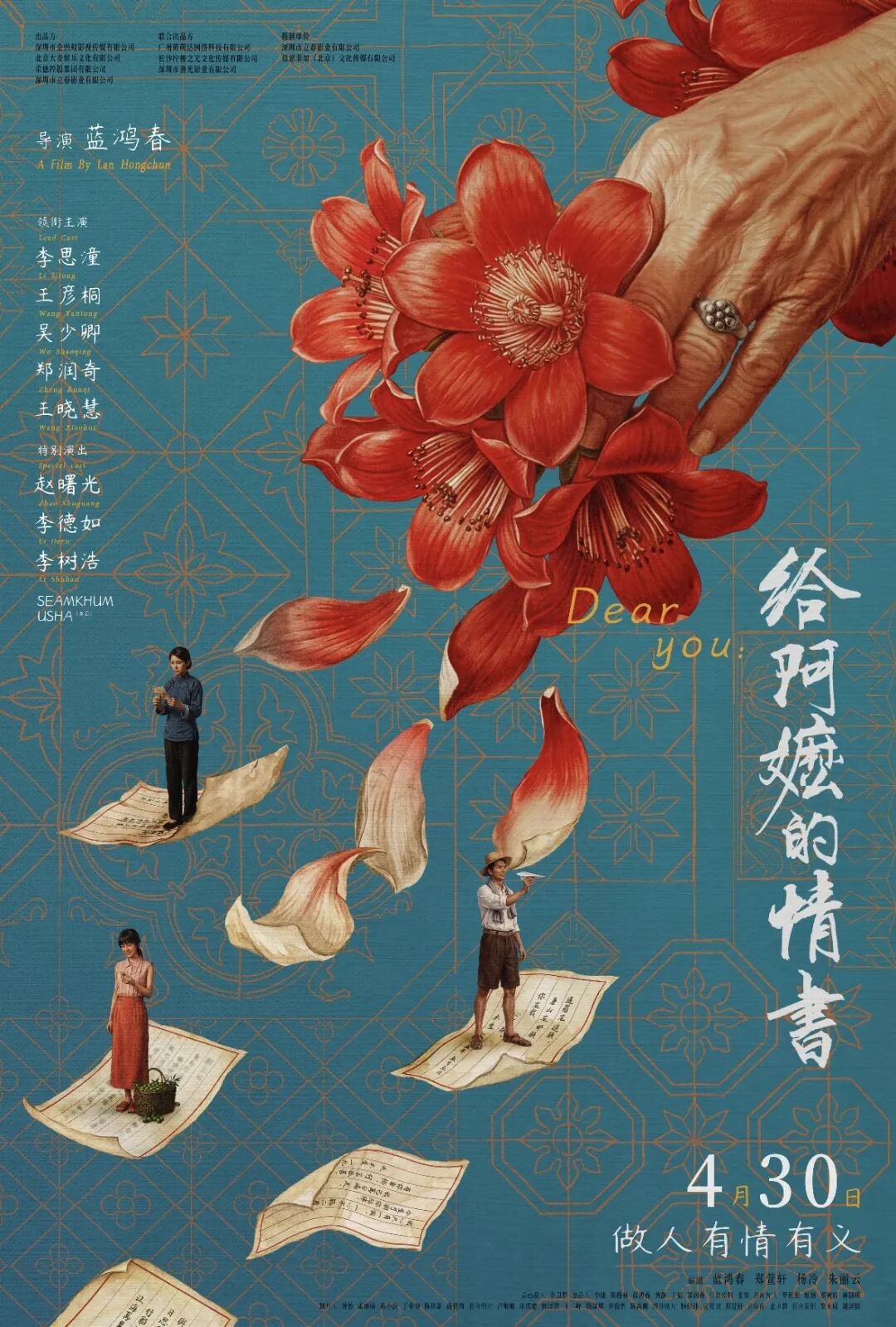
Such films, in fact, have become less and less today.
Today, many films and TV works are pursuing speed: the pace is getting faster and faster, the emotions are getting stronger and stronger, and the characters are becoming more and more symbolic. The movie seems to have become a kind of instant consumer goods, requiring the audience to be aroused, moved and created an emotional climax within a few minutes. But Love Letters to Mammy is the opposite. It does not rush to inflame, nor create dramatic conflict, but patiently returns to the most authentic of human relationships.
And this "slow", it is the most valuable place.
Because true deep feelings, is not instant completion.
What really touch people in the film is a kind of emotional structure that is gradually diluted in modern society - family, responsibility, watching, as well as the obsession of Chinese people with "home".
In particular, the expression of "overseas Chinese" culture, so that the film has a special deep cultural background.
For a long time, the theme of overseas Chinese is not the mainstream in Chinese films, but in fact, "overseas Chinese" itself is an extremely special part of the process of global dissemination of Chinese civilization. Overseas Chinese means not only the departure from their hometown in the geographical sense, but also a cultural concern in the long-term floating. They left their hometown, but never left the "home" of the spiritual structure.
As an overseas Chinese who lived in Germany, I have a particularly deep understanding of this feeling.
Sometimes, the more far from home, the more understanding of "home". When you are young, you may think the world is big. You should keep on traveling; But after a long overseas life, I gradually find that what sustains a person's heart is still the most simple things - a mother's greetings, the taste of the kitchen at home, a phone call during the Spring Festival, and even a letter of home that spans time.
Many overseas Chinese have a common experience: in a foreign country again busy time, there will still be a kind of hometown can not be completely eliminated. And this kind of Nostalgic, is not only miss a place, but also to relatives, family and cultural roots of emotional attachment.
Therefore, I have always believed that the so-called overseas Chinese culture, in a sense, is in fact a kind of "missing their families across the mountains and seas," the culture.
But the overseas Chinese approve, is this kind of culture most true testimony.
Young people today to see overseas, perhaps first of all, it will be understood as a historical document. But in reality, it is far more than a simple voucher for remittances or a record of communications. Those yellow pages behind, is a generation of overseas Chinese life across the sea, is their hard to make a living in a foreign country, they still save money to return home sense of responsibility, but also the Chinese people for the family ethics of the most profound expression of emotion.
The older generation of overseas Chinese are not good at expressing their feelings. They may never say "I love you" or create a romantic drama. But they will send the most hard earned money back to their hometown, will quietly assume the fate of the entire family, will be concerned about their families will be hidden in extremely restrained text.
This kind of feeling, in today's view even some "awkward". But it is this awkwardness that makes it so real.
What is truly advanced about Love Letters to Mammy is that it does not treat these contents as grand historical narrative, but always returns to the most ordinary human relationships. Instead of yelling at the top of their words or deliberately promoting value, it re - sees the Chinese way of feeling in those days through a family, a letter or a waiting period. It shows us that love is not only passionate and romantic, but sometimes it is also responsibility, protection, tolerance and waiting.
Today it seems increasingly difficult to establish stable and lasting relationships in this era. Social media makes people seem more connected to each other, but the real deep emotional connection is increasingly thin. Many people start to lose faith in love and become more and more afraid of assuming responsibility in long-term relationships.
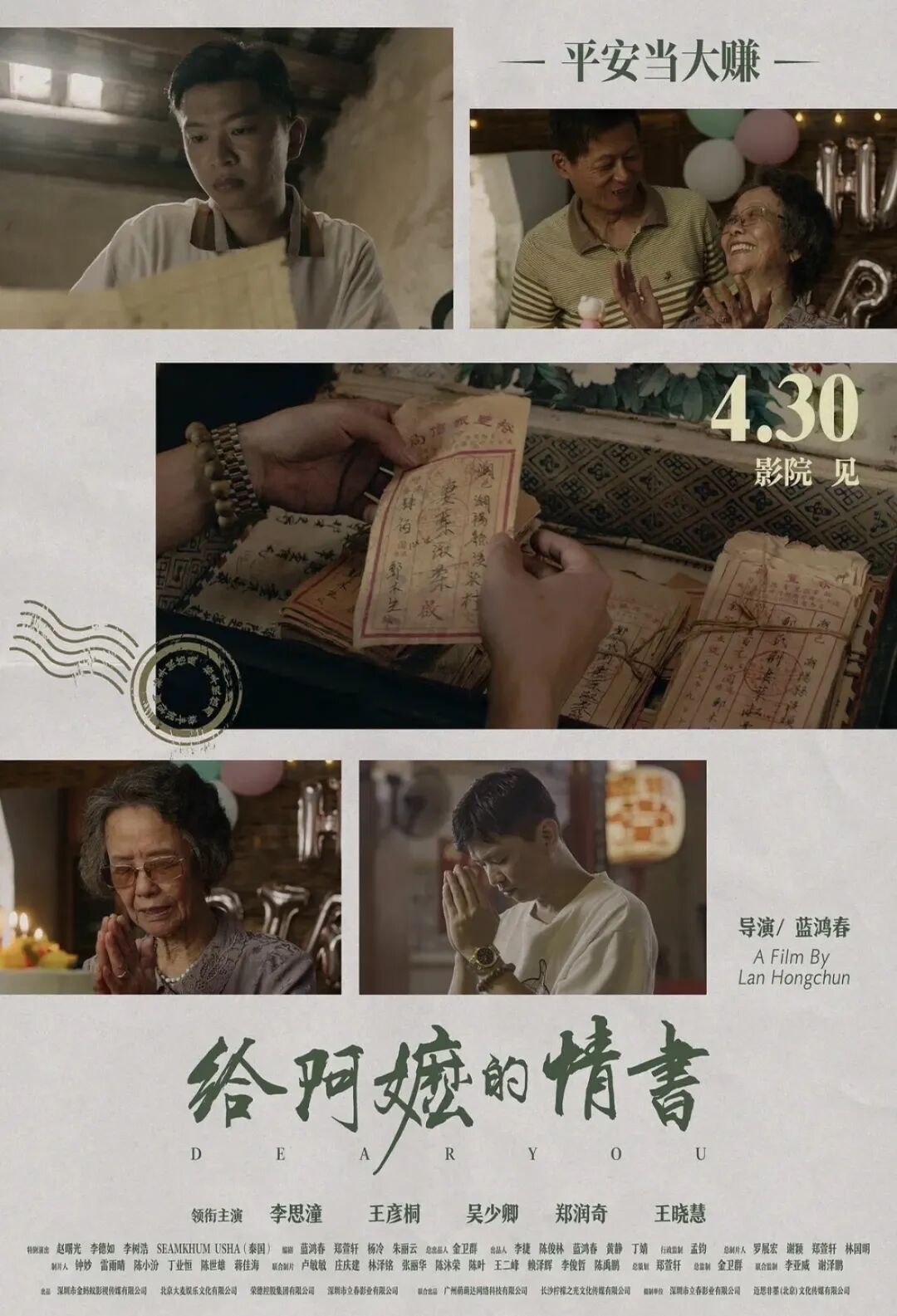
In such an era, the reason why Love Letters to Mammy can cause such a wide range of resonances is not because of how strong the drama conflicts it created, but because it makes the audience feel a long lost "emotional certainty" again.
It's a certainty about home.
A certainty about family.
A certainty that no matter how far you go, someone will be waiting for you to come home. And this is exactly one of the most profound spiritual structures of Chinese culture.
Chinese people's emotional expression is often not exposed, but very deep. It is not as passionate and direct as western expressions of emotion, but more like a slow flowing river. It may be silent, but it can last a lifetime.
This is why, "; Love Letter to Mammy"; will let many people read after a long time can not calm.
Because it touch, not only personal emotions, but also a collective cultural memory deep in the hearts of the Chinese people. It makes many people suddenly think of their grandparents and parents in the cinema, of their relatives who have not been in serious contact for a long time, and of family feelings that they did not understand when they were young but are becoming more and more clear.
And this, in fact, is the true meaning of the film.
Of course, film can be industry, it can be market, it can be entertainment. But the truly great film, in the end, should still return to the people themselves, to the feelings themselves, to the most authentic relationship between people and the world.
Many films today are more and more like "products", and "Love Letters to Mammy" still retains a kind of the work of the temperature. It does not make noise, but has the aftertaste; Don't deliberately sensational, but can make people quiet for a long time.
Real good films, in fact, are like old tea, not in the first strong, and slowly back in the sweet.
Perhaps the best part of Dear you is here. It does not rush to become an era of "explosive money", but may slowly become a lot of people reluctant to forget the memory of a film.
