"Cooperation and Exchange Symposium on the Intangible Cultural Heritage of the Bay Area"
Held at Hong Kong Central Art Space
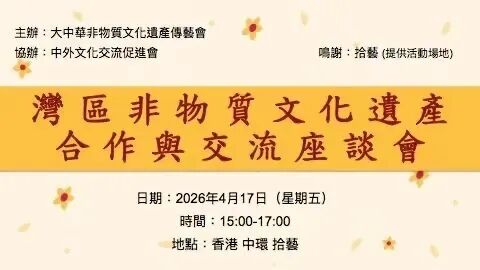
On the afternoon of April 17, 2026, the "Cooperation and Exchange Symposium on the Bay Area Intangible Cultural Heritage", hosted by the Greater China Intangible Cultural Heritage Council and co organized by the China Foreign Cultural Exchange Promotion Association, was held in Hong Kong's Central Huanyi Space. The symposium is one of the series of activities for cooperation and exchange of intangible heritage in the Guangdong Hong Kong Macao Greater Bay Area. It aims to build a dialogue bridge between inheritors of traditional crafts, design forces, university think tanks and market platforms, and provide ideas and mechanism exploration for creative transformation and collaborative development of regional intangible heritage resources.
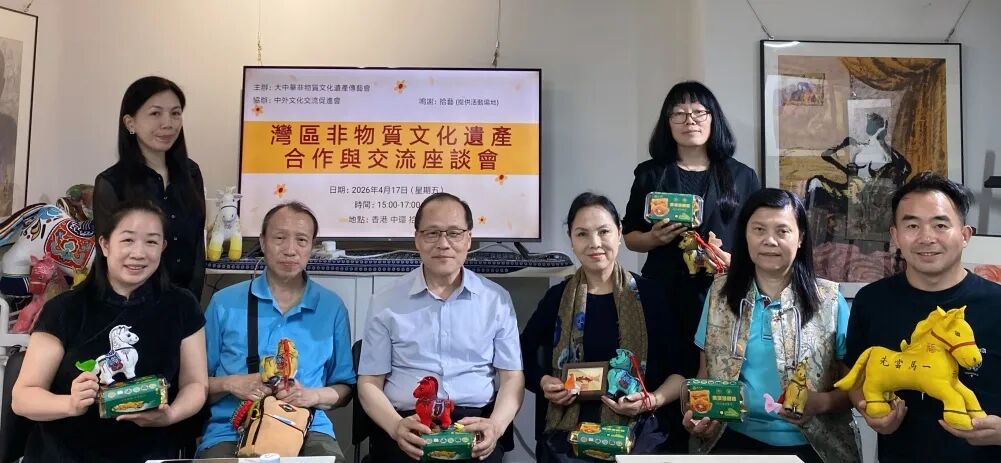
From the left: Mai Wansi, successor of Hong Kong intangible cultural heritage (turnkey), Liu Zhuolin, general manager of Art Space and chairman of China Foreign Cultural Exchange Promotion Association, Huang Dachong, senior successor of Hong Kong origami craft, Lu Yongsheng, chairman of Greater China Intangible Cultural Heritage Communication Association, chief chair of UNESCO World Traditional Handcraft Heritage and Innovation Chair, global chairman of International Organization of Civil Arts (IOV), professor Chen Ping, president of Institute of Cultural Heritage and Creative Industries of Jinan University, Li Ping, president of Shenzhen Dapeng Intangible Heritage Workshop, Zhang Changmei, representative successor of Shenzhen municipal intangible cultural heritage "Nan'ao Sea urchin Dumplings", Zhou Mingxiang, founder of Buluo Oriental Brand
The symposium was presided over by Lu Yongsheng, President of the Greater China Intangible Cultural Heritage Handover Association, Chief Chair of UNESCO Chair for World Traditional Handcraft Heritage and Innovation, Global Chair of International Organization of Civil Arts (IOV), Professor Chen Ping, President of Institute of Cultural Heritage and Creative Industries of Jinan University, Huang Dazhong, Hong Kong's senior inheritor of origami techniques, Zhang Changmei, representative inheritor of Shenzhen Municipal Intangible Heritage "Nan'ao urchins rice dumpling making techniques", Mai Wansi, successor of Hong Kong intangible heritage Huaniu (discounting), Zhou Mingxiang, founder of Buluo Oriental brand, Liu ZhuOLIN, general manager of Art Space, and Li Ping, manager of Shenzhen Dapeng Intangible Heritage Workshop.
Main speech: from "protection" to "enabling" to activate tradition by renewable design
At the forum, Chen Ping comprehensively elaborated on the topics of non genetic rejuvenation, cultural and creative industrialization docking market, bay area resource integration and international promotion, and combined with a large number of successful practice cases, sharing feasible development ideas and valuable experience. With the title of "Innovation and Renewable Design of Traditional Handcraft", she launched a systematic discussion from three sections: one is the value and challenge of traditional crafts, two is the path exploration of innovation and renewable design, and three is the practical possibility of community and cross cultural cooperation.
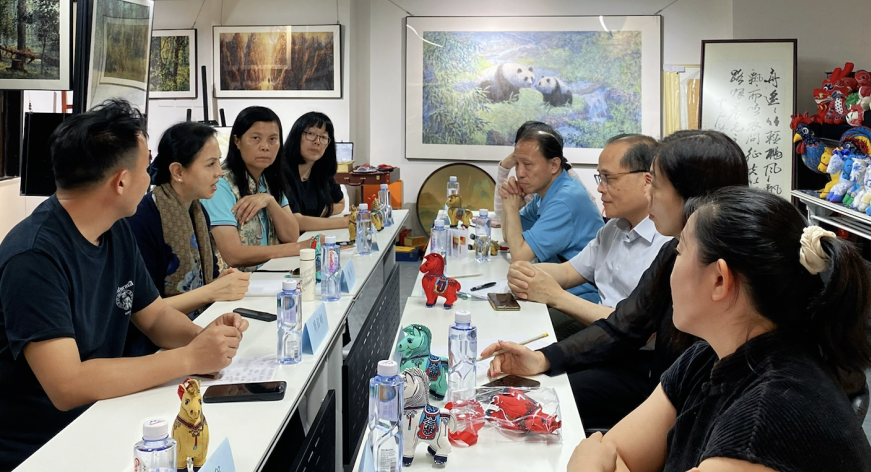
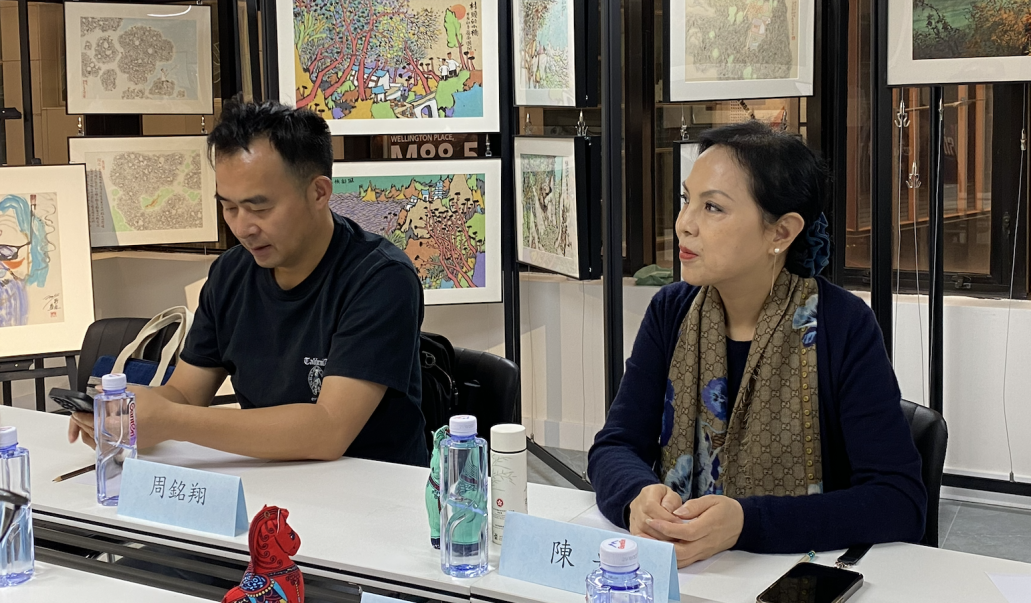
Professor Chen Ping launched a systematic discussion on the topic of "Innovation and Renewable Design of Traditional Handcraft"
Chen Ping pointed out that the concept of protection has shifted from emphasis on pure inter-bank transmission to community cooperation, multi participation and active utilization. Based on her own practical experience in successfully applying for UNESCO Chair of World Traditional Handcraft Heritage and Innovation, she proposed that traditional crafts should be turned from pure "protection" psychology to "creative transformation and innovative development". She introduced the concept of "renewable design", emphasizing that culture itself has the ability to renew itself and adapt to the context of the times. To truly survive, she says, craft must generate economic value and be integrated into contemporary life. Her transformation idea of "affordable, visible, accessible and usable" is to bring traditional skills out of museums and archives and back to daily scenes.
Mutual Communication: Successors and the Industry Search for the activation path
In the interaction and communication link, the attending inheritors and industry representatives shared the achievements and practical challenges in the process of technology inheritance and innovation development combined with their own experience.
Huang Da Chong shared the exploration of the transformation of origami technique from traditional craft to modern art expression, and discussed the possibility of origami entering the cross domain cooperation such as architecture education and natural education. Zhang Changmei, successor of Shenzhen municipal intangible heritage "Nan'ao sea urchins rice dumpling", and Li Ping, manager of Shenzhen Dapeng intangible heritage workshop, shared the practical experience of integrating community intangible heritage resources and building a comprehensive intangible heritage workshop integrating culture, tourism, research, experience, exhibition and cultural creation, which provided a useful reference for the industry. Based on Hong Kong's local practice, Mai Wansi, a successor of Hong Kong's intangible heritage Huaniu, shared her experience in the heritage and promotion of intangible heritage, enabling this "decoration on cheongsam" to find a new expression scene. From the perspective of brand operation, Zhou Mingxiang, the founder of Buluo Oriental brand, systematically elaborated the practical program of integrating various resources and promoting the transformation of contemporary innovation of intangible cultural heritage, and explored the business path of in-depth integration of traditional craft and contemporary lifestyle.
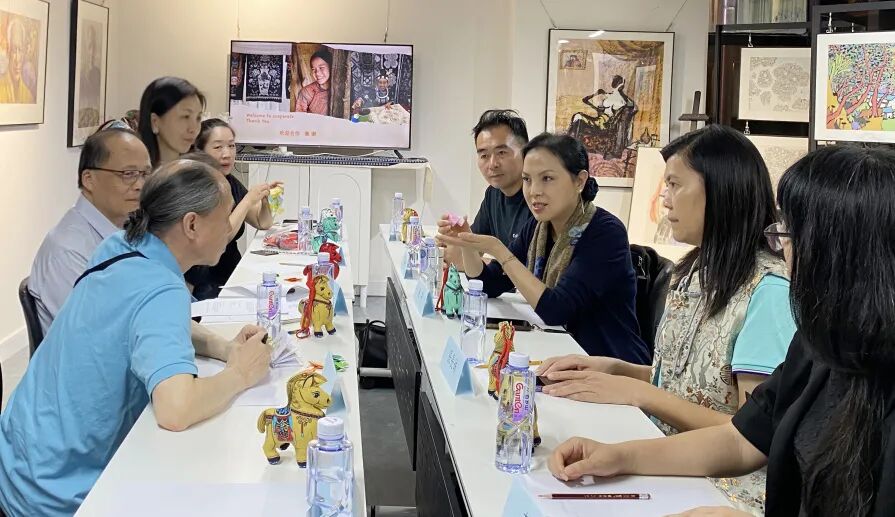
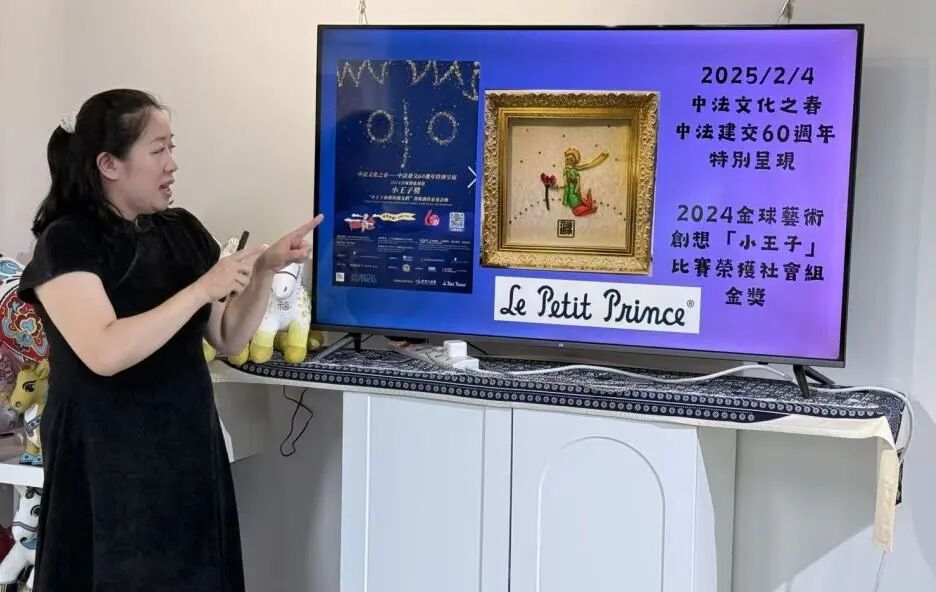
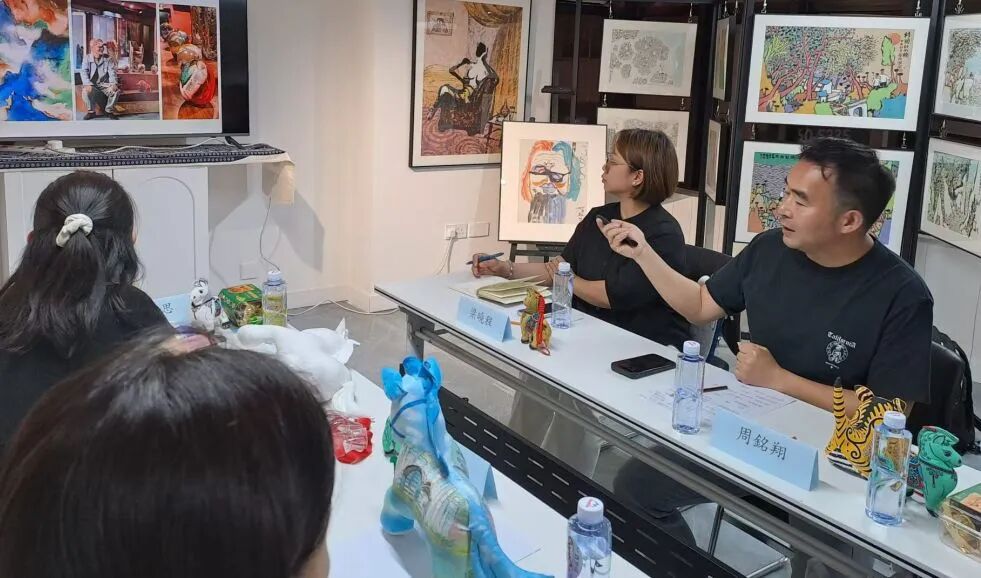
Sharing and communication with attendees
Chen Ping answered and discussed the topics shared by inheritors one by one. She said that the sustainable development of traditional crafts needs to build a systematic support system, including the cultivation of young inheritors, the intervention of design forces, the docking of market channels and the strengthening of public communication. Finally, Chen Ping also introduced the work mode of International Organization of Civil Arts (IOV) and the experience of relevant international activities. She pointed out that only by embedding traditional techniques into contemporary life scenes can the fundamental transformation from "protection" to "empowerment" be realized, and cultural heritage can continuously release cultural value and social influence in the course of live transmission.
Follow up direction: build a dialogue bridge and promote collaborative development
The forum was opened by Lu Yongsheng, President of the Greater China Intangible Cultural Heritage Council. He took the lead in introducing the current situation of intangible heritage development in Hong Kong and briefly describing the general situation of intangible heritage in Macao and the Mainland. General Manager of Art Space and Chairman of China Foreign Cultural Exchange Promotion Association Liu Zhuolin made the final concluding remarks.
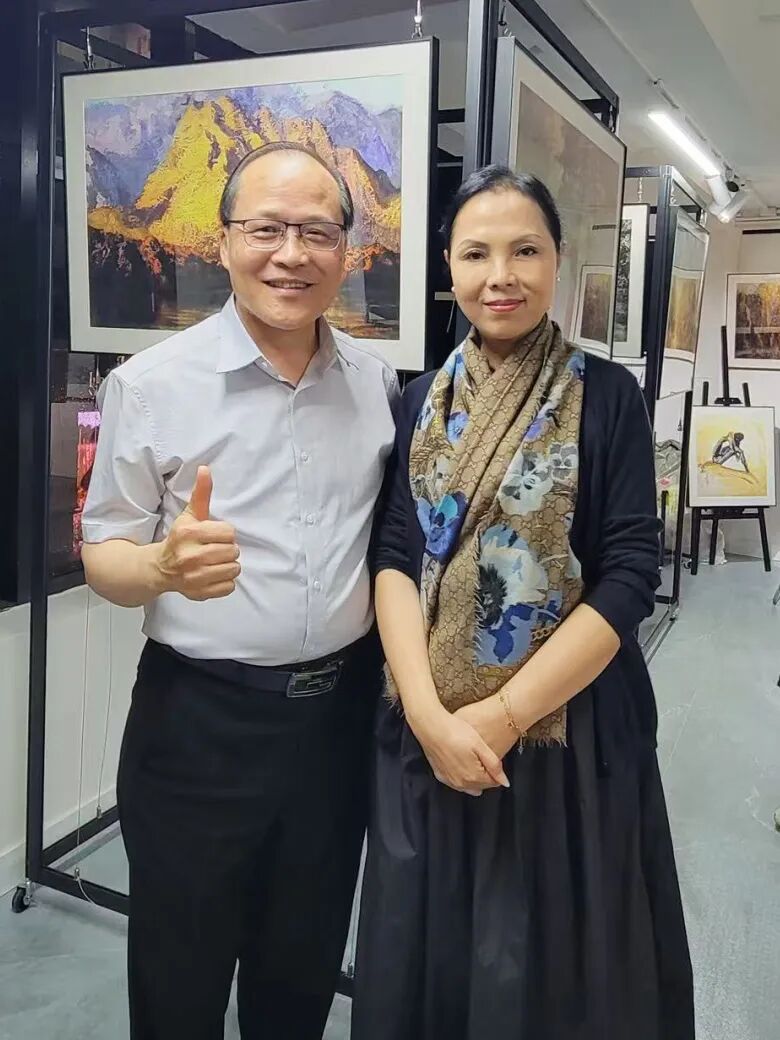
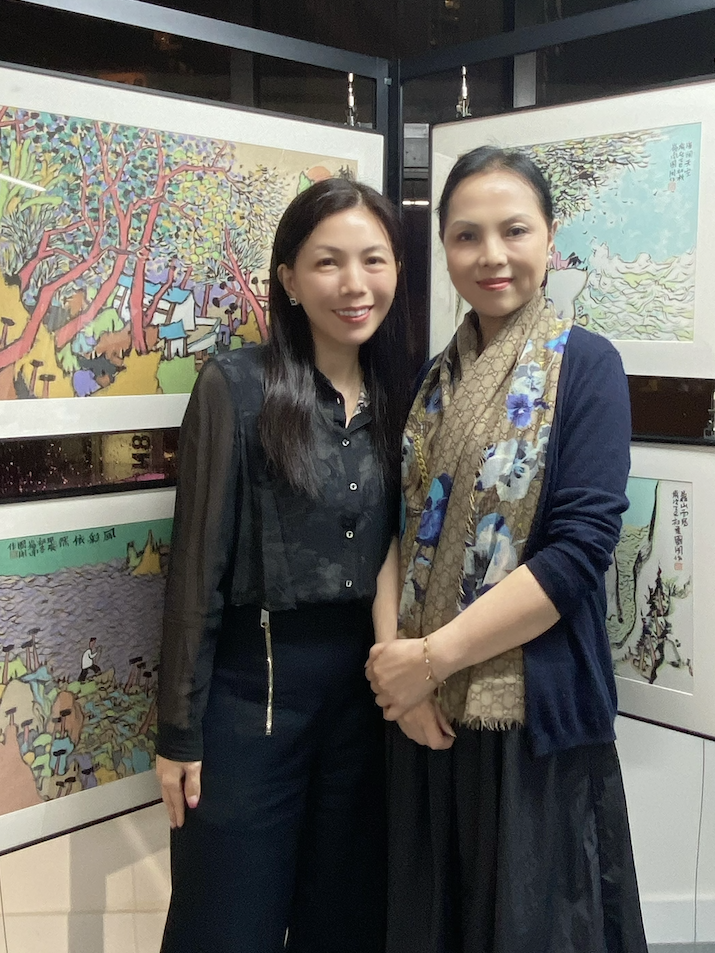
Left: Lu Yongsheng and Chen Ping, President of the China Council for the Promotion of Intangible Cultural Heritage Right: Liu Zhuolin and Chen Ping, General Manager of Art Space and President of China Foreign Cultural Exchange Association
The participants discussed the resources integration, successor cooperation mechanism, design transformation path and international communication strategy of Guangdong, Hong Kong and Macao traditional crafts. It is believed that the Guangdong Hong Kong Macao Greater Bay Area has a rich and unique pedigree of intangible heritage resources. The key to the protection and development of intangible heritage in the Bay Area lies in the establishment of a standardized cross regional exchange platform and the promotion of effective docking among inheritors, designers, research institutions and market channels.
Relying on the UNESCO Chair Platform and the international network of the International Organization of Civil Arts (IOV), the Research Institute will promote the inter regional exchanges and international dissemination of the Bay Area's cultural heritage, and continue to interface around specific project directions to form an operable transformation path and cooperation program.