

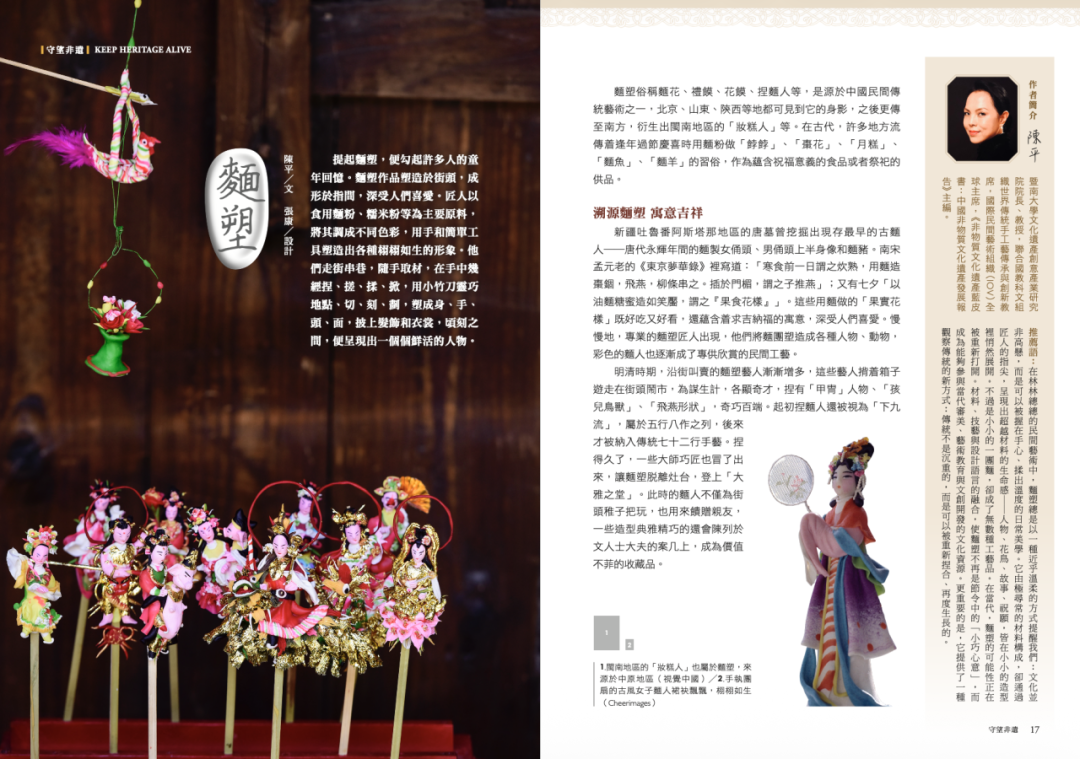
Intangible Cultural Heritage I Face Sculpture

Author Chen Ping
Global President of the International Organization of Folk Arts (IOV), Chief Chair of the UNESCO Chair on the Inheritance and Innovation of Traditional Handicrafts, Dean of the Institute of Cultural Heritage and Creative Industries at Jinan University, and Professor. Editor in Chief of the Blue Book of Intangible Cultural Heritage: Report on the Development of China's Intangible Cultural Heritage.
Among various folk arts, dough sculpture always reminds us in an almost gentle way that culture is not hanging high, but a daily aesthetic that can be held in the palm of the hand and kneaded to create warmth. It is made of extremely ordinary materials, but through the fingertips of craftsmen, it presents a sense of life beyond materials - characters, flowers and birds, stories, and wishes, all quietly unfolding in small shapes. It's just a small ball of dough, but it has become countless handicrafts. In contemporary times, the possibility of dough sculpture is being reopened. The integration of materials, techniques, and design language has made dough sculpture no longer a "small and delicate heart" in festivals, but a cultural resource that can participate in contemporary aesthetics, art education, and cultural and creative development. More importantly, it provides a new way of observing tradition: tradition is not heavy, but can be kneaded and grown again.
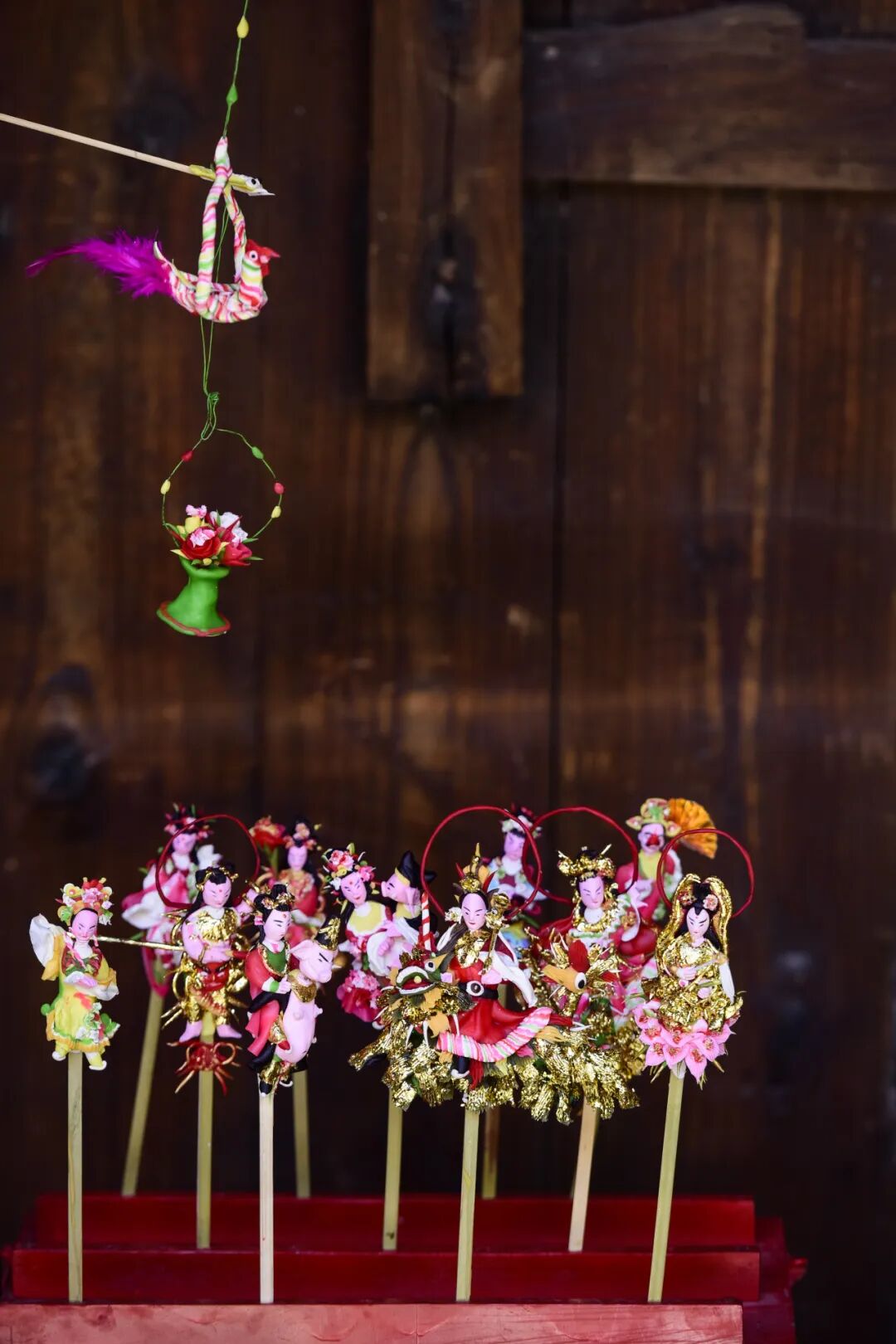
The "makeup cake man" in the Minnan region also belongs to dough sculpture, originating from the Central Plains region (Visual China)
When it comes to dough sculpture, it brings back many people's childhood memories. The dough sculpture works are shaped on the streets and formed between the fingers, and are deeply loved by people. The craftsmen use food flour, glutinous rice flour, etc. as the main raw materials, mix them into different colors, and use hands and simple tools to create a variety of lifelike images. They walked through the streets and alleys, picking materials at will, pinching, rubbing, and lifting them in their hands, skillfully cutting, carving, and scratching them with small bamboo knives to shape their bodies, hands, heads, and faces. They put on hair accessories and clothes, and in an instant, they presented vivid characters one by one.
Noodle sculpture, commonly known as "Mianhua", "Li Mo", "Hua Mo", "Nie Mian Ren", etc., originated from one of the traditional folk arts in China. Its presence can be seen in Beijing, Shandong, Shaanxi and other places, and later spread to the south, giving rise to the "makeup cake man" in the southern Fujian region. In ancient times, there was a custom in many places to use flour to make "cakes", "date flowers", "moon cakes", "noodle fish", and "noodle sheep" during festivals and celebrations, as food or offerings with blessing meanings.
Face Sculpture | auspicious meaning
The Tang tombs in the Astana area of Turpan, Xinjiang, have excavated the earliest surviving ancient dough figures - female and male figurine heads made of dough from the Yonghui period of the Tang Dynasty, as well as upper body portraits of faced pigs. In the "Dream of Splendor in the Eastern Capital" written by the elder Meng of the Southern Song Dynasty, it is written: "The day before the cold meal, it is said to be cooked, and dates are made with flour, flying swallows are made, and willow branches are strung together. When inserted into the lintel of the door, it is called the son pushing swallows; There is also Qixi Festival, "which is made of oil surface molasses, like a smile, called" fruit eating patterns ". These "fruit patterns" made with noodles are not only delicious and beautiful, but also contain the meaning of seeking blessings from the people, and are deeply loved by them. Slowly, professional dough sculptors emerged, shaping dough into various characters and animals, and colorful dough figurines gradually became a folk craft exclusively for appreciation.
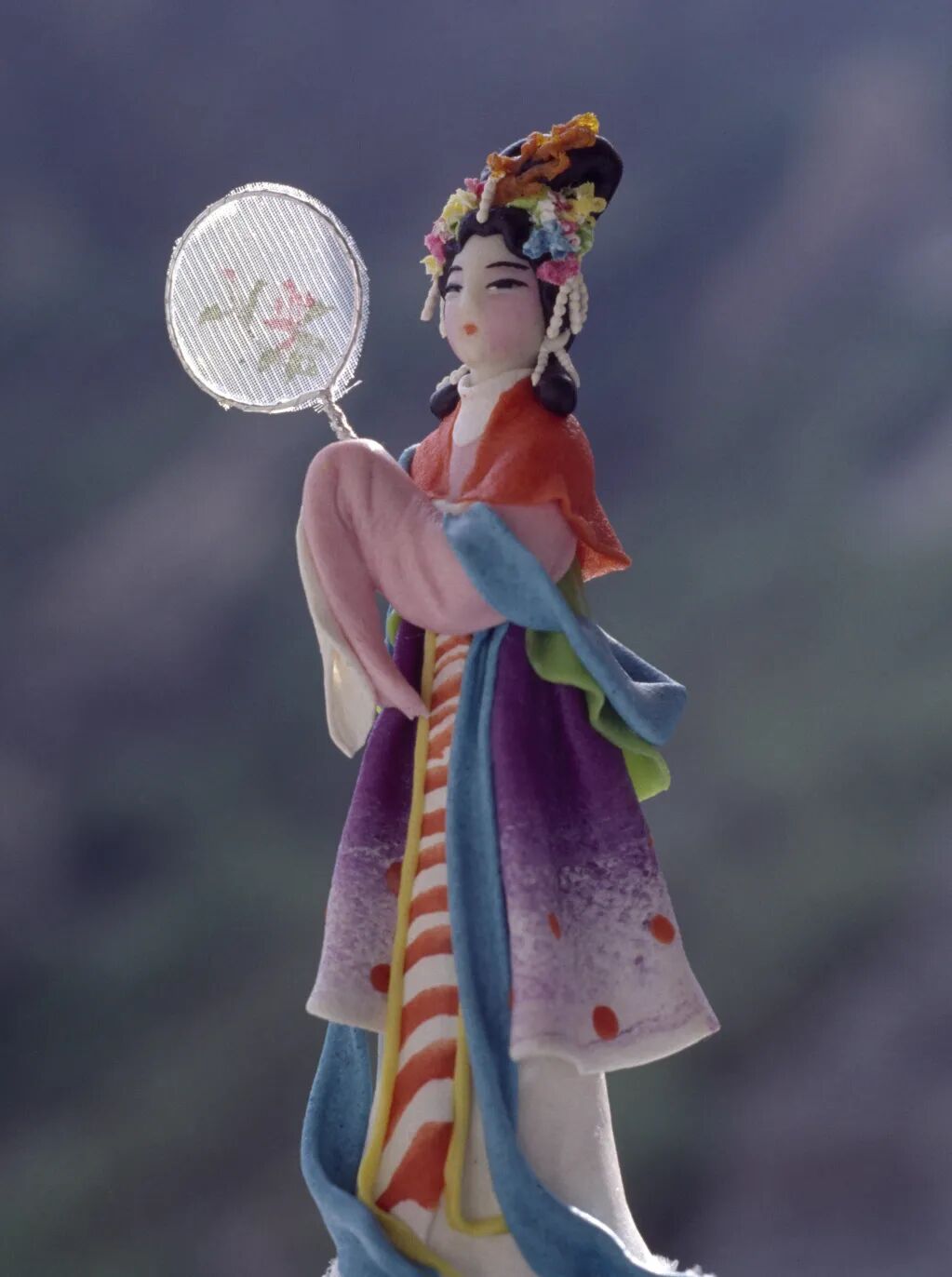
The ancient style woman holding a round fan has a flowing and lifelike skirt (Cheerigages)
During the Ming and Qing dynasties, there was a gradual increase in the number of dough sculpture artists selling on the streets. These artists carried boxes and wandered around the bustling streets, showcasing their talents to make a living. They created characters such as "armor", "child birds and beasts", and "flying swallow shapes" with various ingenious techniques. At first, dough figurines were considered to be of the "lower ninth class" and belonged to the category of the Five Elements and Eight Crafts. Later, they were incorporated into the traditional Seventy Two Elements craft. After kneading for a long time, some master craftsmen also emerged, allowing the dough sculpture to detach from the stove and ascend to the "Hall of Elegance". At this time, the dough figurines were not only used by street children to play with, but also as gifts for friends and family. Some elegant and exquisite designs were displayed on the desks of literati and doctors, becoming valuable collectibles.
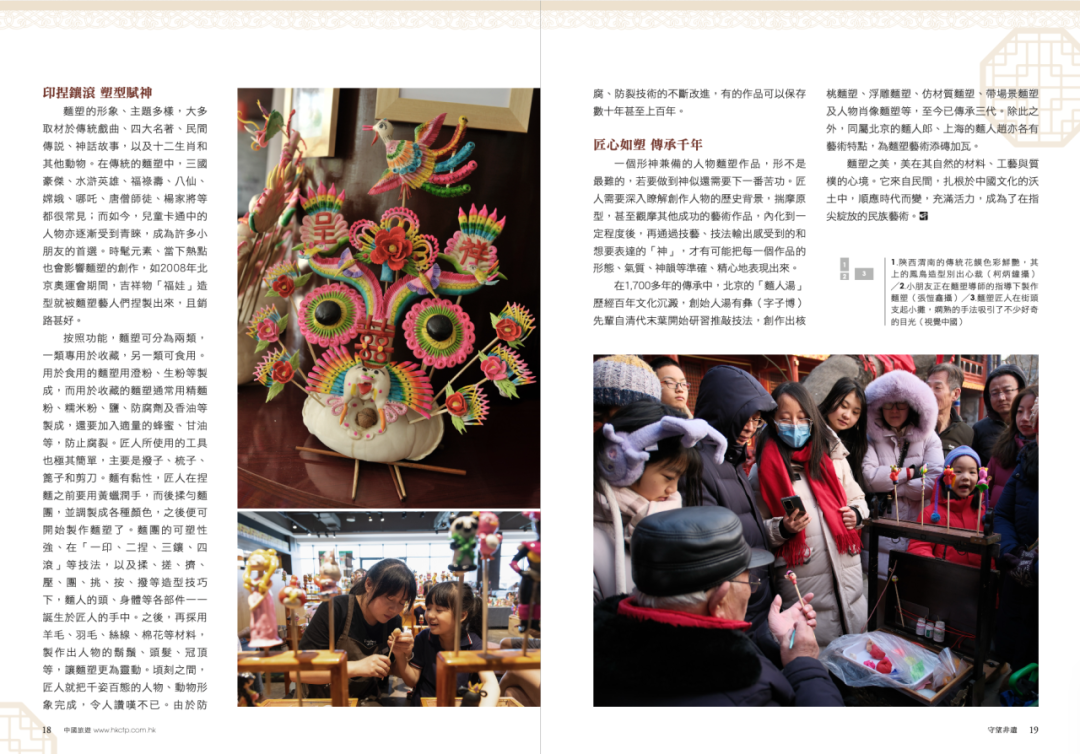
The images and themes of dough sculptures are diverse, mostly based on traditional Chinese opera, the Four Great Classical Novels, folklore, mythological stories, as well as the twelve zodiac animals and other animals. In traditional dough sculptures, heroes of the Three Kingdoms, Water Margin heroes, Fu Lushou, the Eight Immortals, Chang'e, Nezha, Tang Monk's disciples, Yang family generals, etc. are all very common; Nowadays, characters in children's cartoons are gradually gaining popularity and becoming the first choice for many children. Fashionable elements and current hot topics can also affect the creation of dough sculptures. For example, during the 2008 Beijing Olympics, the mascot "Fuwa" was molded by dough sculpture artists and sold well.
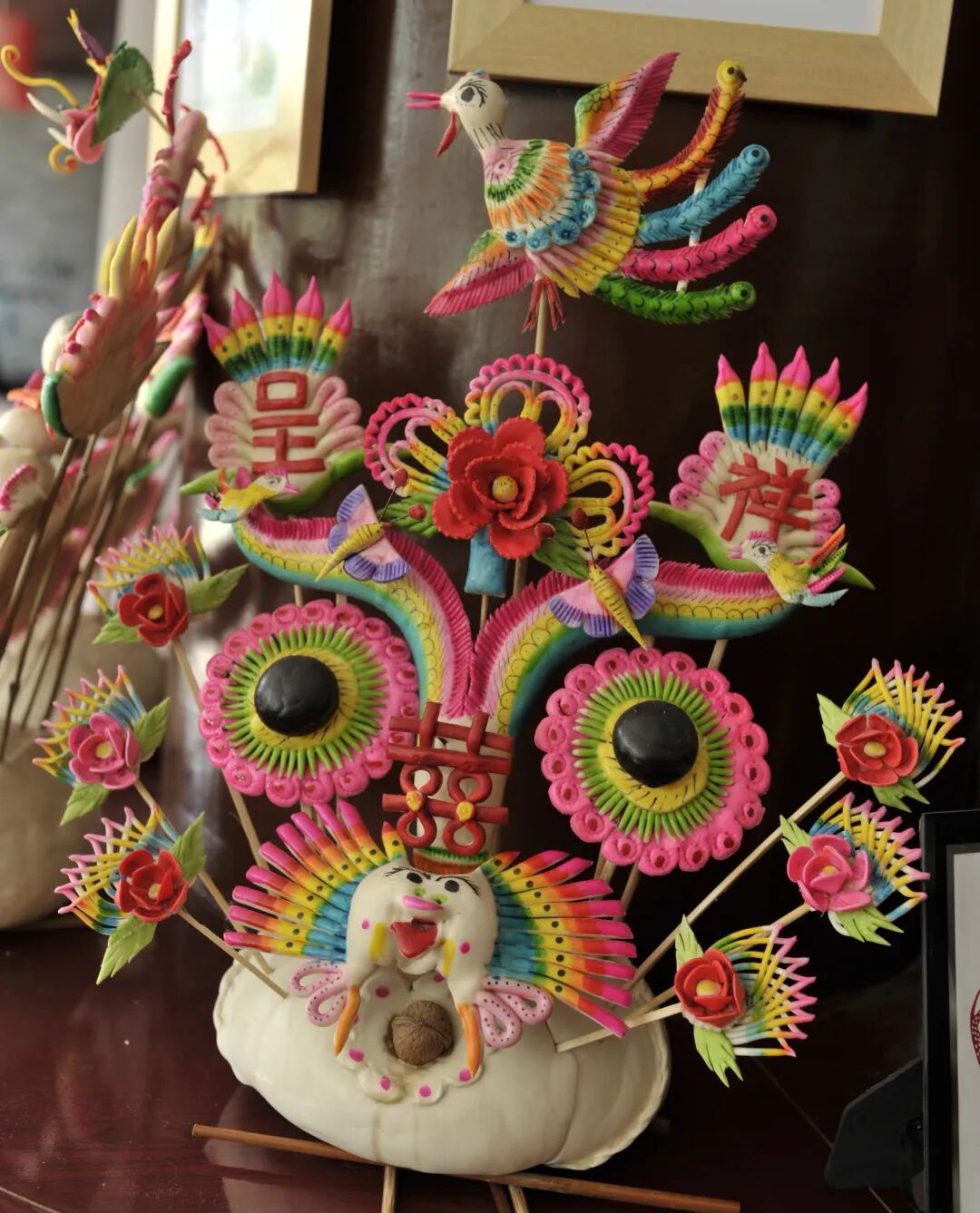
The traditional flower bread in Weinan, Shaanxi is brightly colored, and the phoenix shaped on it is creatively designed (photo by Ke Bingzhong)
According to their functions, dough sculptures can be divided into two categories: one is specifically designed for collection, and the other is edible. The dough sculptures used for food are made of clarified flour, raw flour, etc., while the dough sculptures used for collection are usually made of refined flour, glutinous rice flour, salt, preservatives, sesame oil, etc., and a proper amount of honey, glycerin, etc. are added to prevent them from cracking. The tools used by craftsmen are also extremely simple, mainly consisting of picks, combs, grates, and scissors. Noodles have stickiness, and craftsmen need to moisten their hands with yellow wax before kneading them. Then, they knead the dough evenly and mix it into various colors before starting to make dough sculptures. The dough has strong plasticity, and through techniques such as "one printing, two kneading, three inlaying, and four rolling", as well as shaping techniques such as kneading, rolling, squeezing, pressing, rolling, picking, pressing, and plucking, the head, body, and other components of the dough maker are born one by one in the hands of the craftsman. Afterwards, materials such as wool, feathers, silk thread, cotton, etc. are used to create the character's beard, hair, crown, etc., making the dough sculpture more dynamic. In an instant, the craftsmen completed a variety of characters and animal images, leaving people in awe. Due to the continuous improvement of anti-corrosion and crack prevention technologies, some works can be preserved for decades or even hundreds of years.
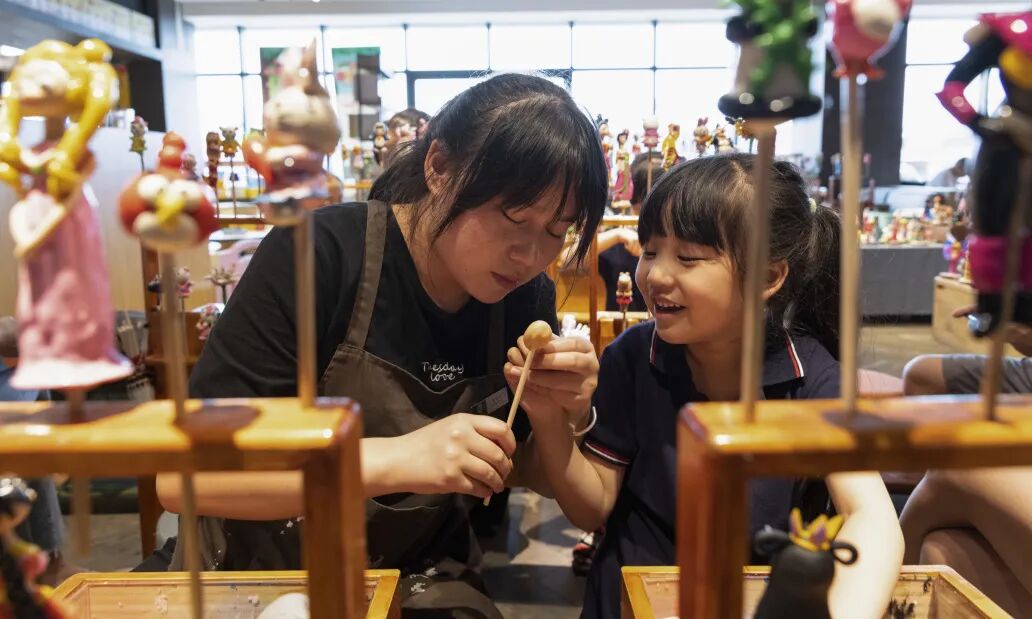
Children are making dough sculptures under the guidance of their dough sculpture instructor (photo by Zhang Kaixin)
A character face sculpture that combines both form and spirit is not the most difficult, and achieving a lifelike appearance requires further hard work. Craftsmen need to have a deep understanding of the historical background of the creative characters, speculate on prototypes, and even observe other successful works of art. After internalizing to a certain extent, they can then output the "spirit" they feel and want to express through skills and techniques, in order to accurately and carefully express the form, atmosphere, charm, and other aspects of each work.
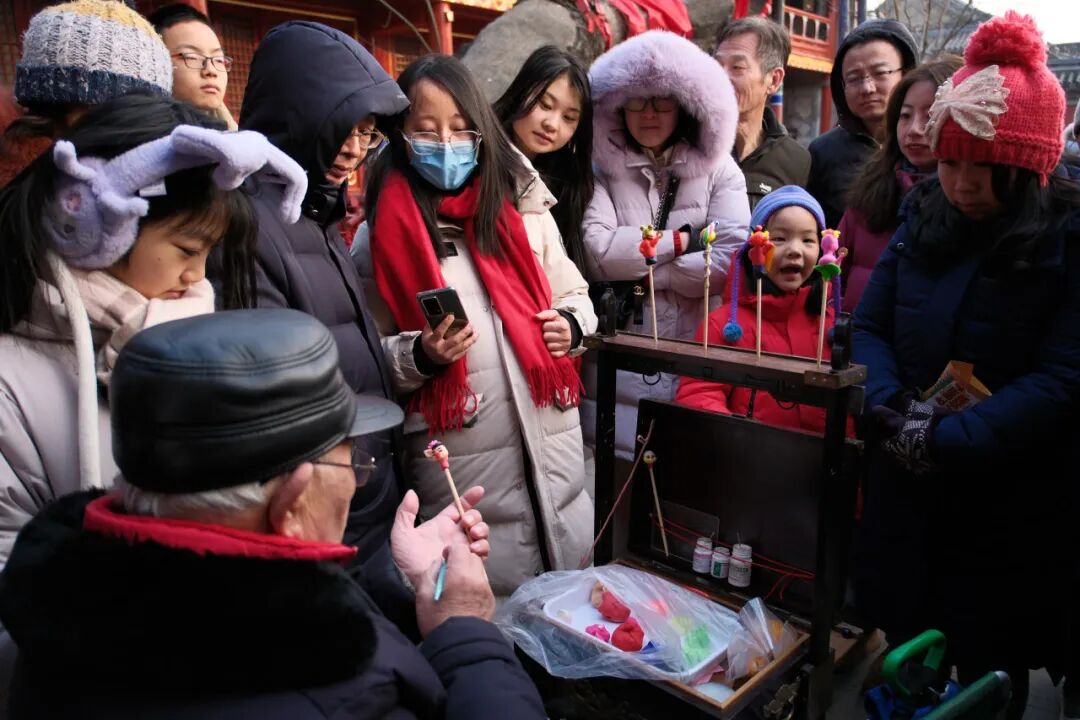
The dough sculptors set up small stalls on the streets, and their skilled techniques attracted many curious gazes (Visual China)
Over the course of more than 1700 years of inheritance, Beijing's "Mianren Tang" has undergone a hundred years of cultural precipitation. Its founder, Tang Youyi (styled Zibo), began studying and refining techniques since the late Qing Dynasty, creating walnut dough sculptures, relief dough sculptures, imitation material dough sculptures, scene dough sculptures, and portrait dough sculptures. It has been passed down for three generations to this day. In addition, both the noodle man Lang from Beijing and the noodle man Zhao from Shanghai have their own artistic characteristics, contributing to the art of noodle sculpture.
The beauty of dough sculpture lies in its natural materials, craftsmanship, and simple state of mind. It comes from the folk, rooted in the fertile soil of Chinese culture, adapts to the times, is full of vitality, and has become a national art that blooms at the fingertips.
(This article was published in the 12th issue of China Tourism magazine in Hong Kong in 2025)
《China Tourism》Magazine
Thank you to China Tourism Magazine, a light book, for traveling with you through the north and south of the country, and exploring all over the world. The Hong Kong China Tourism Publishing House was established in 1980 and launched the monthly magazine "China Tourism" in July of the same year. With wonderful pictures and vivid articles, it deeply reports on the beautiful scenery, geographical features, folk customs, historical sites, cultural arts, etc. of mainland China, and is deeply loved by tourists and photography enthusiasts. China Tourism has been excavating and reporting on many little-known scenic spots and customs for many years. In the future, we will continue to lead readers to witness the ever-changing landscape of China and fully appreciate its beautiful rivers and mountains.
