

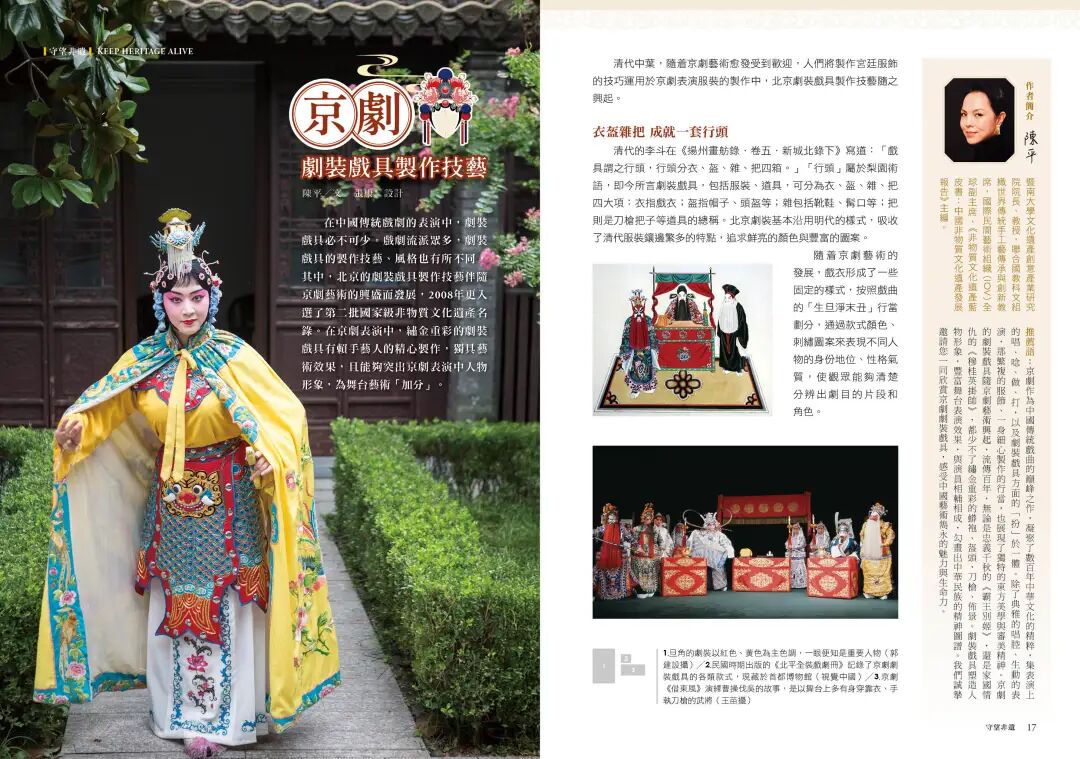
Intangible Cultural Heritage
Beijing Opera Costume and Equipment Production Techniques
Special Column
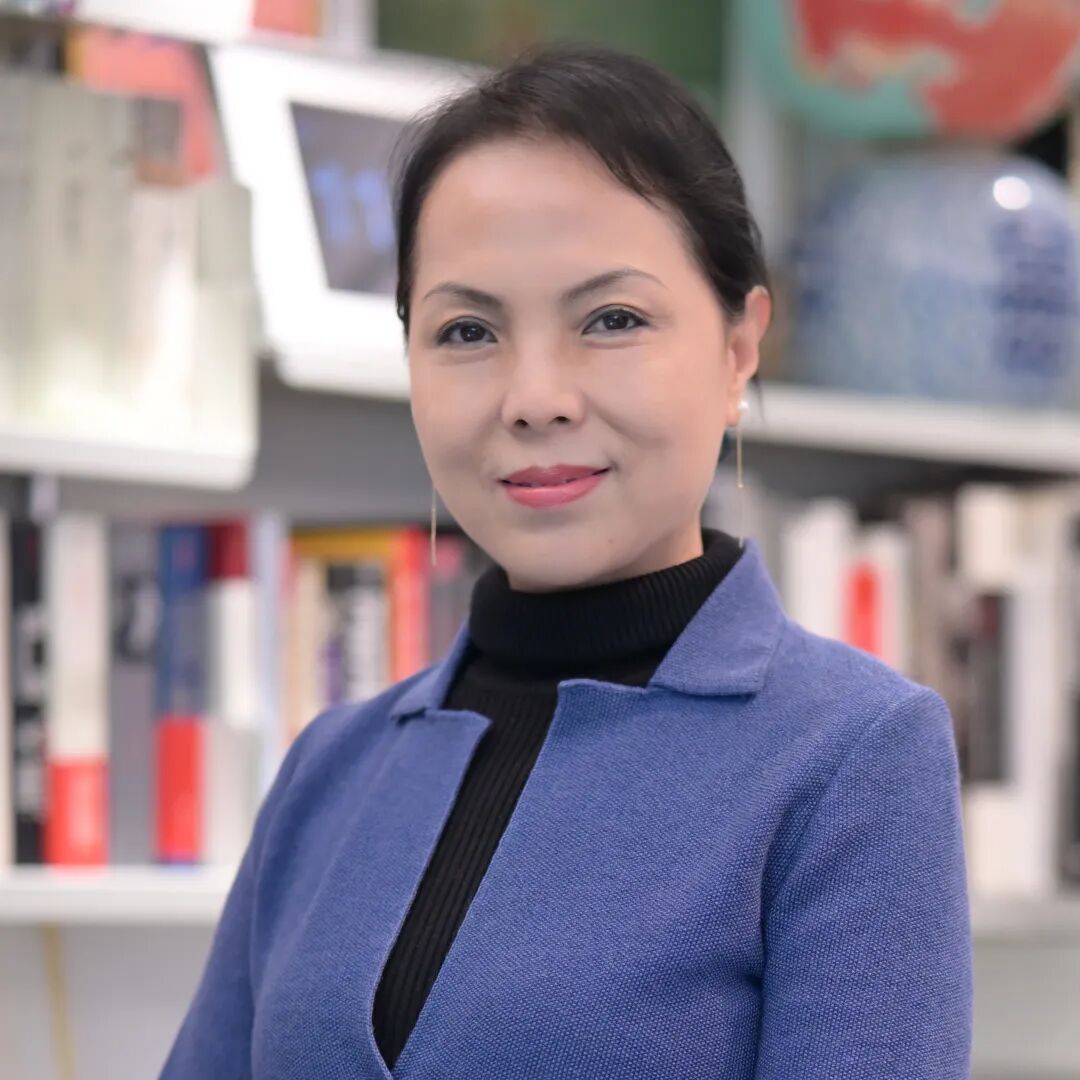
Author Chen Ping
Dean and Professor of the Institute of Cultural Heritage and Creative Industries at Jinan University, Chief Chair of World Traditional Handicraft Inheritance and Innovation at UNESCO, Global President of the International Organization of Folk Arts (IOV), and Editor in Chief of the "Blue Book of Intangible Cultural Heritage: Report on the Development of China's Intangible Cultural Heritage".
Recommendation: As the pinnacle of traditional Chinese opera, Peking Opera embodies the essence of hundreds of years of Chinese culture, combining singing, recitation, acting, and percussion in performance, as well as costumes and equipment in the play. In addition to elegant singing style and vivid performances, the intricate costumes and carefully crafted attire also showcase unique Eastern aesthetics and aesthetic spirit. The costumes and equipment of Peking Opera have risen with the art of Peking Opera and have been passed down for a hundred years. Whether it is the loyal and righteous "Farewell My Concubine" or the patriotic "Mu Guiying Takes Command", they all have embroidered golden python robes, helmets, knives, guns, and scenery. Costumes and equipment shape character images, enrich stage performance effects, complement actors, and outline the spiritual map of the Chinese nation. We sincerely invite you to appreciate the costumes and equipment of Peking Opera together, and feel the timeless charm and vitality of Chinese art.
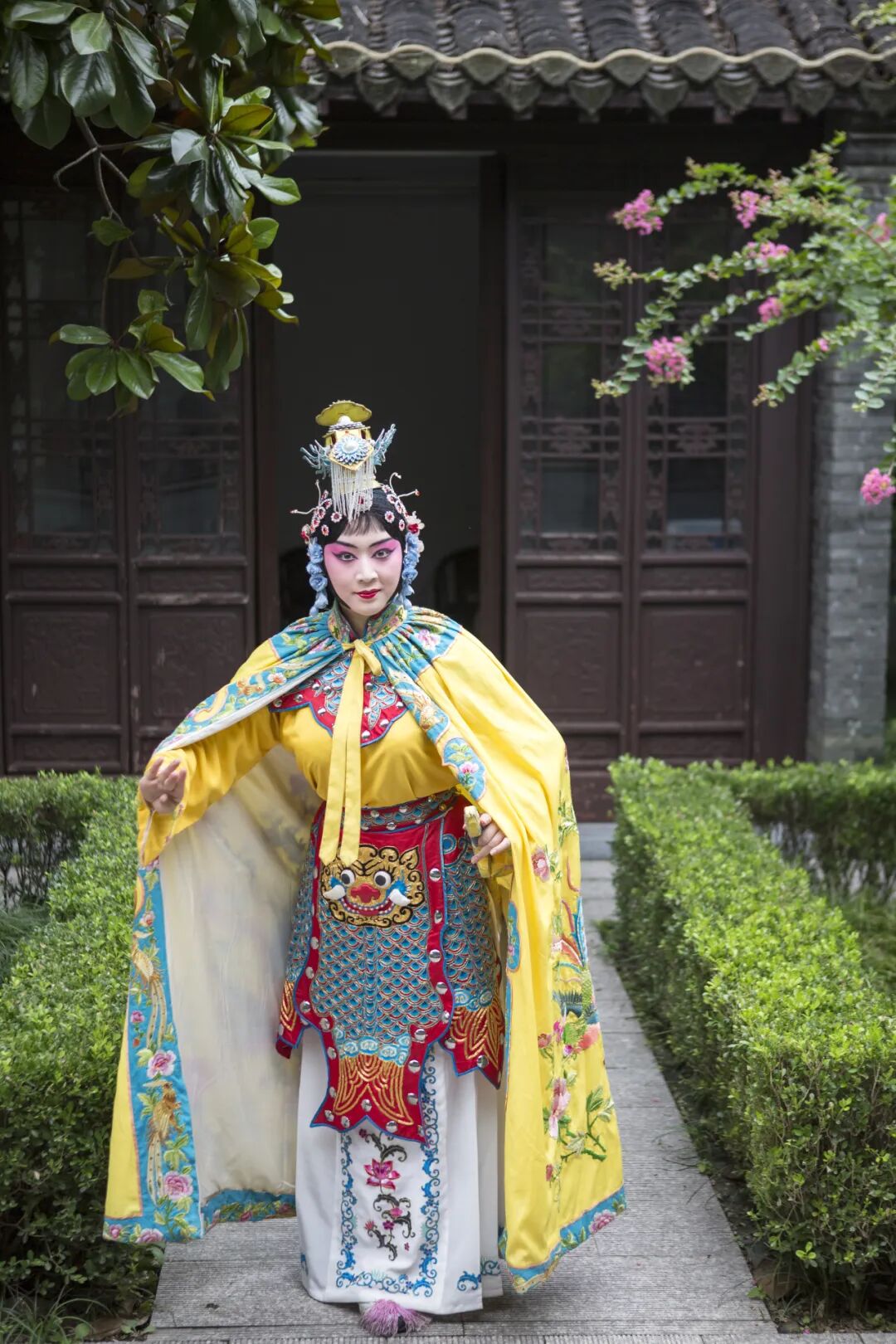
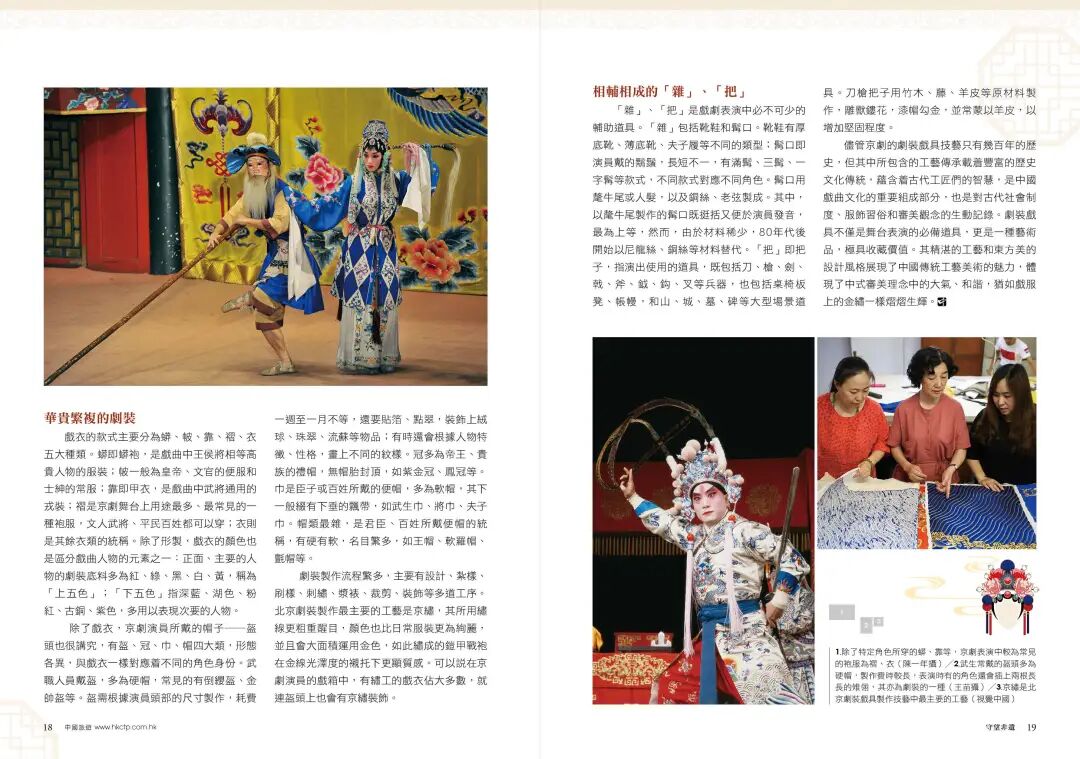
The costumes of Dan roles are mainly in red and yellow tones, indicating that they are important characters at a glance (photographed by Guo Jianshe)
In the performance of traditional Chinese drama, costumes and equipment are essential. There are many schools of drama, and the production techniques and styles of theatrical costumes and props are also different. Among them, the production techniques of theatrical costumes and props in Beijing have developed with the prosperity of Peking Opera art, and in 2008, they were selected for the second batch of national intangible cultural heritage list. In the performance of Peking Opera, the embroidered golden and colorful costumes are carefully crafted by skilled performers, with unique artistic effects, and can highlight the character images in Peking Opera performance, adding points to the stage art.
In the mid Qing Dynasty, with the increasing popularity of Peking Opera art, people applied the techniques of making palace costumes to the production of Peking Opera performance costumes, and the skills of making Beijing opera costumes and props rose accordingly.
In the Qing Dynasty, Li Dou wrote in his book "Yangzhou Painting Boat Record, Volume 5, New City North Record": "The theatrical equipment is called the costume, and the costume is divided into four boxes: clothing, helmet, miscellaneous, and handle." "The costume" belongs to the terminology of pear gardens, which includes costumes and props, and can be divided into four categories: clothing, helmet, miscellaneous, and handle: clothing refers to the theatrical costume; Helmet refers to a hat, helmet, etc; Miscellaneous items include boots, shoes, beard, etc; Ba is a general term for props such as knives, guns, handles, etc. Beijing opera costumes basically follow the style of the Ming Dynasty, absorbing the characteristics of the Qing Dynasty's clothing with numerous borders, pursuing bright colors and rich patterns.
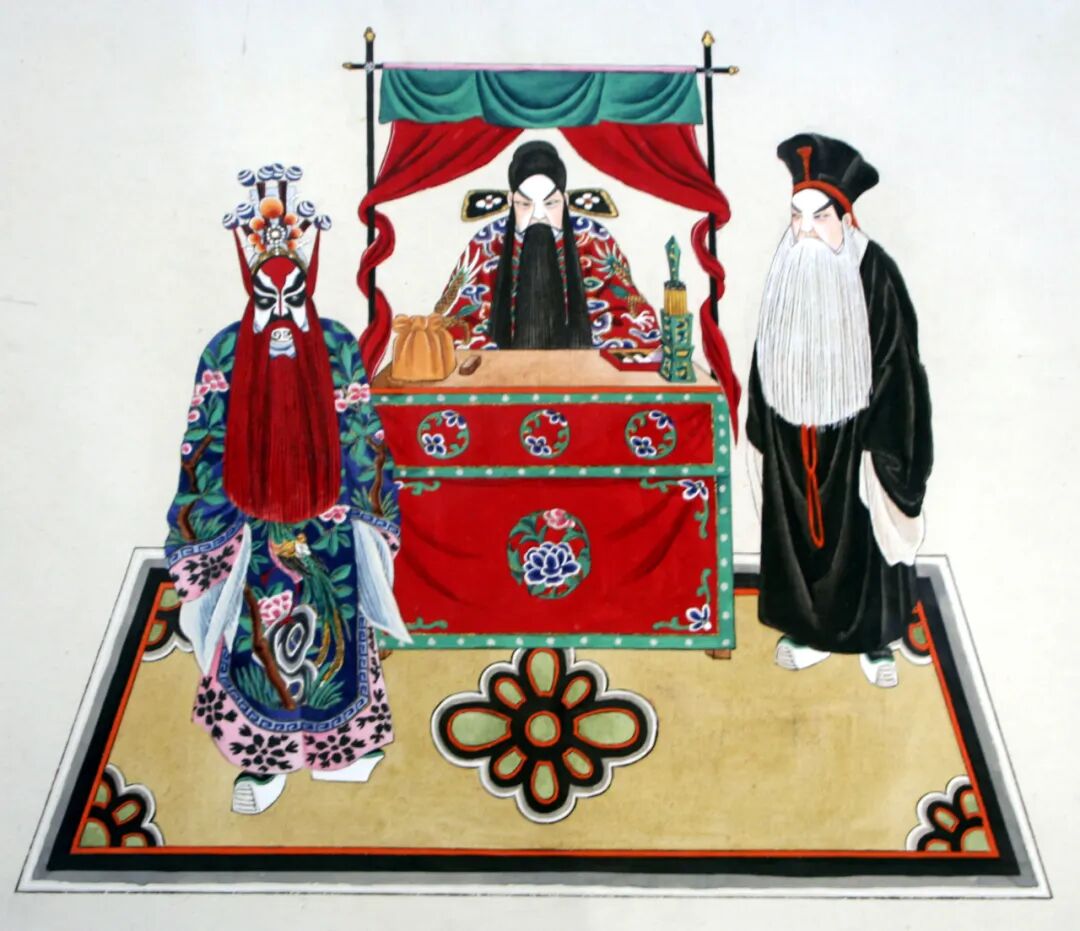
The "Beiping Complete Costume Drama Book" published during the Republic of China period records various styles of costumes and props for Peking Opera, which are now housed in the Capital Museum (Visual China)
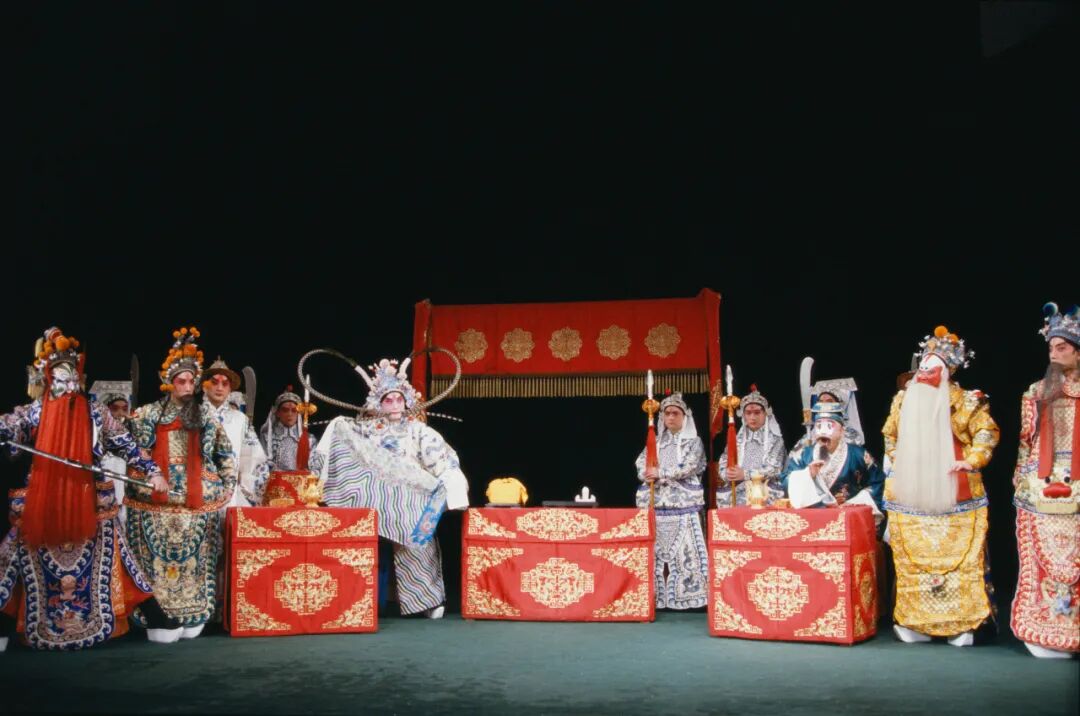
The Beijing Opera "Borrowing the East Wind" is based on "Romance of the Three Kingdoms" and features many military commanders dressed in padded clothes and holding knives and guns on stage (photographed by Wang Miao)
With the development of Peking Opera art, fixed styles of costumes have been formed, which are divided according to the roles of "sheng dan jing mo chou" in traditional Chinese opera. Different characters' identities, statuses, personalities, and temperaments are expressed through style, color, and embroidery patterns, allowing the audience to clearly distinguish between segments and characters of the play.
The styles of theatrical costumes are mainly divided into five categories: python, gong, leaning, folding, and clothing. The python, also known as the python robe, is a costume worn by nobles and other noble figures in traditional Chinese opera; Generally, it refers to the casual attire of the emperor, civil officials, and the common attire of the gentry; Relying on armor is a common military attire used by generals in traditional Chinese opera; Folding is the most commonly used and common type of robe on the Beijing Opera stage, which can be worn by literati, generals, and ordinary people; Clothing is a general term for other types of clothing. In addition to the form, the color of the costumes is also one of the elements that distinguish the characters in traditional Chinese opera: the main characters' costumes on the front are mostly made of red, green, black, white, and yellow, known as the "upper five colors"; The "lower five colors" refer to deep blue, lake color, pink, bronze, and purple, often used to depict secondary characters.
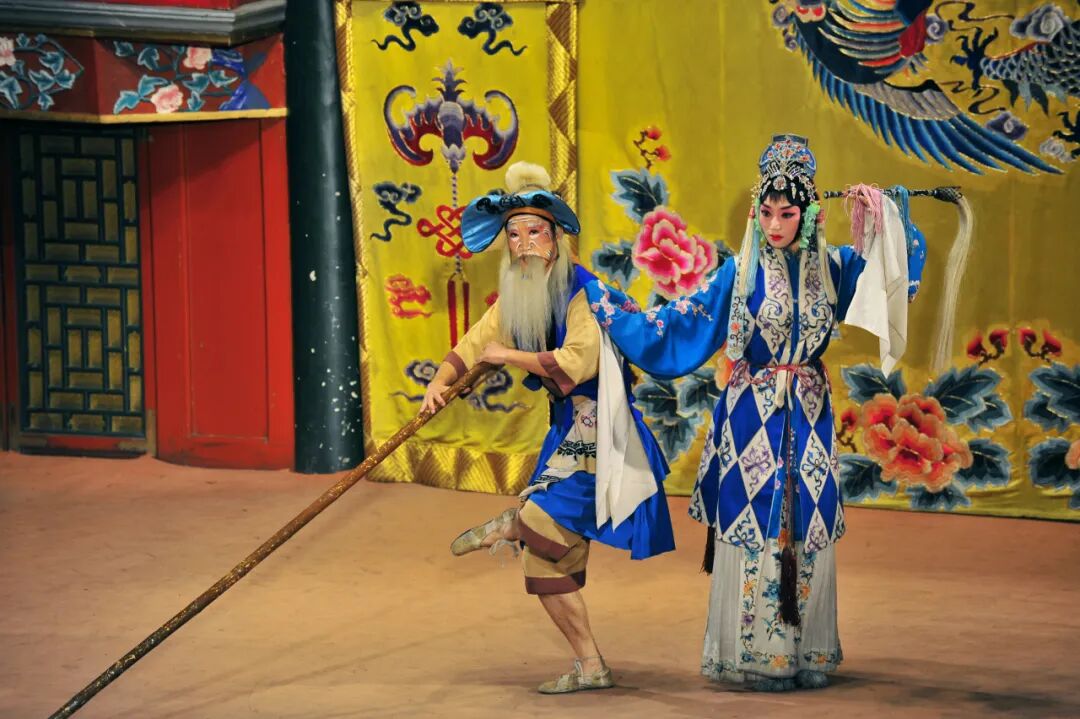
In addition to the pythons and armbands worn by specific characters, the most common costumes in Peking Opera performances are pleated and draped (photographed by Chen Yinian)
In addition to costumes, the hats worn by Peking Opera actors - helmets - are also very particular, with four categories: helmets, crowns, scarves, and hats, each with different shapes and corresponding to different character identities, just like costumes. Military personnel wear helmets, mostly hard hats, such as inverted tassels and golden helmets. The helmet needs to be made according to the size of the actor's head, taking about a week to a month. It also needs to be covered with foil, embellished with jade, and decorated with objects such as fluffy balls, pearls, tassels, etc; Sometimes different patterns are drawn based on the characteristics and personalities of the characters. Crowns are mostly top hats worn by emperors and nobles, with no capped caps, such as purple gold crowns, phoenix crowns, etc. A handkerchief is a soft hat worn by officials or common people, usually adorned with hanging ribbons, such as a warrior's handkerchief, a general's handkerchief, or a teacher's handkerchief. Hats are the most diverse, referring to the various types of hats worn by monarchs, officials, and common people. There are hard and soft hats with various names, such as king hats, soft hats, felt hats, etc.
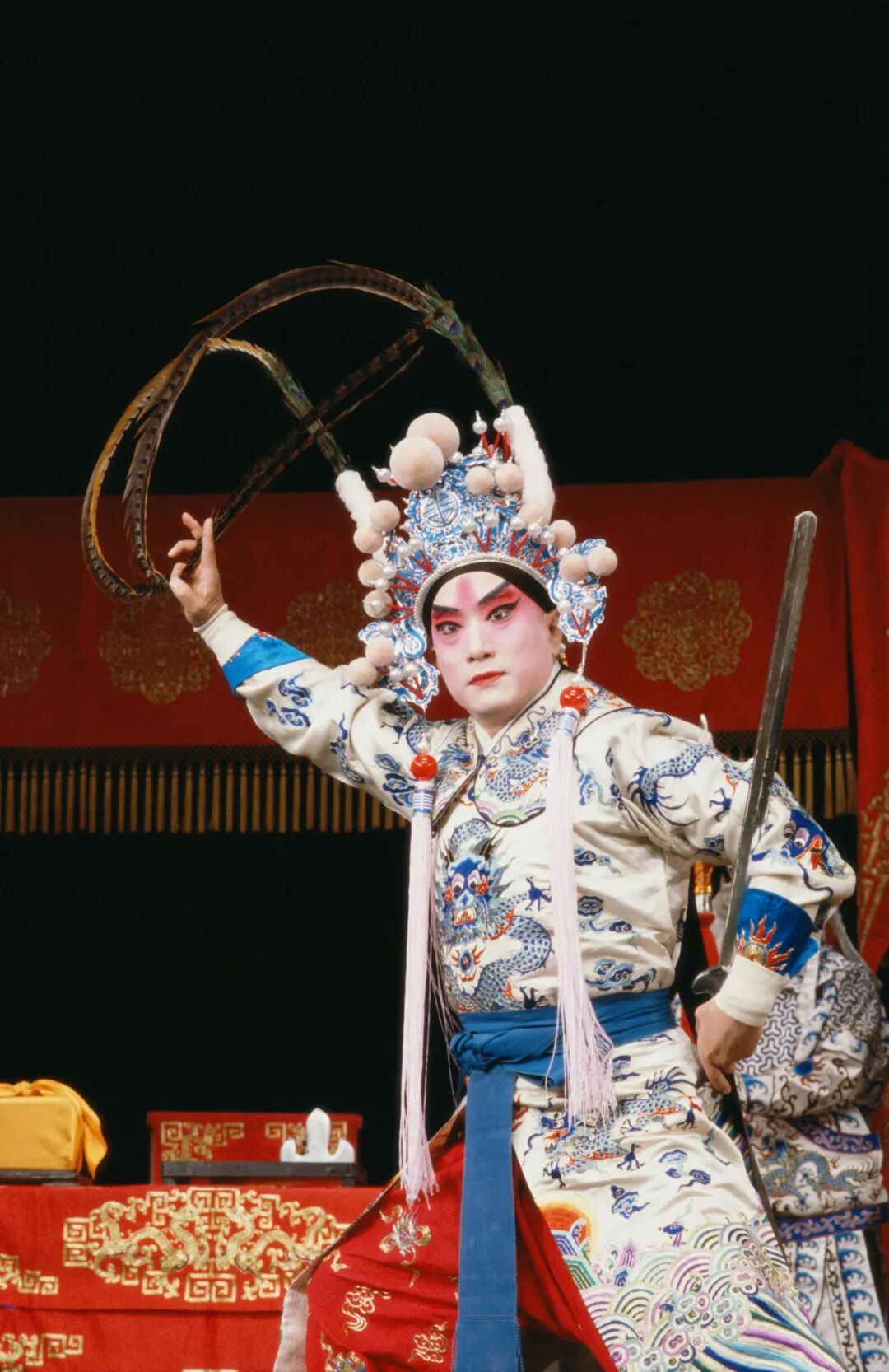
The helmets commonly worn by martial artists are mostly hard hats, which take a long time to produce. During performances, some characters may even wear two long pheasant feathers, which are also a type of theatrical costume. (Photo by Wang Miao)
The production process of theatrical costumes is diverse, mainly including multiple steps such as design, sample making, sample brushing, embroidery, laminating, cutting, and decoration. The main technique used in the production of Beijing opera costumes is Beijing embroidery, which uses thicker and heavier embroidery threads that are more eye-catching, and the colors are more dazzling than daily clothing. Gold is also widely used, and the armor and battle robes embroidered in this way are more textured against the luster of the gold thread. It can be said that in the chests of Peking Opera actors, most of them have embroidered costumes, and even the helmets are decorated with Beijing embroidery.
'Za' and 'Ba' are essential auxiliary props in theatrical performances. 'Miscellaneous' includes boots, shoes, and beard. There are different types of boots and shoes, such as thick soled boots, thin soled boots, and Confucian shoes; Beard mouth refers to the beard worn by actors, which varies in length and comes in styles such as full beard, triple beard, and straight beard. Different styles correspond to different characters. The beard is made of yak tail or human hair, as well as copper wire and old strings. Among them, the beard made from yak tail is both firm and easy for actors to pronounce, making it the most superior. However, due to the scarcity of materials, nylon wire, copper wire and other materials began to replace it after the 1980s. 'Ba' refers to the props used in performances, including knives, guns, swords, halberds, axes, axes, hooks, forks and other weapons, as well as tables, chairs, benches, curtains, and large-scale scene props such as mountains, cities, tombs, and monuments. The handles of knives and guns are made of raw materials such as bamboo, wood, rattan, sheepskin, etc. They are carved with beasts and flowers, painted with hats and hooked with gold, and often covered with sheepskin to increase their strength.
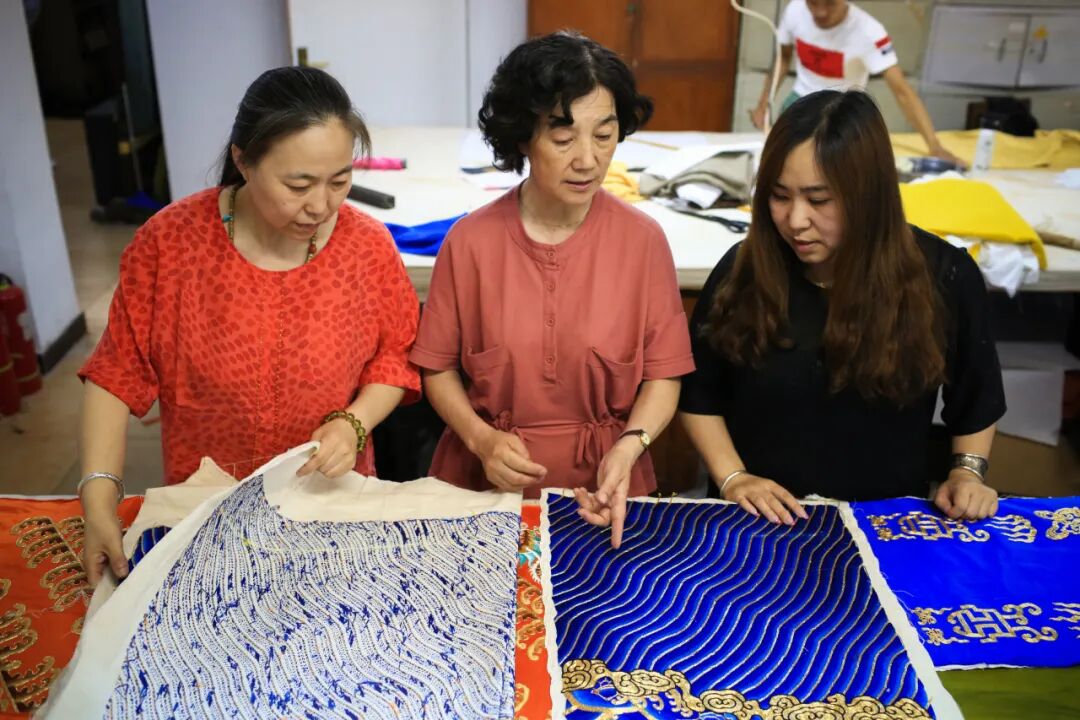
Jingxiu is the most important craft in the production of Beijing opera costumes and equipment (Visual China)
Although the production techniques of costumes and props in Peking Opera have only a few hundred years of history, the craftsmanship it contains carries rich historical and cultural traditions, embodies the wisdom of ancient craftsmen, and is an important part of Chinese opera culture. It is also a vivid record of ancient social systems, clothing customs, and aesthetic concepts. Drama costumes and equipment are not only essential props for stage performances, but also a form of art with great collectible value. Its exquisite craftsmanship and Oriental aesthetic design style showcase the charm of traditional Chinese arts and crafts, embodying the grandeur and harmony of Chinese aesthetic concepts, shining like gold embroidery on costumes.
(This article was published in the seventh issue of China Tourism magazine in Hong Kong in 2025)
《China Tourism》Magazine
Thanks to 《China Tourism》 Magazine
A light book, traveling with you through the north and south of the Yangtze River, exploring all over the world. The Hong Kong China Tourism Publishing House was established in 1980 and launched the monthly magazine "China Tourism" in July of the same year. With wonderful pictures and vivid articles, it deeply reports on the beautiful scenery, geographical features, folk customs, historical sites, cultural arts, etc. of mainland China, and is deeply loved by tourists and photography enthusiasts. China Tourism has been excavating and reporting on many little-known scenic spots and customs for many years. In the future, we will continue to lead readers to witness the ever-changing landscape of China and fully appreciate its beautiful rivers and mountains.
