

Intangible Cultural Heritage of Chaozhou Woodcarving
Special Column

Author Chen Ping
Global President of the International Organization of Folk Arts (IOV), Chief Chair of World Heritage and Innovation in Traditional Handicrafts at UNESCO, Dean and Professor of the Cultural Heritage Creative Industry Research Institute at Jinan University, and Editor in Chief of the "Blue Book of Intangible Cultural Heritage: Report on the Development of China's Intangible Cultural Heritage".
Recommendation: Chaozhou wood carving originated in the Tang Dynasty and has now developed into a folk art with distinct local characteristics. It is exquisite and delicate, with a wide range of themes, covering historical figures, myths and legends, natural scenery, etc. The sculptor endows wood with vitality through exquisite techniques, and each work perfectly combines art and skill. Chaozhou wood carving emphasizes the transmission of cultural connotations, with many works symbolizing auspiciousness. It is commonly used in traditional ceremonies such as home decoration, sacrifice, and temple fairs, and is integrated into daily life and spiritual beliefs, embodying people's aspirations and blessings for a better life. If you are interested in traditional crafts, Chaozhou wood carving is undoubtedly a treasure that cannot be missed. It is not only a symbol of Chaozhou culture, but also a business card of traditional Chinese craftsmanship. Whether as a collectible or home decoration, it can bring different artistic enjoyment and cultural experience.
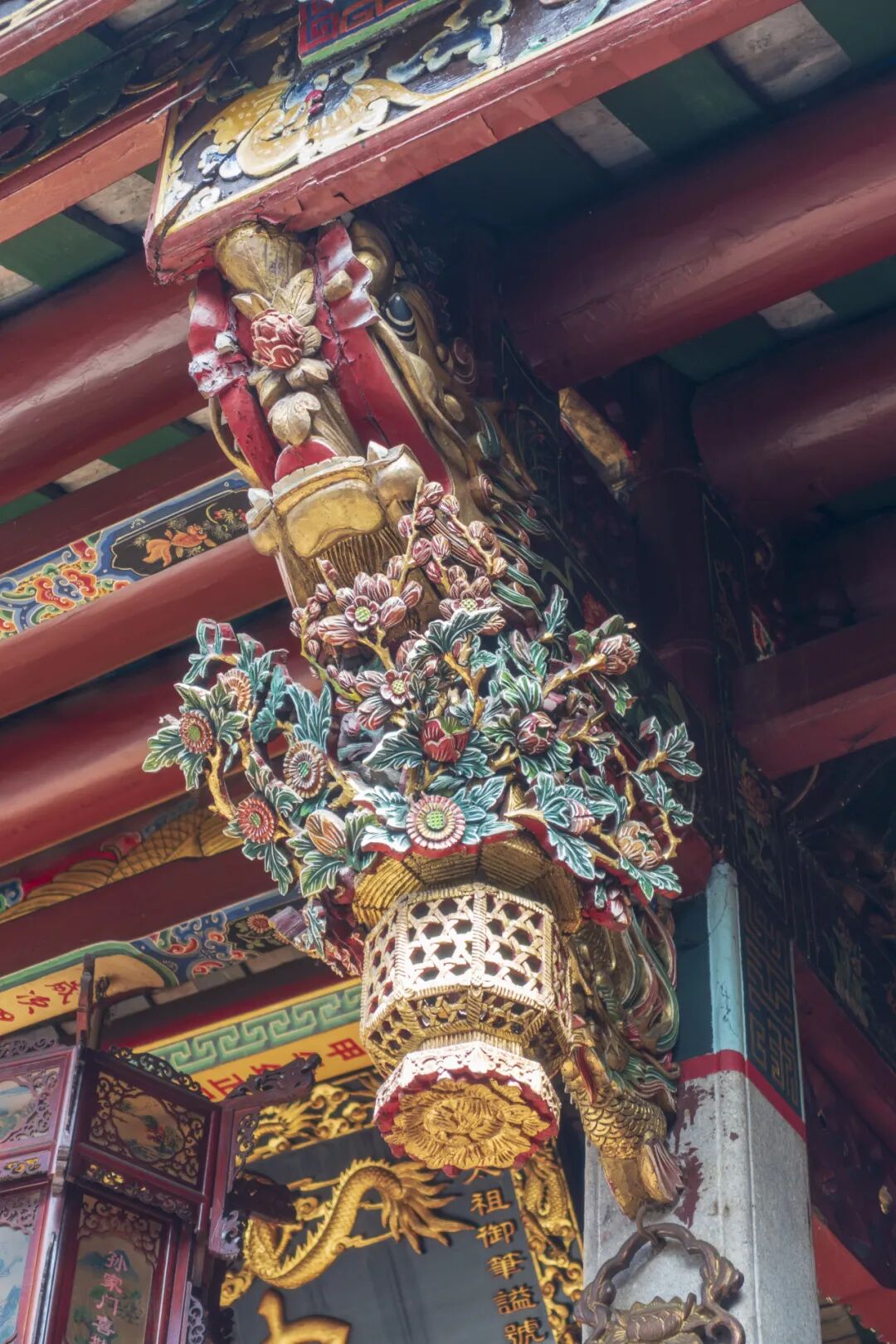
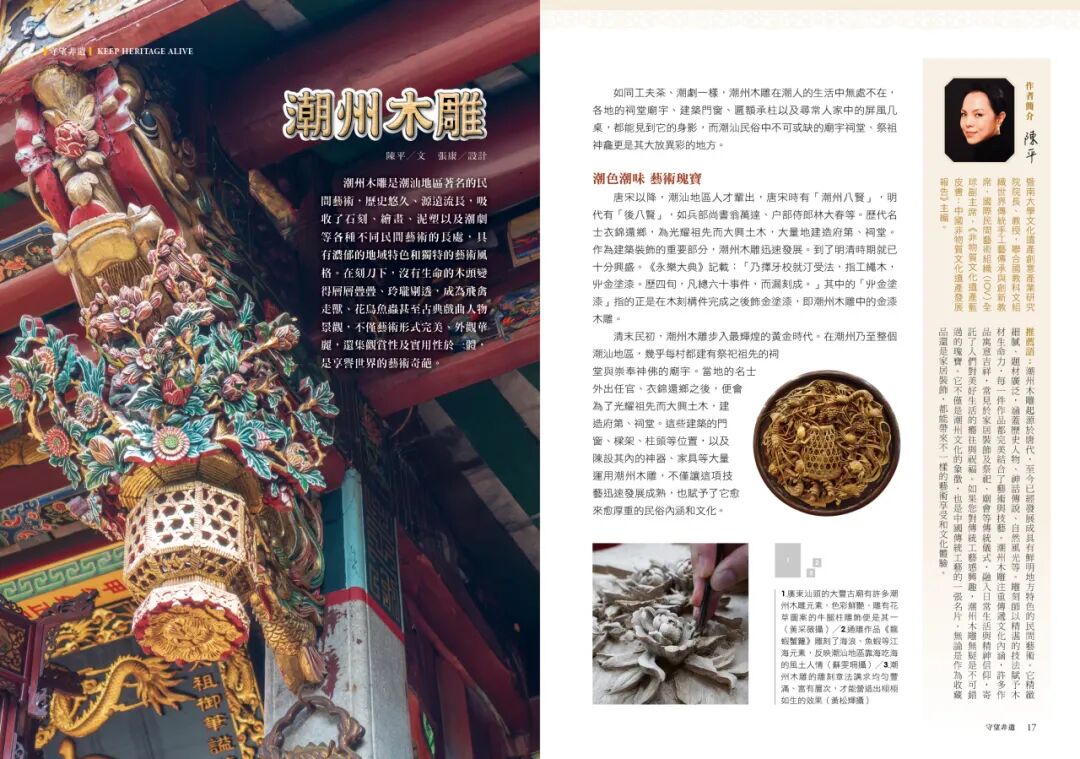
The Dafeng Ancient Temple in Shantou, Guangdong Province, has many Chaozhou wood carving elements, including the brightly colored cow leg pillar carvings with floral patterns. (Photo by Huang Caiwei)
Chaozhou wood carving is a famous folk art in the Chaoshan region, with a long and profound history. It absorbs the strengths of various folk arts such as stone carving, painting, clay sculpture, and Chaozhou opera, and has strong regional characteristics and unique artistic styles. Under the carving knife, lifeless wood becomes layered and exquisite, becoming landscapes of birds, animals, flowers, birds, fish, insects, and even classical opera characters. Not only is the artistic form perfect and the appearance gorgeous, but it also integrates ornamental and practical aspects, making it a world-renowned artistic wonder.
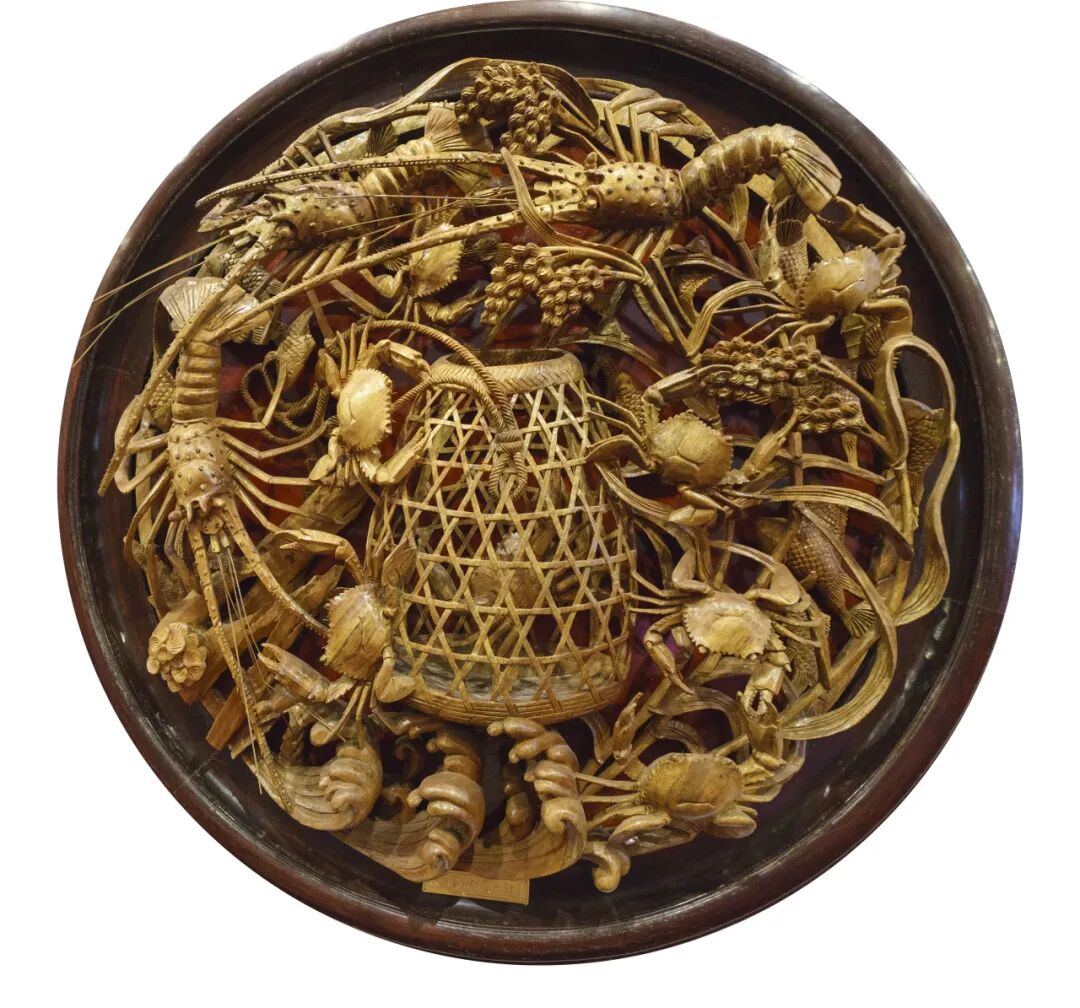
The sculpture "Lobster and Crab Basket" depicts river and sea elements such as waves, fish, and shrimp, reflecting the local customs and traditions of the Chaoshan region where people rely on the sea to eat. (Photo by Su Wenshan)
Like Gongfu tea and Chaozhou opera, Chaozhou wood carving is ubiquitous in the lives of Chaozhou people. Its presence can be seen in temples, buildings, doors and windows, plaques and pillars, as well as screens and tables in ordinary households. The indispensable temples, ancestral shrines, and ancestral shrines in Chaozhou folk customs are also its shining places.
Since the Tang and Song dynasties, the Chaoshan region has produced a large number of talented people. During the Tang and Song dynasties, there were the "Eight Sages of Chaozhou", and during the Ming dynasty, there were the "Later Eight Sages", such as Weng Wanda, the Minister of War, and Lin Dachun, the Minister of Revenue. Throughout history, famous scholars returned home in splendid attire and embarked on extensive construction projects to honor their ancestors, constructing numerous mansions and ancestral halls. As an important part of architectural decoration, Chaozhou wood carving has developed rapidly. It was already very prosperous during the Ming and Qing dynasties. The Yongle Encyclopedia records: "It refers to the process of selecting teeth and selecting wood, and painting it with gold. Throughout the four decades, there were a total of sixty events, and the carving was missed." The "painting with gold" refers to the process of painting the wooden components with gold after they were completed, which is the gold lacquer wood carving in Chaozhou wood carving.
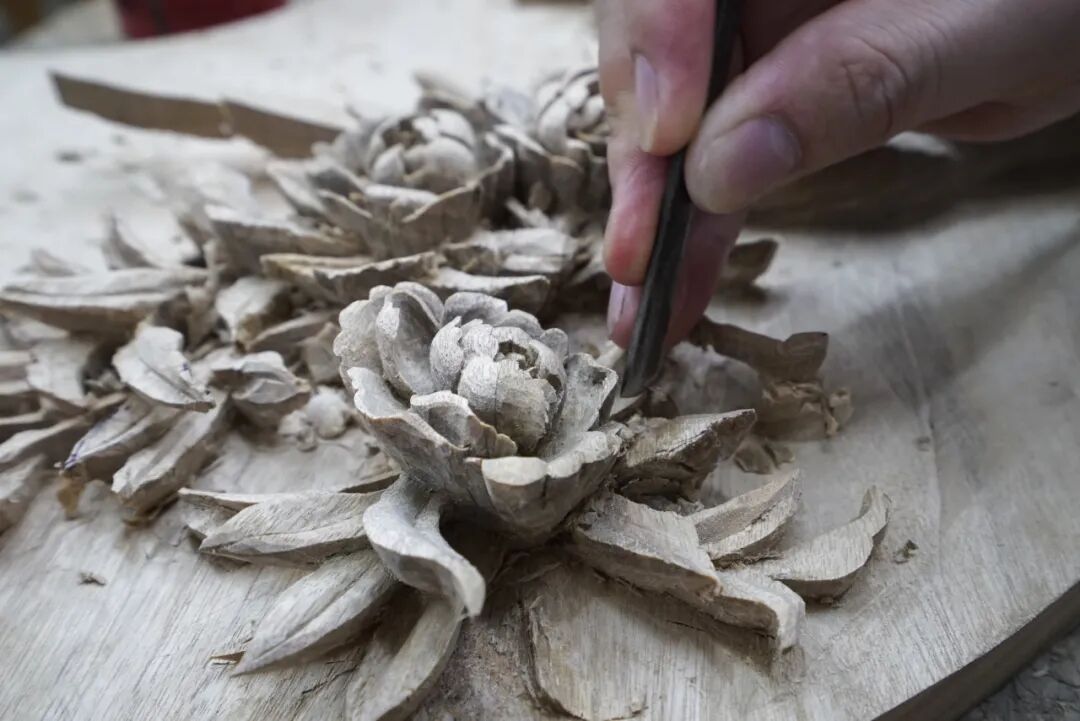
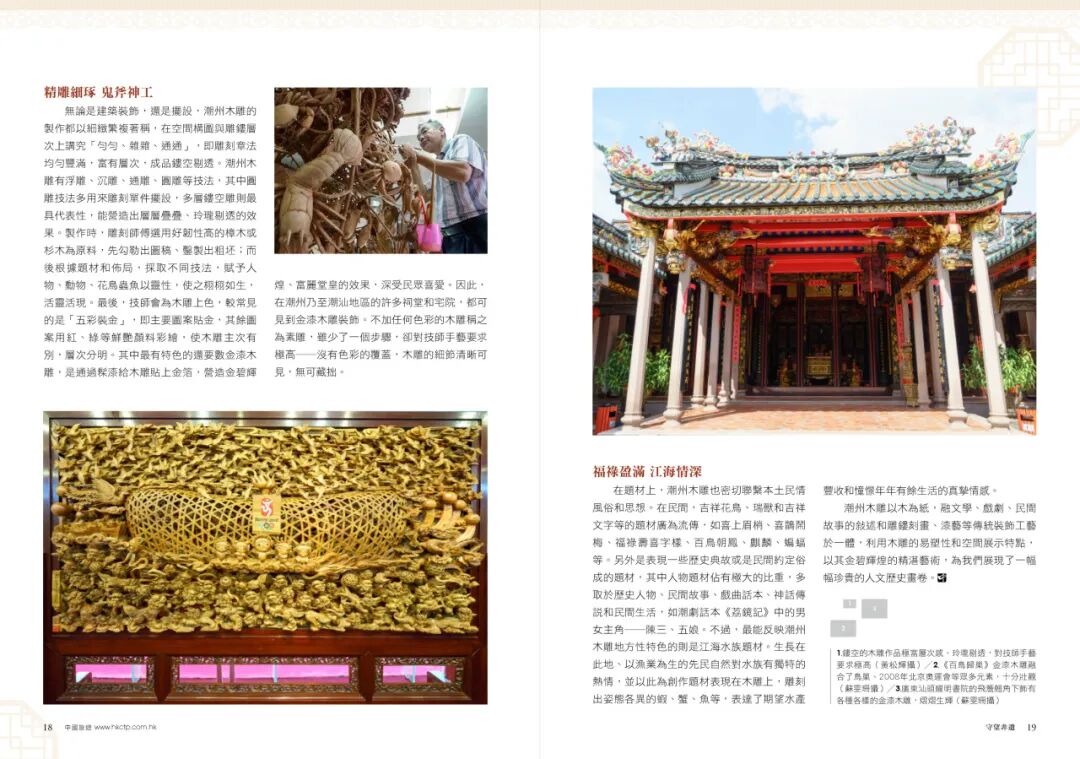
The carving techniques of Chaozhou woodcarving emphasize uniformity, fullness, and richness of layers in order to create lifelike effects. (Photo by Huang Songhui)
In the late Qing Dynasty and early Republic of China, Chaozhou woodcarving entered its most glorious golden age. In Chaozhou and even the entire Chaoshan region, almost every village has built ancestral halls and temples to worship gods and Buddhas. After local celebrities go out to serve as officials and return home in glory, they will embark on a large-scale construction project to honor their ancestors, building mansions and ancestral halls. The doors, windows, beams, column heads and other positions of these buildings, as well as the artifacts and furniture displayed inside, extensively utilize Chaozhou wood carving, which not only rapidly develops and matures this technique, but also endows it with increasingly rich folk connotations and culture.
Whether it is architectural decoration or decoration, Chaozhou wood carving is known for its meticulous and complex production. In terms of spatial composition and carving levels, it emphasizes "uniformity, complexity, and uniformity", that is, the carving pattern is uniform and full, rich in layers, and the finished product is hollowed out and transparent. Chaozhou wood carving has techniques such as relief carving, sinking carving, through carving, and round carving. Among them, round carving techniques are mostly used to carve single piece decorations, while multi-layer hollow carving is the most representative, which can create layered and exquisite effects. When making, the sculptor selects high toughness camphor wood or fir wood as raw materials, first outlines the blueprint, and chisels out the rough blank; Then, based on the theme and layout, different techniques are adopted to endow characters, animals, flowers, birds, insects, and fish with spirituality, making them vivid and lively. Finally, the technician will color the wood carving, with the most common being "colorful gold decoration", where the main pattern is gold-plated and the remaining patterns are painted with bright colors such as red and green to distinguish the main and secondary aspects of the wood carving and create clear layers. The most distinctive feature among them is the gold lacquer wood carving, which involves painting the wood carving with gold foil to create a magnificent and magnificent effect, which is deeply loved by the public. Therefore, in many ancestral halls and courtyards in Chaozhou and even Chaoshan areas, gold lacquer and wood carving decorations can be seen. Wood carving without adding any color is called plain carving. Although it lacks one step, it requires extremely high craftsmanship from the technician - without color coverage, the details of the wood carving are clear and visible, and there is no room for concealment.
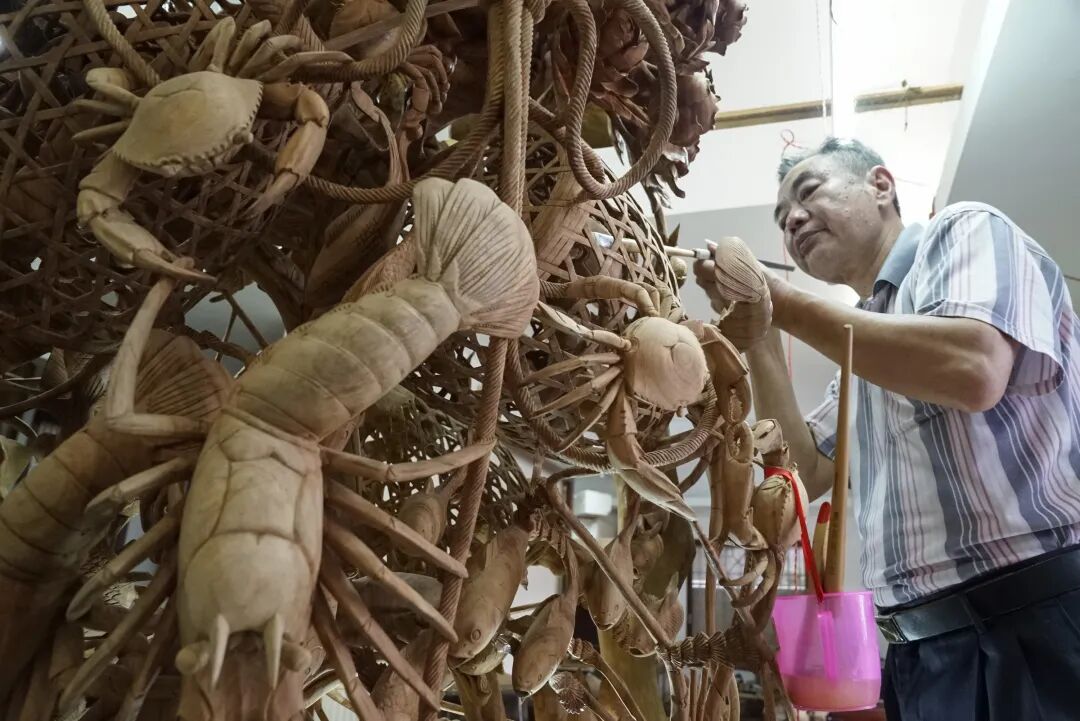
The hollowed out wooden carvings are highly layered, exquisite and transparent, and require extremely high technical skills from the technicians. (Photo by Huang Songhui)
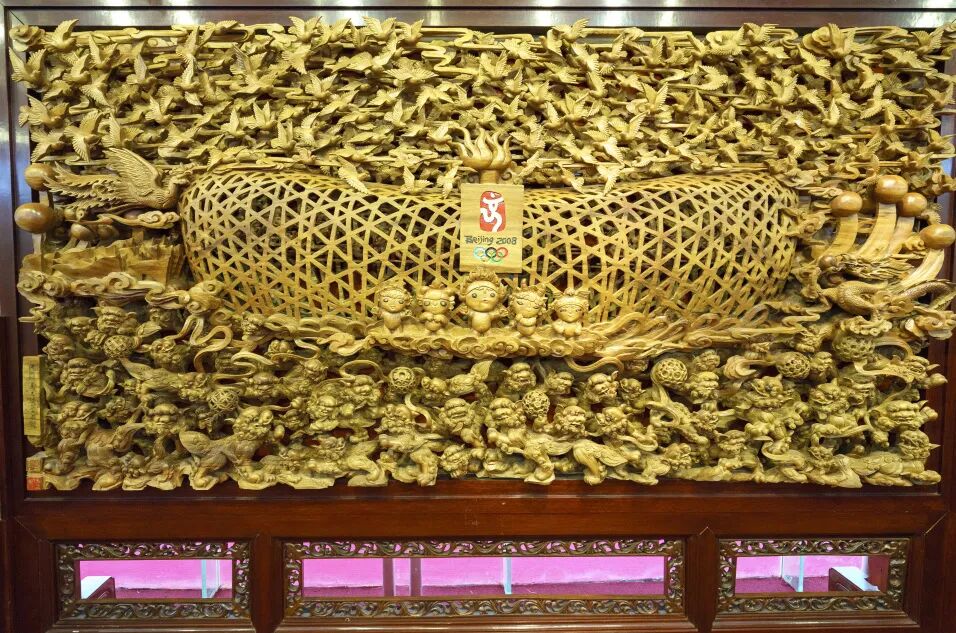
The golden lacquer wood carving of "Hundred Birds Returning to the Nest" combines many elements such as the Bird's Nest and the 2008 Beijing Olympics, making it very spectacular. (Photo by Su Wenshan)
In terms of subject matter, Chaozhou woodcarving is also closely related to local customs, traditions, and ideas. In folk culture, auspicious themes such as flowers and birds, auspicious beasts, and auspicious texts are widely circulated, such as "happy eyebrows", "magpies playing in plum blossoms", "happy fortune, prosperity, and longevity", "birds bowing to phoenixes", "unicorns", "bats", etc. In addition, it portrays some historical allusions or folk conventions, among which character themes account for a large proportion, mostly taken from historical figures, folk stories, opera scripts, myths and legends, and folk life, such as the male and female protagonists Chen San and Wu Niang in the Chaozhou opera script "Li Jing Ji". However, the most reflective of the local characteristics of Chaozhou woodcarving is the theme of rivers, seas, and aquatic creatures. The ancestors who grew up in this area and made a living by fishing naturally had a unique passion for aquatic creatures, and used this as a creative theme to express it in wood carvings, carving shrimp, crabs, fish, etc. with different postures, expressing sincere emotions of hoping for a bountiful harvest of aquatic products and longing for a life of surplus every year.
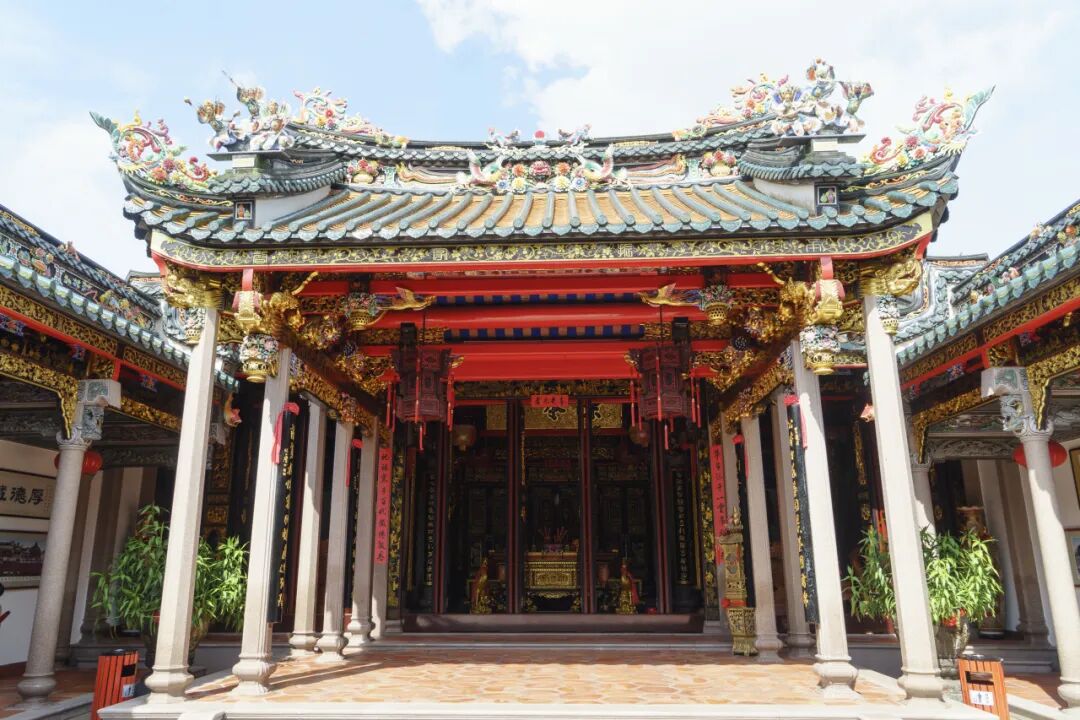
The flying eaves and upturned corners of Yaoming Academy in Shantou, Guangdong are decorated with various golden lacquer wood carvings, shining brightly. (Photo by Su Wenshan)
Chaozhou wood carving uses wood as paper and integrates traditional decorative techniques such as literature, drama, folk stories, carving and carving, lacquer art, etc. It utilizes the plasticity and spatial display characteristics of wood carving to showcase precious cultural and historical paintings with its exquisite and magnificent art.
(This article was published in the 11th issue of 《China Tourism》magazine in Hong Kong in 2025)
《China Tourism》magazine
Thank you to China Tourism Magazine
A light book, traveling with you through the north and south of the Yangtze River, exploring all over the world. The Hong Kong China Tourism Publishing House was established in 1980 and launched the monthly magazine "China Tourism" in July of the same year. With wonderful pictures and vivid articles, it deeply reports on the beautiful scenery, geographical features, folk customs, historical sites, cultural arts, etc. of mainland China, and is deeply loved by tourists and photography enthusiasts. China Tourism has been excavating and reporting on many little-known scenic spots and customs for many years. In the future, we will continue to lead readers to witness the ever-changing landscape of China and fully appreciate its beautiful rivers and mountains.
