Intangible Cultural Heritage I Fan
Special Column

Author Chen Ping
Global President of the International Organization of Folk Arts (IOV), Chief Chair of World Heritage and Innovation in Traditional Handicrafts at UNESCO, Dean and Professor of the Cultural Heritage Creative Industry Research Institute at Jinan University, and Editor in Chief of the "Blue Book of Intangible Cultural Heritage: Report on the Development of China's Intangible Cultural Heritage".
Recommendation: Tuan Fan, also known as Hehuan Fan or Palace Fan, has been carrying the ultimate tenderness of Eastern aesthetics since the Han Dynasty. It is not only a summer cool object, but also a symbol of the "gentle", "implicit", and "reunion" imagery in classical Chinese culture. From the poetic imagery of "a group of fans fluttering fireflies" in Tang poetry to the soft whispers of "the grace of a fan" in Song poetry, the group fan has long become a spiritual object for literati to express their emotions and character. Today, the beauty of the fan is still captivating. It has been worn for thousands of years, not only retaining the exquisite texture of traditional craftsmanship, but also radiating new charm and expression in modern design. It belongs not only to the ancients, but also to our current life - bringing a refreshing breeze to the heat and adding a touch of Eastern poetry to the space.
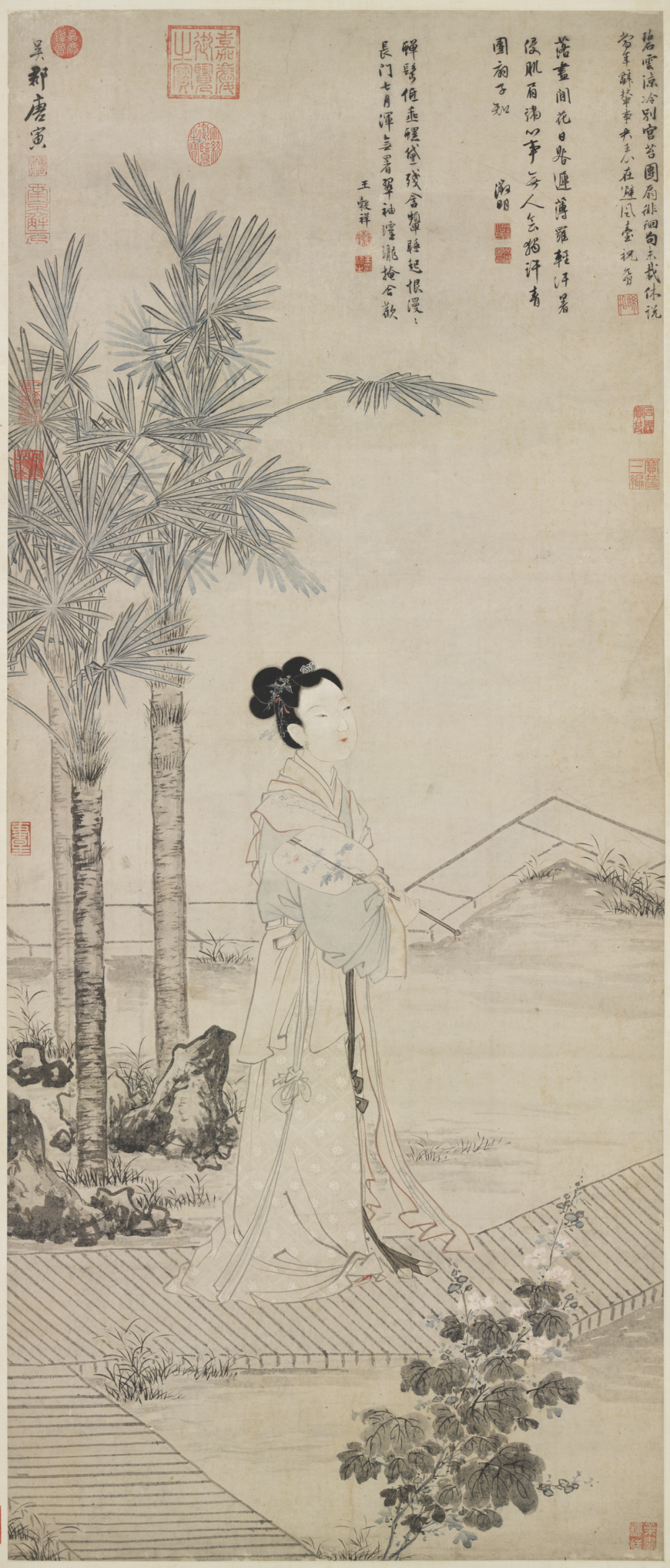
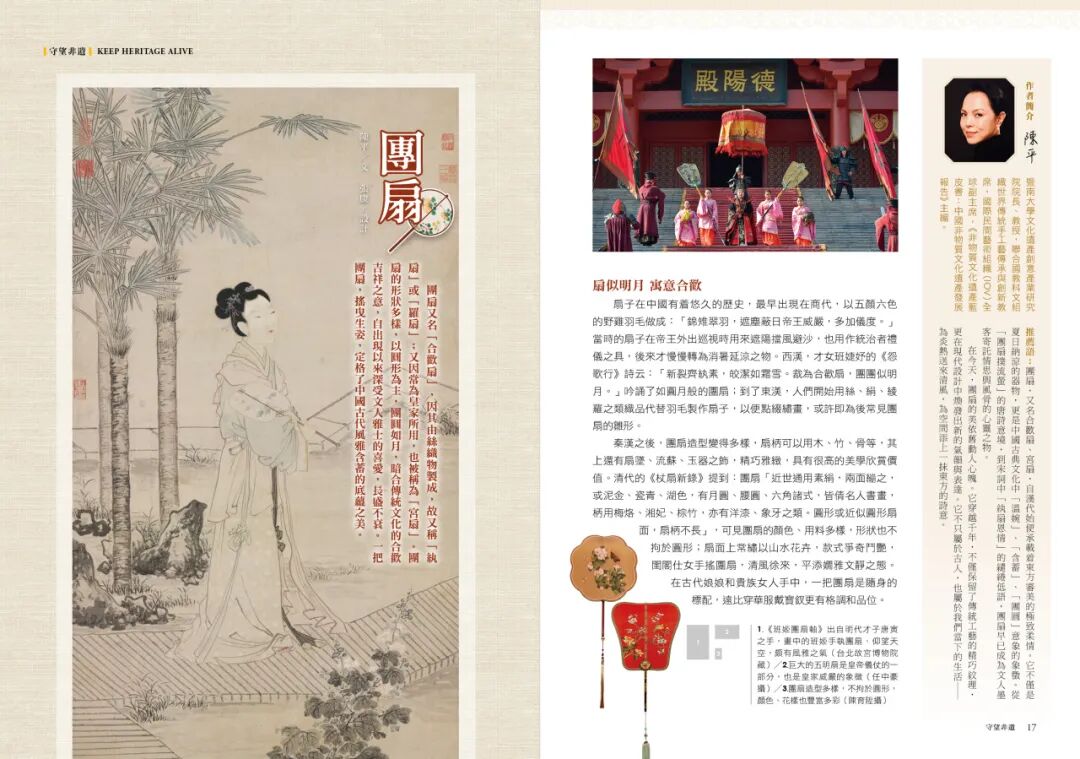
《Ban Ji Tuan Fan Axe》is created by Tang Yin, a talented scholar of the Ming Dynasty. In the painting, Ban Ji holds a Tuan Fan and looks up at the sky, exuding a refined and elegant atmosphere (collected by the National Palace Museum in Taipei)
Tuan Fan, also known as "Hehuan Fan", is also called "Wan Fan" or "Luo Fan" because it is made of silk fabric; Also known as the "palace fan" due to its frequent use by the royal family. The shape of the round fan is diverse, mainly circular, with reunion like the moon, which is in line with the auspicious meaning of the traditional culture of Hehuan. Since its emergence, it has been deeply loved by literati and scholars and has been thriving for a long time. A round fan, swaying gracefully, captures the beauty of ancient Chinese elegance and subtlety.
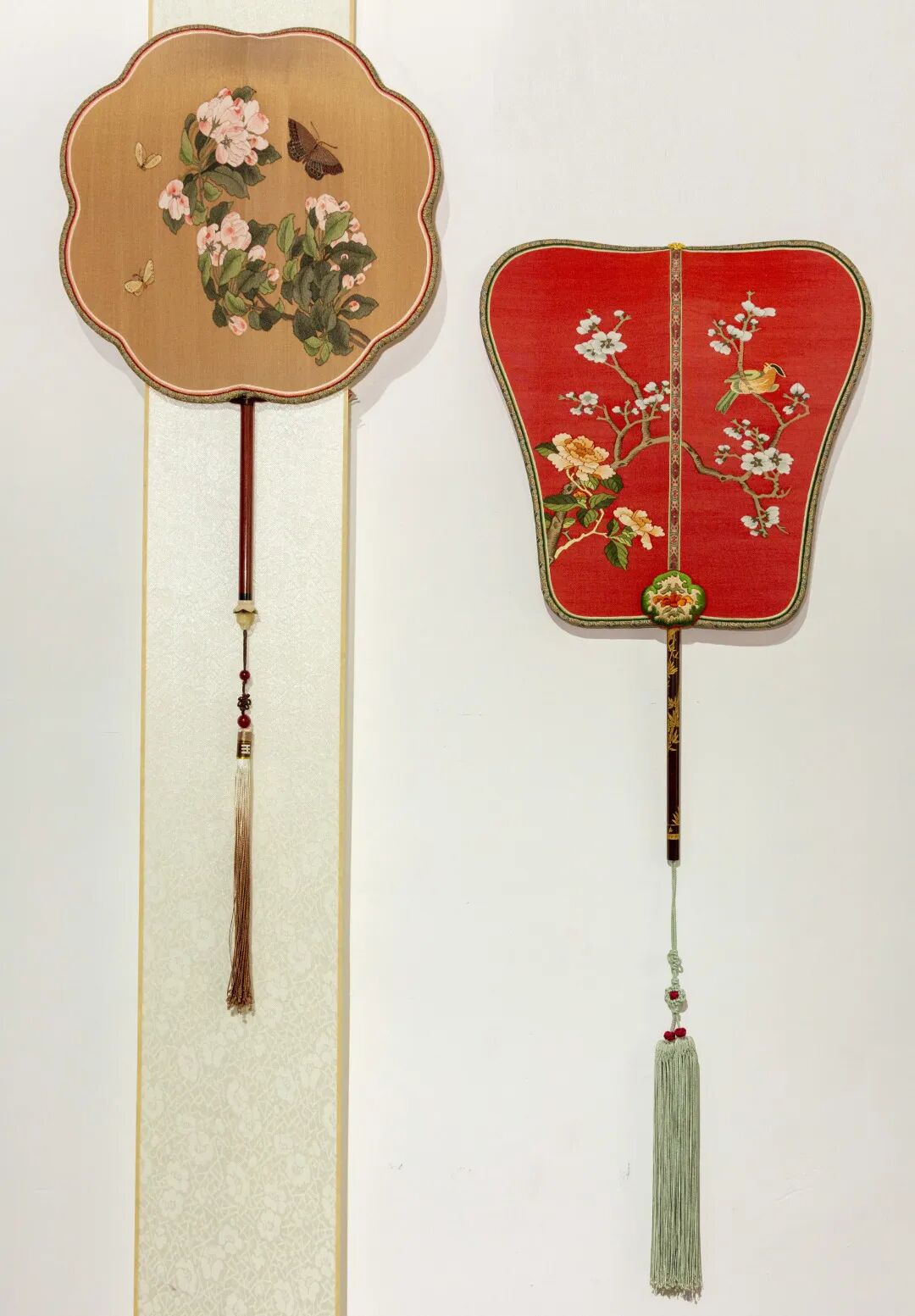
The fan shapes are diverse, not limited to circles, and the colors and patterns are also rich and colorful (photographed by Chen Yusheng)
The fan resembles the bright moon, symbolizing the acacia tree
Fans have a long history in China, first appearing in the Shang Dynasty, made of colorful wild chicken feathers: "Golden pheasant and green feathers, covering the dust and sun, imperial majesty, and adding etiquette." At that time, fans were used by emperors to shade from the sun, wind, and sand when they went out for inspection, and were also used as ceremonial tools for rulers. Later, they gradually became objects to cool down and cool down. In the Western Han Dynasty, the talented woman Ban Jieyu wrote in her poem "Lament Song Xing": "Newly cracked silk leaves, as bright as frost and snow. Cut into acacia fans, clustered like the bright moon." She recited the round moon like fan; In the Eastern Han Dynasty, people began to use fabrics such as silk, satin, and satin instead of feathers to make fans, in order to embellish embroidery paintings, perhaps the prototype of the later common fan.
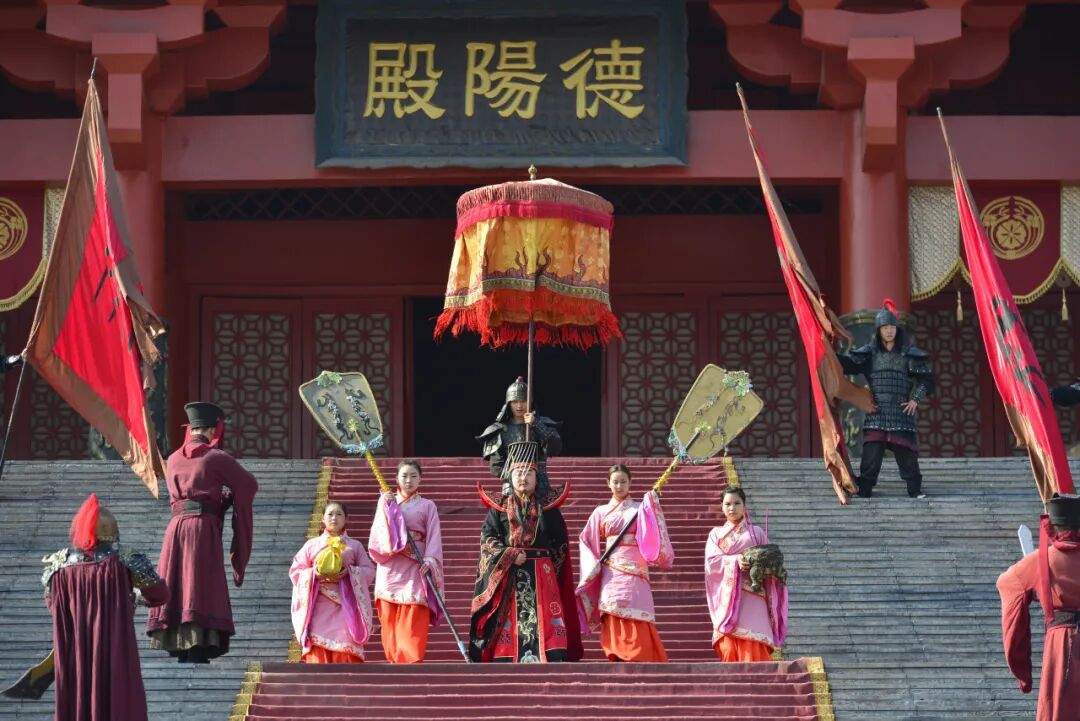
The huge Five Bright Fan is a part of the emperor's ceremonial attire and a symbol of royal majesty. (Photo by Ren Zhonghao)
After the Qin and Han dynasties, the shapes of round fans became more diverse. The fan handle could be made of wood, bamboo, bone, etc., and there were also fan pendants, tassels, and jade ornaments on it, which were exquisite and elegant, and had high aesthetic appreciation value. The Qing Dynasty's "New Record of Staff and Fan" mentions that in modern times, round fans are commonly made of plain silk, with two sides stretched, or made of mud, gold, porcelain blue, or lake color. They come in various forms such as round moon, round waist, and hexagonal shape, all of which are famous calligraphers and painters. The handles are made of plum blossoms, Xiang Fei, brown bamboo, as well as foreign lacquer, ivory, and the like. The round or nearly circular fan face has a short handle, indicating that round fans come in a variety of colors and materials, and their shapes are not limited to circles; The fan surface is often embroidered with mountains, waters, and flowers, with various styles competing for beauty. The ladies in the boudoir hand crank the round fan, and the gentle breeze blows gently, adding a refined and quiet demeanor. In the hands of ancient empresses and noblewomen, a round fan was a standard accessory, far more stylish and tasteful than wearing traditional Chinese clothing and hairpins.
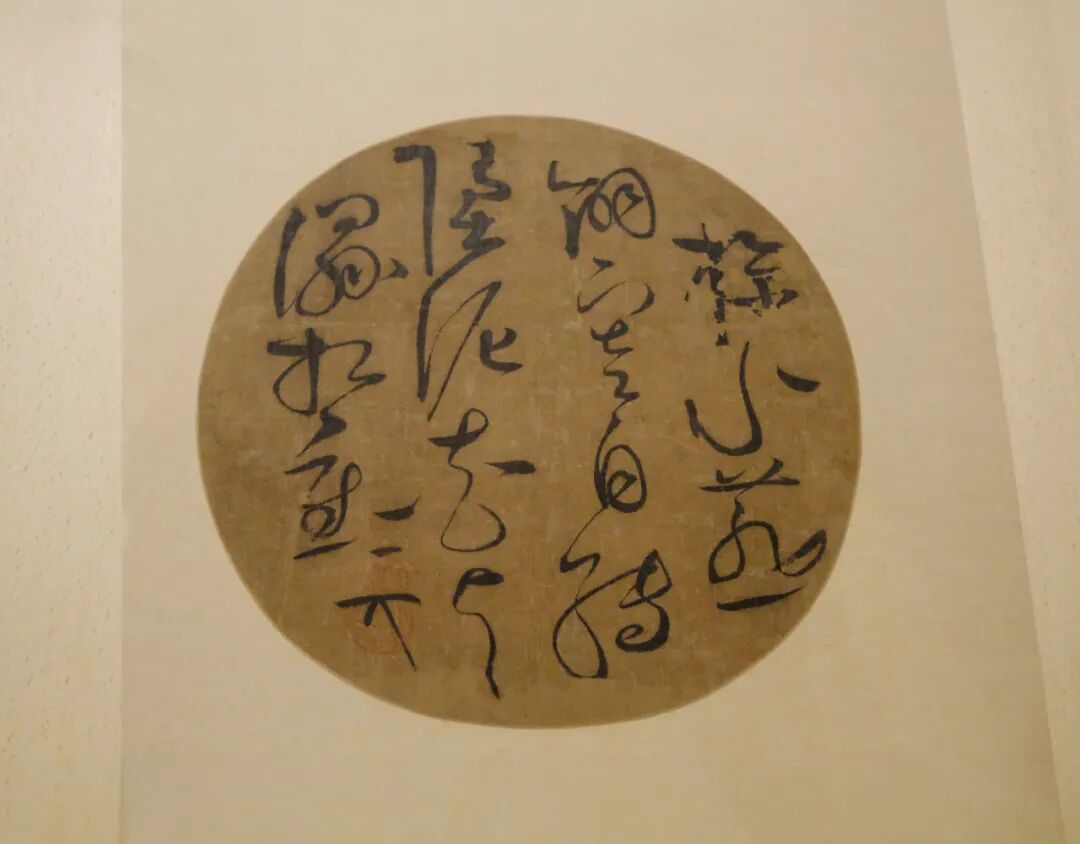
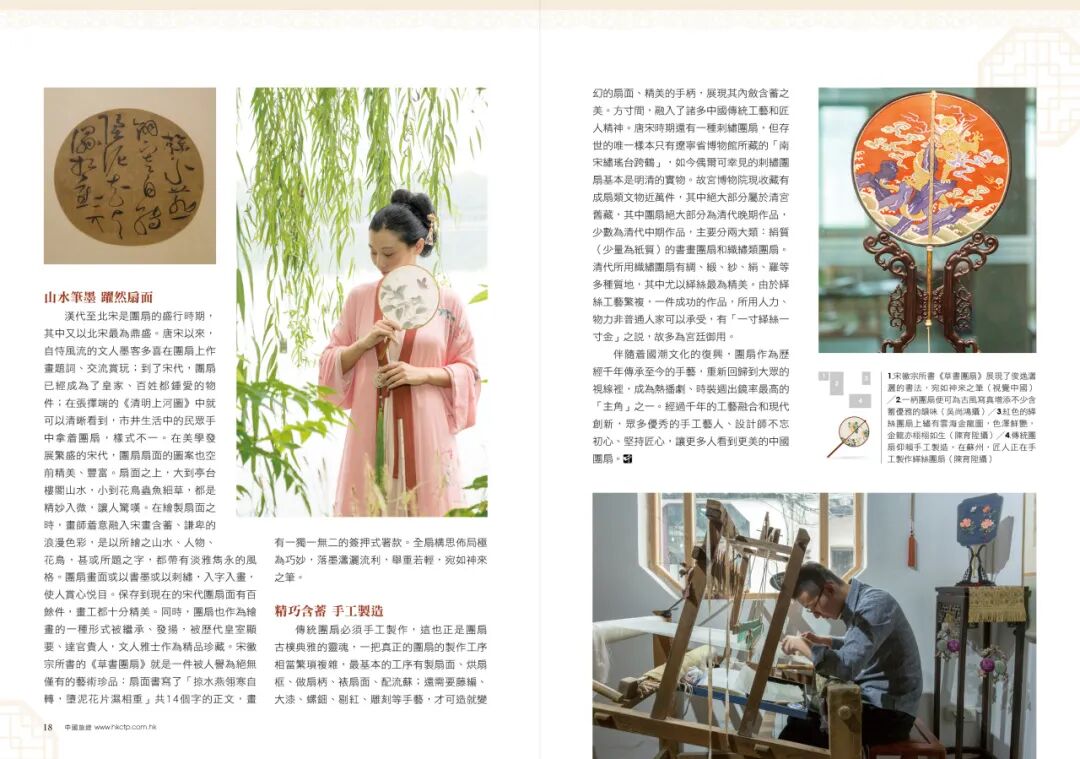
The cursive scroll fan written by Emperor Huizong of Song showcases the elegant and graceful calligraphy, like a stroke of genius (Visual China)
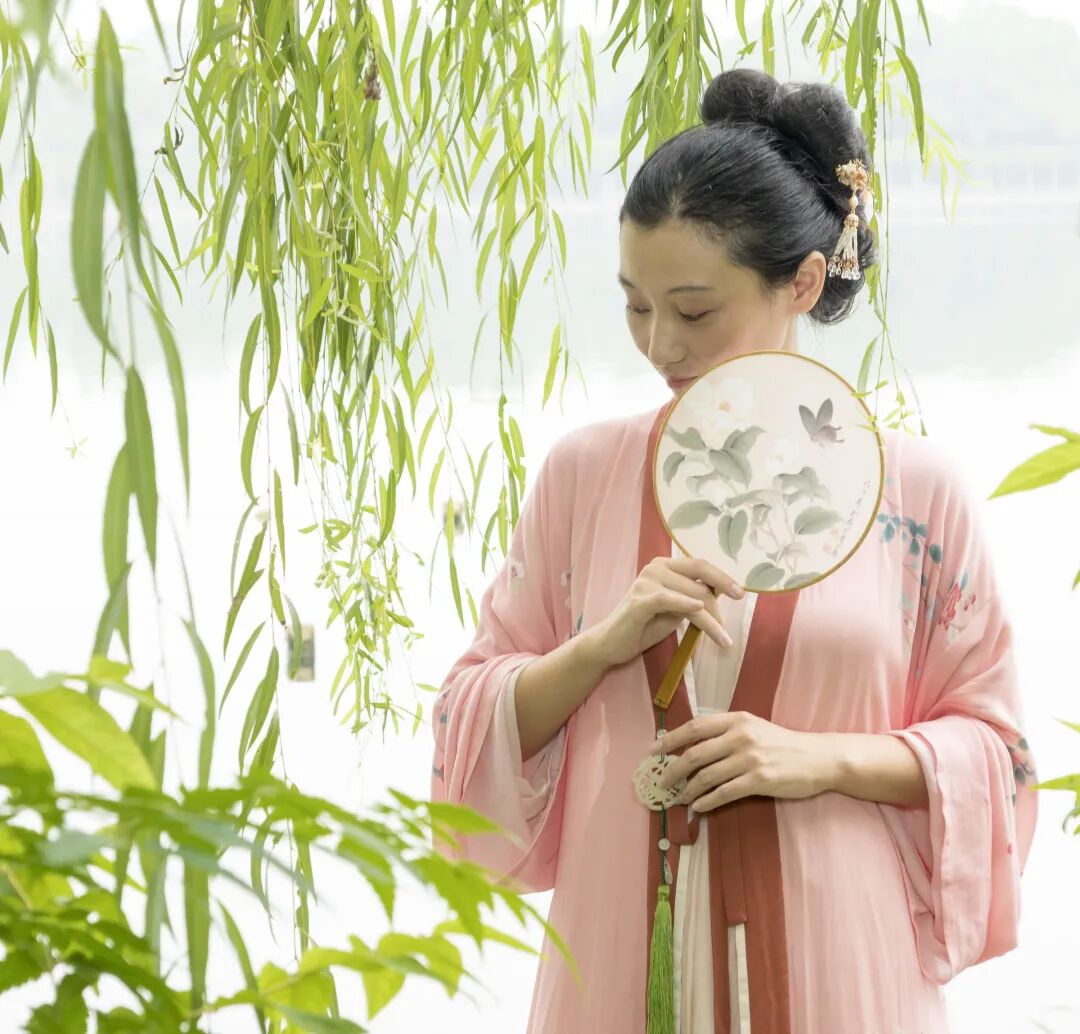
A round fan can add a lot of subtle and elegant charm to ancient style photography (photo by Wu Shanghong)
The brushstrokes of mountains, waters, and calligraphy leap like a fan
The Han Dynasty to the Northern Song Dynasty was a period of widespread popularity for fan fans, with the Northern Song Dynasty being the most prosperous. Since the Tang and Song dynasties, literati and ink artists who relied on their own charm often enjoyed painting and writing inscriptions on fan fans, as well as exchanging and enjoying themselves; In the Song Dynasty, the round fan had become a beloved object of both the royal family and the common people; In Zhang Zeduan's "Along the River During Qingming Festival", it is clear that people in ordinary life hold fans in their hands, with different styles. In the flourishing aesthetic development of the Song Dynasty, the patterns on the surface of the fan were unprecedentedly exquisite and rich. Above the fan, from pavilions, towers, mountains and waters to flowers, birds, insects, fish, and fine grass, everything is exquisitely detailed and stunning. When drawing the fan, the painter deliberately incorporated the subtle and humble romantic colors of Song painting, with the landscapes, figures, flowers and birds, and even the characters inscribed, all possessing a subtle and timeless style. The picture of the fan is either written in ink or embroidered, with characters and paintings, making it pleasing to the eye. There are over a hundred preserved Song Dynasty fan faces, all of which are exquisitely painted. At the same time, the round fan has also been inherited and developed as a form of painting, and has been treasured by prominent figures in the imperial family, high-ranking officials, and literati throughout history. The "Grass Script Fan" written by Emperor Huizong of Song is a rare and unparalleled art treasure: the fan surface is inscribed with a 14 word text that reads "Swallow Feathers Sweeping Water, Cold Rotation, Falling Mud, Flower Slices Damply Heavy", and is painted with a unique signature style signature. The overall design and layout of the fan are extremely clever, with ink flowing smoothly and effortlessly, like a stroke of genius.
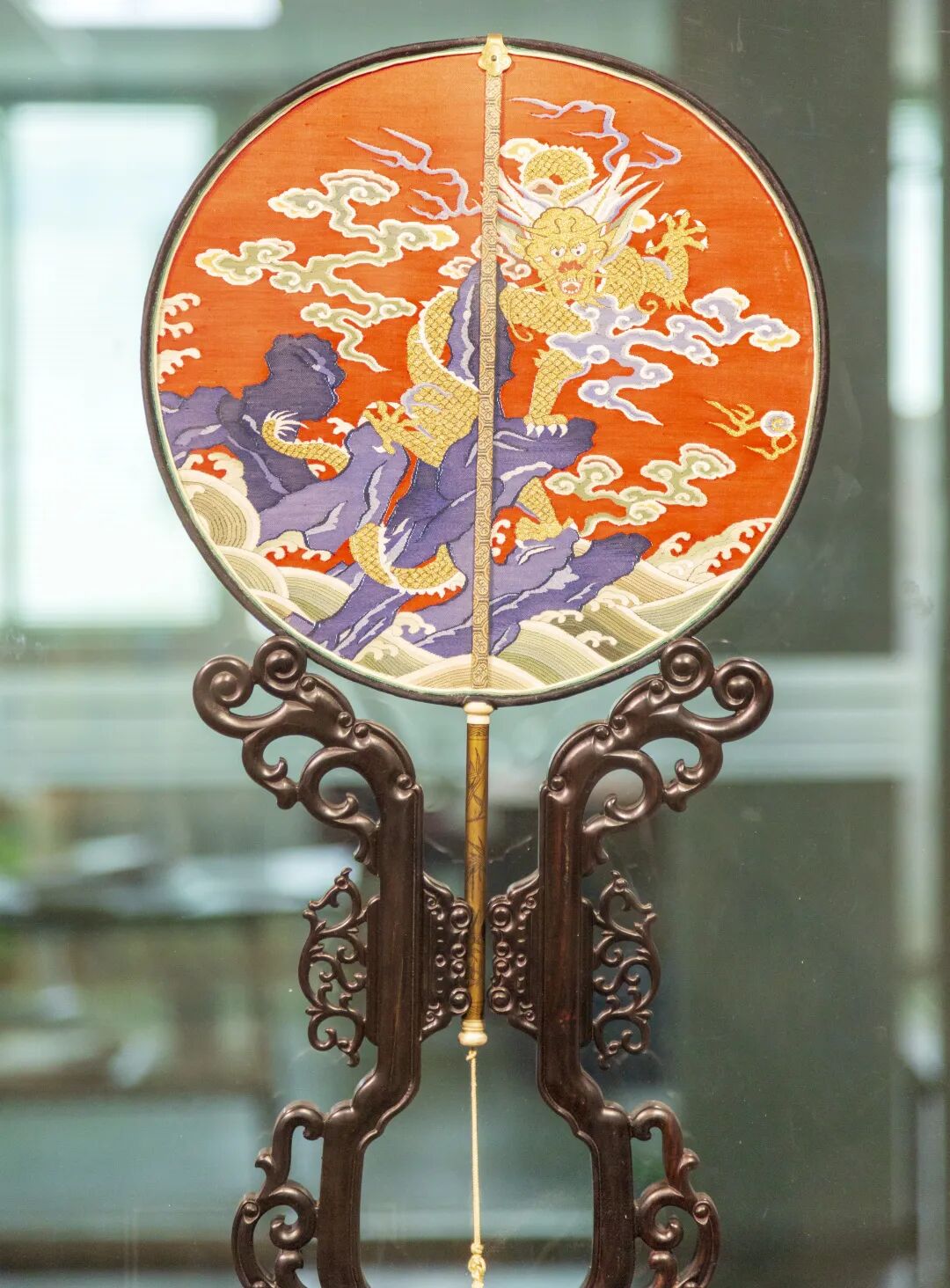
The red silk ball fan is embroidered with a picture of a sea of clouds and golden dragons, with bright colors and lifelike golden dragons. (Photo by Chen Yusheng)
Traditional round fans must be handmade, which is also the soul of the antique and elegant style of round fans. The production process of a real round fan is quite complicated, with the most basic processes including making the fan face, drying the fan frame, making the fan handle, mounting the fan face, and matching tassels; Craftsmanship such as rattan weaving, lacquer painting, mother of pearl inlay, red picking, and carving are also needed to create the ever-changing fan surface and exquisite handle, showcasing its restrained and subtle beauty. In every inch, it incorporates many traditional Chinese crafts and the spirit of craftsmen. During the Tang and Song dynasties, there was another type of embroidered fan, but the only surviving sample is the "Southern Song Embroidery Yaotai Cross Crane" held in the Liaoning Provincial Museum. The embroidered fan that can occasionally be seen today is mostly a physical object from the Ming and Qing dynasties. The Palace Museum currently has nearly 10000 pieces of fan shaped cultural relics in its collection, the vast majority of which belong to the old collections of the Qing Dynasty. Among them, the majority of fan shaped pieces are from the late Qing Dynasty, with a few from the mid Qing Dynasty. They are mainly divided into two categories: silk (with a small amount of paper) calligraphy and painting fan shaped pieces, and woven embroidery fan shaped pieces. The weaving and embroidery fans used in the Qing Dynasty were made of various textures such as silk, satin, gauze, silk, and silk, among which silk is the most exquisite. Due to the complexity of the silk weaving process, a successful work requires manpower and material resources that ordinary families cannot afford. There is a saying that 'one inch of silk is worth an inch of gold', so it is mostly used by the imperial court.

Traditional fans rely on handmade manufacturing. In Suzhou, craftsmen are handcrafting silk fans (photo by Chen Yusheng)
With the revival of China-Chic culture, as a handicraft that has been passed down for thousands of years, the round fan has returned to the public's view and become one of the "leading roles" with the highest appearance rate in popular dramas and fashion weeks. After thousands of years of technological integration and modern innovation, numerous outstanding craftsmen and designers have not forgotten their original intentions and adhered to craftsmanship, allowing more people to see a more beautiful Chinese fan.
This article was published in the 8th issue of China Tourism magazine in Hong Kong in 2025
《China Tourism》Magazine
Thank you to《China Tourism》Magazine
A light book, traveling with you through the north and south of the Yangtze River, exploring all over the world. The Hong Kong China Tourism Publishing House was established in 1980 and launched the monthly magazine "China Tourism" in July of the same year. With wonderful pictures and vivid articles, it deeply reports on the beautiful scenery, geographical features, folk customs, historical sites, cultural arts, etc. of mainland China, and is deeply loved by tourists and photography enthusiasts. China Tourism has been excavating and reporting on many little-known scenic spots and customs for many years. In the future, we will continue to lead readers to witness the ever-changing landscape of China and fully appreciate its beautiful rivers and mountains.