

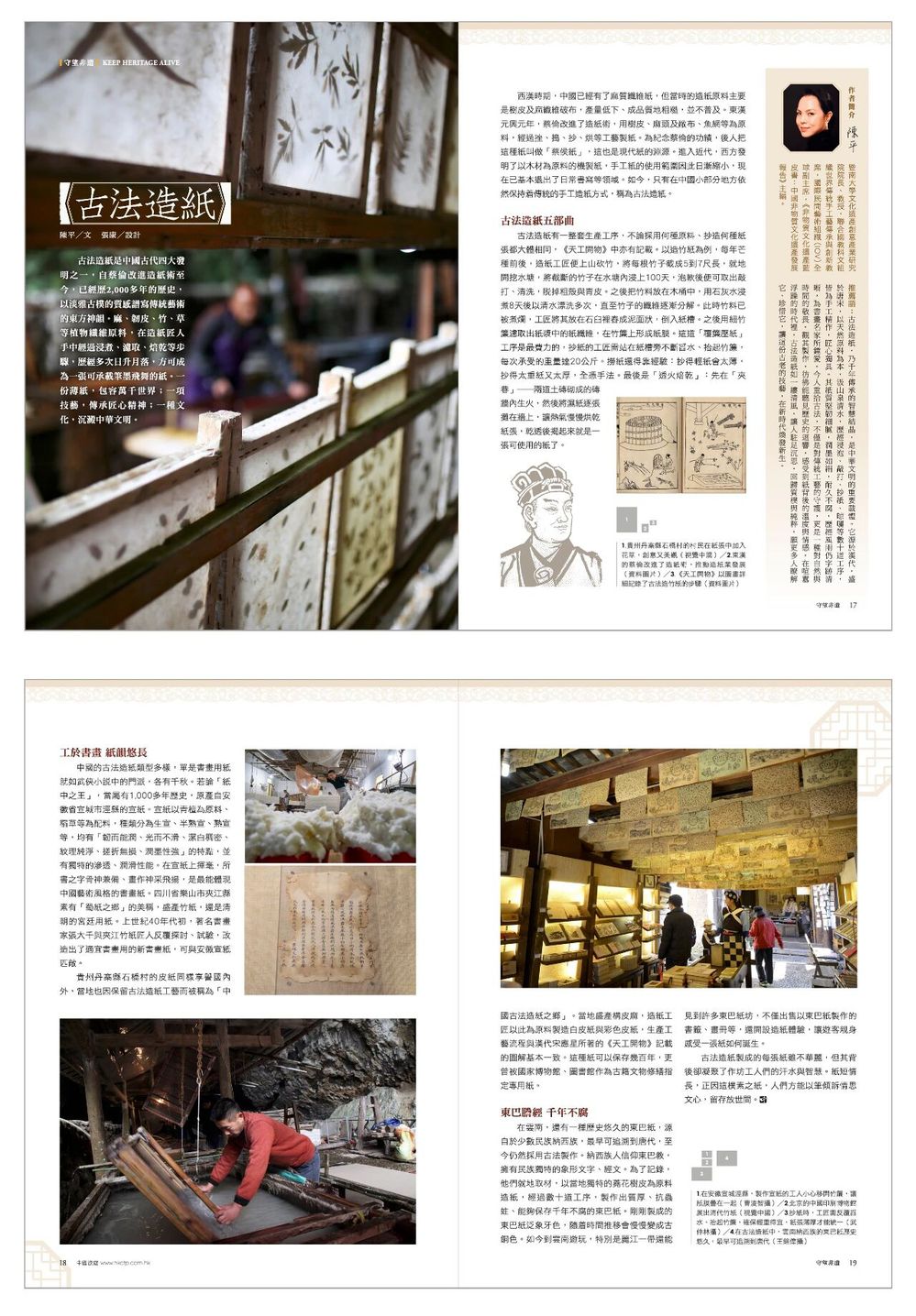
Observing the ancient paper-making methods of intangible cultural heritage
Special Column

Author Chen Ping
Dean and Professor of the Institute of Cultural Heritage and Creative Industries at Jinan University, and Chief Professor of World Heritage and Innovation in Traditional Handicrafts at UNESCO,Global President of the International Organization of Folk Arts (IOV), Editor in Chief of the Blue Book of Intangible Cultural Heritage: Report on the Development of China's Intangible Cultural Heritage.
Ancient papermaking is one of the the Four Great Inventions in ancient China. Since Cai Lun improved papermaking, it has experienced more than 2000 years of history, and has composed the oriental charm of traditional art with simple and elegant texture. Plant fiber materials such as hemp, phloem, bamboo, and grass undergo soaking, filtering, and drying in the hands of paper makers. After multiple cycles of rising and falling sun and moon, they can become a piece of paper that can carry ink and brush. A thin piece of paper that embraces the world; A skill that inherits the spirit of craftsmanship; A culture that has precipitated Chinese civilization.
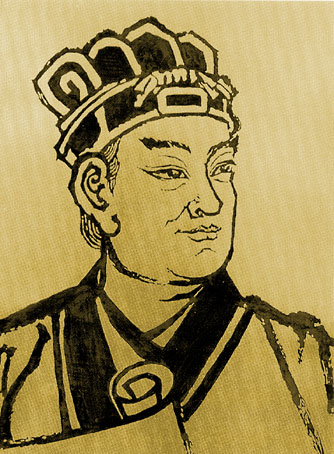
During the Eastern Han Dynasty, Cai Lun improved papermaking techniques and promoted the development of the paper industry (source image)
The ancient method of papermaking is a crystallization of wisdom passed down for thousands of years and an important carrier of Chinese civilization. It originated in the Han Dynasty and flourished in the Tang and Song Dynasties. It is based on natural materials, draws water from mountain springs, and goes through dozens of processes such as soaking, tapping, papermaking, and drying. It is all handmade with unique craftsmanship. Its paper is tough and delicate, with ink as smooth as silk, durable and not rotten, and its handwriting remains clear even after wind and rain, beloved by famous calligraphers and painters. The revival of ancient methods by modern people is not only a protection of traditional craftsmanship, but also a reverence for nature and time. Observing its production, it seems like one can hear the echoes of history and feel the temperature and emotions behind the paper. In the noisy and restless era, the ancient method of papermaking is like a gentle breeze, making people stop and ponder, returning to simplicity and purity. May more people understand and cherish it, and let this ancient skill shine with new vitality in the new era.
During the Western Han Dynasty, China already had hemp fiber paper, but the main raw materials for papermaking at that time were bark and hemp fiber cloth, with low production and rough texture of finished products, which were not widely used. In the first year of Yuanxing in the Eastern Han Dynasty, Cai Lun improved papermaking techniques by using bark, hemp heads, cloth, fish nets, and other raw materials to make paper through processes such as rolling, pounding, copying, and drying. To commemorate Cai Lun's achievements, later generations called this type of paper Cai Hou paper, which is also the origin of modern paper. In modern times, the West invented machine-made paper made from wood, and the use of handmade paper gradually narrowed. It has now basically withdrawn from daily writing and other fields. Nowadays, only a small part of China still maintains the traditional handmade papermaking method, known as ancient papermaking.
Five Classic Part of Ancient Papermaking
The ancient method of papermaking had a complete set of production processes, which were generally the same regardless of the raw materials used or the type of paper being copied. This is also recorded in the book Tiangong Kaiwu. Taking bamboo paper as an example, every year before and after the Mangzhong period, paper makers go up the mountain to cut bamboo. They cut each bamboo into 5 to 7 feet long and excavate a pond on site. The cut bamboo is soaked in the pond for 100 days, softened, and then taken out for tapping, cleaning, and removing the coarse shell and green skin. Afterwards, place the bamboo material in a wooden barrel and soak it in lime water for 8 days before rinsing it multiple times with clean water until the fibers of the bamboo gradually decompose. At this point, the bamboo material has been boiled to a pulp. The craftsman places it in a mortar and crushes it into a mud like texture, then pours it into a paper trough. Afterwards, filter out the paper fibers from the pulp using a fine bamboo curtain, and form a paper film on the bamboo curtain. The process of covering the curtain and pressing the paper is the most laborious, and the paper-making craftsman needs to stand next to the paper trough and constantly scoop water and lift the bamboo curtain, bearing a weight of up to 20 kilograms each time. Paper picking still relies on experience: if you copy light paper, it will be too thin, and if you copy too heavy paper, it will be too thick, it all depends on the technique. Finally, let the fire dry: First, start a fire in the Jiaxiang - a brick wall made of two adobe bricks. Then spread wet paper on the wall one by one, letting the hot air slowly dry the paper. After it dries, peel it off and it will be a usable piece of paper.
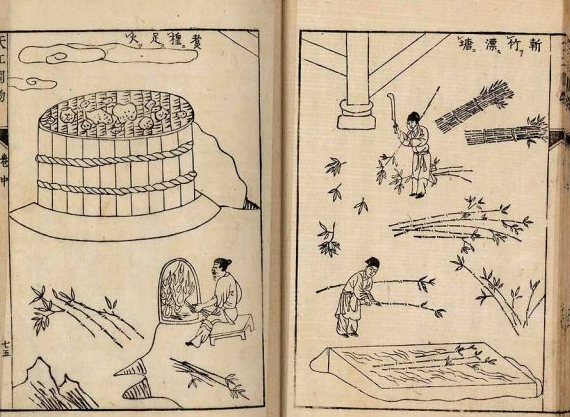
The book Tian Gong Kai Wu records in detail the steps of making bamboo paper using ancient methods through illustrations (source image)
Skilled in calligraphy and painting
There are various types of ancient paper-making techniques in China, just like the sects in martial arts novels, each with its own unique strengths. If we talk about the king of paper, it is undoubtedly Xuan paper with a history of more than 1000 years, originally from Jing County, Xuancheng City, Anhui Province. Xuan paper is made from green sandalwood as raw material and rice straw as ingredients. It is divided into raw Xuan, semi ripe Xuan, ripe Xuan, etc., all of which have the characteristics of tough and moisturizing, smooth but not slippery, white and dense, pure texture, non-destructive rubbing and folding, and strong ink wetting properties, and have unique penetration and lubrication properties. Waving on Xuan paper, the characters written are both bone and spirit, and the paintings are full of vitality, making it the most representative of Chinese art style. Jiajiang County, Leshan City, Sichuan Province, is known as the hometown of Shu paper and is rich in bamboo paper, which was also used as imperial paper in the Qing Dynasty. In the early 1940s, the famous calligrapher and painter Zhang Daqian and the bamboo paper craftsmen in Jiajiang repeatedly explored and experimented, and transformed a new book of paper suitable for calligraphy and painting, which could rival Anhui Xuan paper.
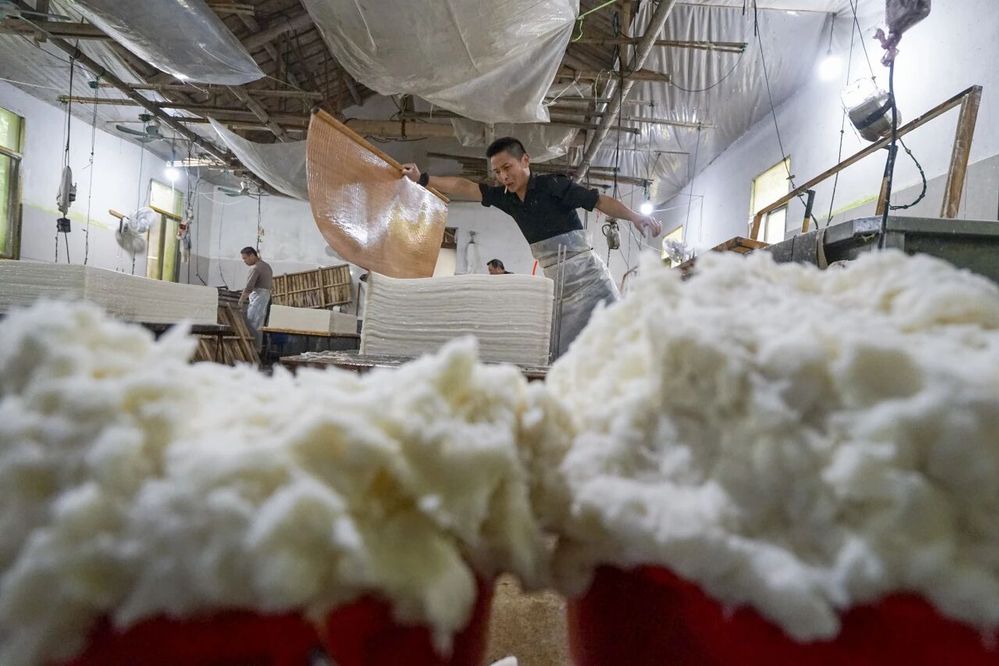
In Jing County, Xuancheng City, Anhui Province, workers making rice paper carefully remove bamboo curtains and stack the paper film together (photo by Cao Lingzhi)
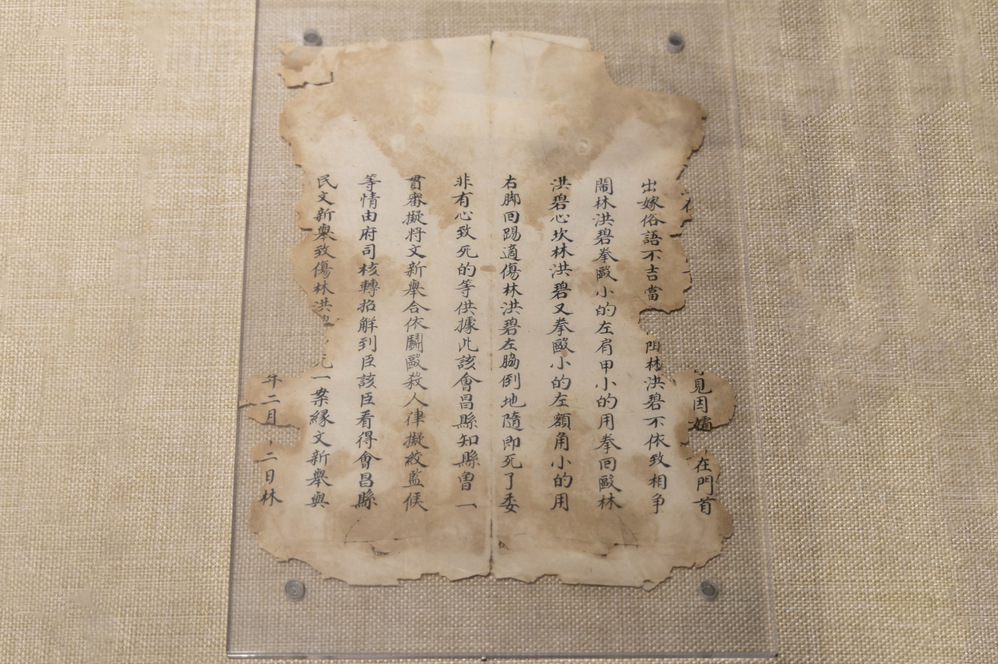
The China Printing Museum in Beijing exhibits Qing Dynasty bamboo paper source/visual China
The leather paper in Shiqiao Village, Danzhai County, Guizhou Province is also renowned both domestically and internationally, and the local area is known as the hometown of ancient Chinese paper-making due to the preservation of ancient paper-making techniques. The local area is rich in structured hemp, and paper-making craftsmen use it as raw material to produce white paper and colored paper. The production process is basically consistent with the diagram recorded in the book Tiangong Kaiwu by Song Yingxing in the Han Dynasty. This type of paper can be preserved for hundreds of years and has been designated as a special paper for the restoration of ancient books and cultural relics by national museums and libraries.
Dongba Paper making for thousands of years
In Yunnan, there is also a type of Dongba paper with a long history, originating from the Naxi ethnic group, which can be traced back to the Tang Dynasty and is still made using ancient methods to this day. The Naxi people believe in Dongba religion and have their own unique pictographic characters and scriptures. In order to keep records, they used local materials and the unique bark of the Chinese parasol tree as raw material to make paper. After dozens of processes, they produced thick, insect resistant, and corrosion-resistant Dongba paper that can be preserved for thousands of years. The just made Dongba paper has an ivory color and will gradually turn into bronze color over time. Nowadays, when visiting Yunnan, especially in the Lijiang area, you can also see many Dongba paper mills. They not only sell bookmarks, picture books, etc. made of Dongba paper, but also offer paper-making experiences, allowing tourists to personally experience how a piece of paper was born.
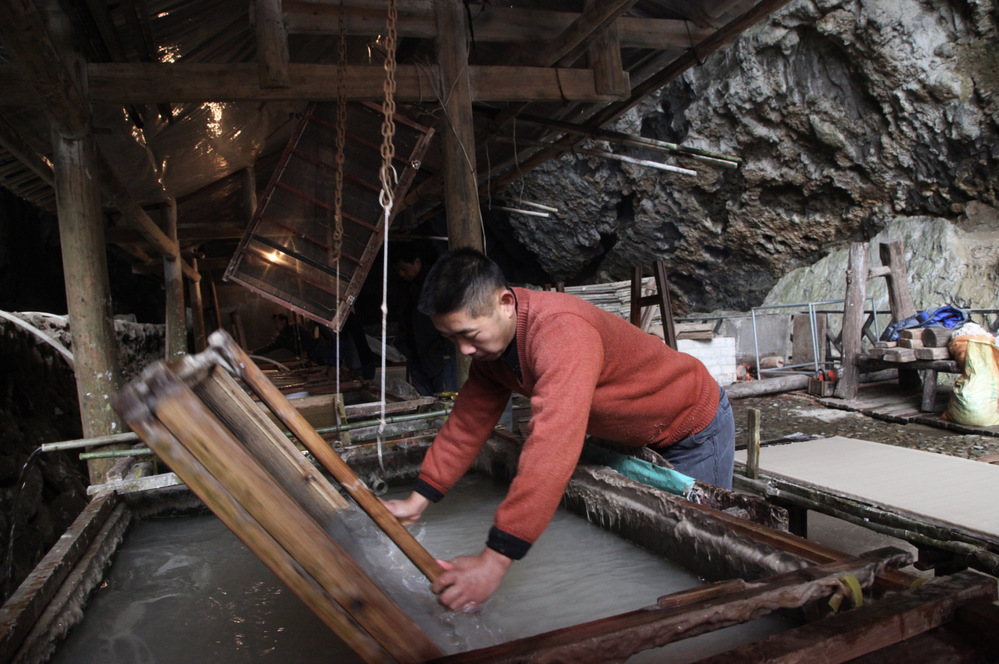
When making paper, craftsmen need to repeatedly scoop water and lift bamboo curtains to ensure that the weight is appropriate, so that the thickness of the paper can be uniform (photo by Wu Zhonglin)
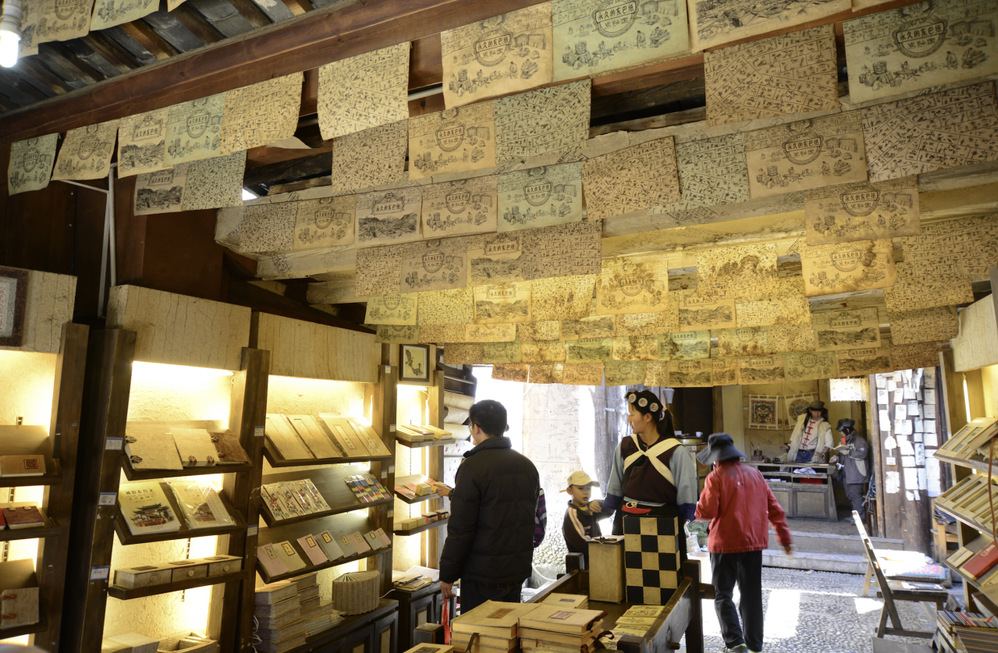
In ancient papermaking, Dongba paper of the Naxi people in Yunnan has a long history, dating back to the Tang Dynasty (photo by Wang Mingwei)
Although each piece of paper made by ancient papermaking methods may not be glamorous, it embodies the sweat and wisdom of the workshop workers behind it. Paper is thin but emotions are strong. It is precisely because of this simple paper that people can express their thoughts and emotions with a pen and keep them in the world.
This article was published in the seventh issue of China Tourism magazine in Hong Kong in 2025
《China Tourism》Magazine
Thanks to 《China Tourism》Magazine
A light book, traveling with you through the north and south of the Yangtze River, exploring all over the world. The Hong Kong China Tourism Publishing House was established in 1980 and launched the monthly magazine China Tourism in July of the same year. With wonderful pictures and vivid articles, it deeply reports on the beautiful scenery, geographical features, folk customs, historical sites, cultural arts, etc. of mainland China, and is deeply loved by tourists and photography enthusiasts. China Tourism has been excavating and reporting on many little-known scenic spots and customs for many years. In the future, we will continue to lead readers to witness the ever-changing landscape of China and fully appreciate its beautiful rivers and mountains.
