

UNESCO designates 26 new biosphere reserves across 21 countries – the highest number in 20 years. The World Network of Biosphere Reserves now includes 784 sites in 142 countries, with an additional one million km² of natural areas brought under protection since 2018 – equivalent to the size of Bolivia. This year, six countries welcome their first biosphere reserve, while São Tomé and Príncipe becomes the first State to have its entire territory designated as a biosphere reserve.
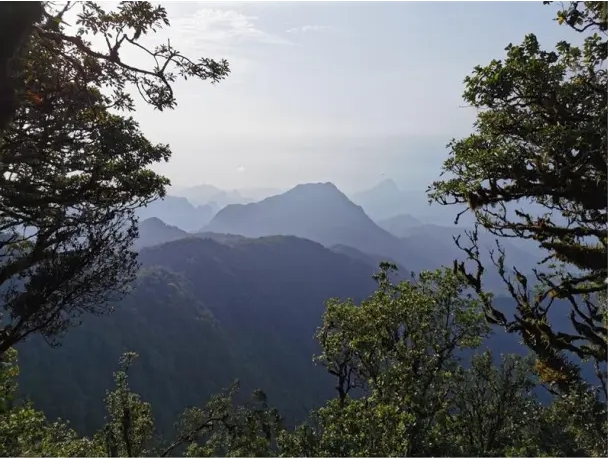
Pico de São Tomé, Sao Tome and Principe, @Marion Tafani
With nearly thirty new designations this year, our World Network of Biosphere Reserves has reached a major milestone, now protecting 5% of the planet. Within these reserves, new ways of balancing nature conservation with sustainable livelihoods are being forged every day. UNESCO will continue to mobilize States, scientists, civil society, and local and Indigenous communities to continue this positive momentum.
——Audrey Azoulay UNESCO Director-General
This week, UNESCO gathered more than 2,000 international experts, public decision-makers, civil society, Indigenous representatives and youth for the 5th World Congress of Biosphere Reserves in Hangzhou, China, to take stock of the achievements of this historic UNESCO programme, and chart its course for the coming decade. During the Congress, Audrey Azoulay invited every Member State to establish at least one biosphere reserve by 2035.
First designations in six countries and new reserves worldwide
Today, six countries are seeing the designation of their first biosphere reserve: Angola, Djibouti, Equatorial Guinea, Iceland, Oman and Tajikistan.
In addition to these six, new reserves have also been designated in Albania, China, Ethiopia, France, Greece, India, Indonesia, Jordan, Madagascar, Malaysia, Mongolia, Portugal, Saudi Arabia and Sweden. São Tomé and Príncipe becomes the first State to have its entire territory designated as a biosphere reserve.
These new sites were designated during the 37th session of the International Coordinating Council of UNESCO's Man and the Biosphere Programme, held from 26 to 28 September in the Lin’An district of Hangzhou, China.
A model of protection that’s gaining momentum
UNESCO’s Man and the Biosphere (MAB) Programme has witnessed unprecedented growth in recent years: since 2018, 142 new biosphere reserves have brought an additional one million km² of additional natural areas under protection. Today, the 784 reserves cover over 8 million km² – equivalent to the size of Australia – and directly benefit the nearly 300 million people who live within these areas.
Since 1971, biosphere reserves have played a central role in UNESCO’s environmental mission. Alongside natural World Heritage sites and Global Geoparks, they contribute to protecting more than 13 million km² of terrestrial and marine ecosystems under UNESCO’s umbrella, advancing the global Kunming-Montreal target of conserving 30% of land and sea by 2030.
With the entry into force of the BBNJ Treaty in January 2026, countries will be able to designate and manage protected areas in the high seas, backed by science and robust management plans. Through its marine World Heritage sites, biosphere reserves and marine geoparks, UNESCO already safeguards more than 4.1 million km² – an area equivalent to the Mediterranean Sea.
“Living laboratories” as a solution to climate challenges
Biosphere reserves safeguard some of the planet’s richest and most fragile ecosystems. They harbour a significant share of global biodiversity – including more than 60% of terrestrial vertebrate species, 12% of mapped mangroves, 10% of salt marshes and 8% of the world’s seagrass meadows.
They foster local and community initiatives and serve as learning grounds for younger generations, through educational programmes tailored to schools as well as to local and Indigenous communities.
Partnerships with the private sector further strengthen these efforts. For example, the Amazonia Project, deployed across eight biosphere reserves with support from LVMH, combines Indigenous knowledge with modern science. It has already supported more than 40 local initiatives, creating sustainable green jobs in agroforestry and regenerative agriculture, while strengthening forest and biodiversity protection against wildfires.
Newly Designated Biosphere Reserves
Albania – Vjosa Valley Biosphere Reserve
Angola – Quiçama Biosphere Reserve
China:
Daqingshan Biosphere Reserve
Zhouzhi Biosphere Reserve
Djibouti – Archipel des Sept Frères – Ras Siyyan – Khor Angar – Godoria Biosphere Reserve
Equatorial Guinea – Isla de Bioko Biosphere Reserve
Ethiopia – Anywaa Forest Biosphere Reserve
France
Lac du Bourget, between the Rhône and the Alps Biosphere Reserve
Marshes and Tides between the Loire and the Vilaine Biosphere Reserve
Greece – Mount Parnon – Cape Maleas Biosphere Reserve
Iceland – Snæfellsnes Biosphere Reserve
India – Cold Desert Biosphere Reserve
Indonesia – Raja Ampat Biosphere Reserve
Jordan
Ajloun Biosphere Reserve
Yarmouk Biosphere Reserve
Madagascar
Mantadia Biosphere Reserve
Tsimembo Biosphere Reserve
Malaysia – Kinabatangan Biosphere Reserve
Mongolia – Khomyn Tal Biosphere Reserve
Oman
Al Jabal Al Akhdar Biosphere Reserve
Sirrin Biosphere Reserve
Portugal – Arrábida Biosphere Reserve
Saudi Arabia – Imam Turki Bin Abdullah Biosphere Reserve
São Tomé and Príncipe – Ilha de São Tomé Biosphere Reserve
Sweden – Storkriket Biosphere Reserve
Tajikistan – Romit Biosphere Reserve
——This article is reprinted from the official website of UNESCO
