

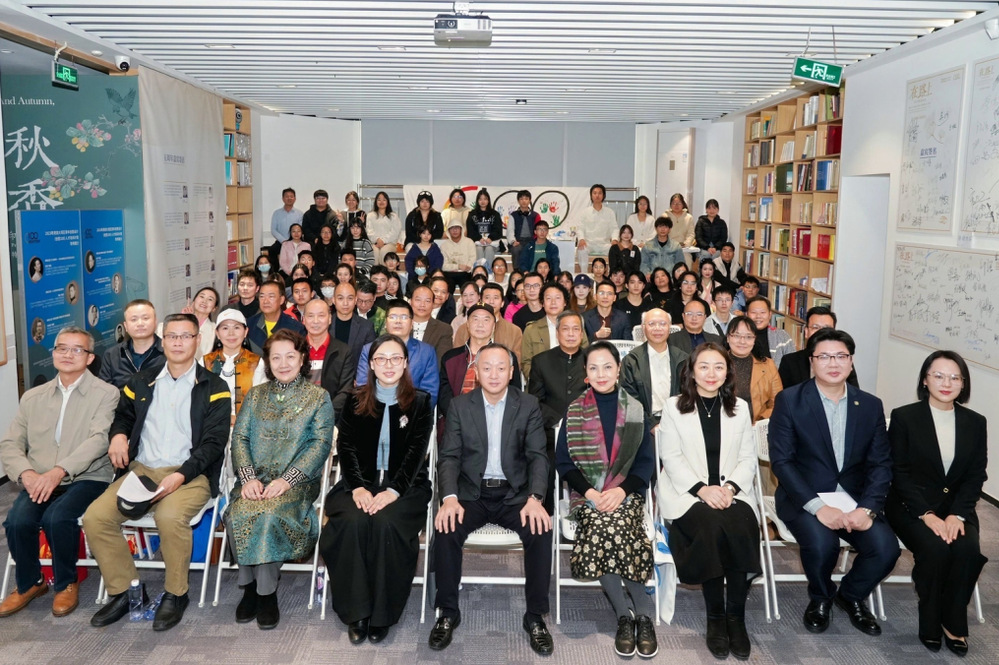
On the afternoon of January 9th, the opening ceremony of Jinan University's Four Seas Intangible Cultural Heritage Inheritance and Innovation Talent Training Program and the Cross border Exchange Seminar on Intangible Cultural Heritage Protection and Inheritance were held at the Four Seas Art Space on the third floor of the alumni building in Shipai Campus of Jinan University. Experts and scholars from all walks of life, along with 120 students from Hong Kong, Macao, and Taiwan at Jinan University, gathered together to discuss the inheritance and innovation of intangible cultural heritage. The atmosphere at the event was lively, writing a new footnote for the protection and international dissemination of intangible cultural heritage.
This event is guided by the UNESCO Chair in the Inheritance and Innovation of World Traditional Handicrafts, the Culture and Sports Committee of the Guangdong Provincial Committee of the Zhigong Party, and the Guangdong Overseas Chinese Youth Federation. It is hosted by the Cultural Heritage and Creative Industry Research Institute of Jinan University, and co organized by the Guangzhou Arts and Crafts Association, Guangzhou Literature and Art Volunteer Association, and Guangdong Tianbo International Cultural Industry Co., Ltd.
Gathering Strength: Opening Ceremony Embarks on a New Chapter of Inheritance
The Four Seas Intangible Cultural Heritage Inheritance and Innovation Talent Training Program of Jinan University is led by the Cultural Heritage Creative Industry Research Institute of Jinan University. It convenes 120 voluntary students from Hong Kong, Macao, Taiwan, and other overseas Chinese to participate in the program. Through lectures, studies, visits, and research for about six months, they will be fully exposed to traditional Chinese intangible cultural heritage, and trained to become Chinese intangible cultural heritage inheritors and disseminators who love traditional Chinese culture and have certain knowledge of intangible cultural heritage.
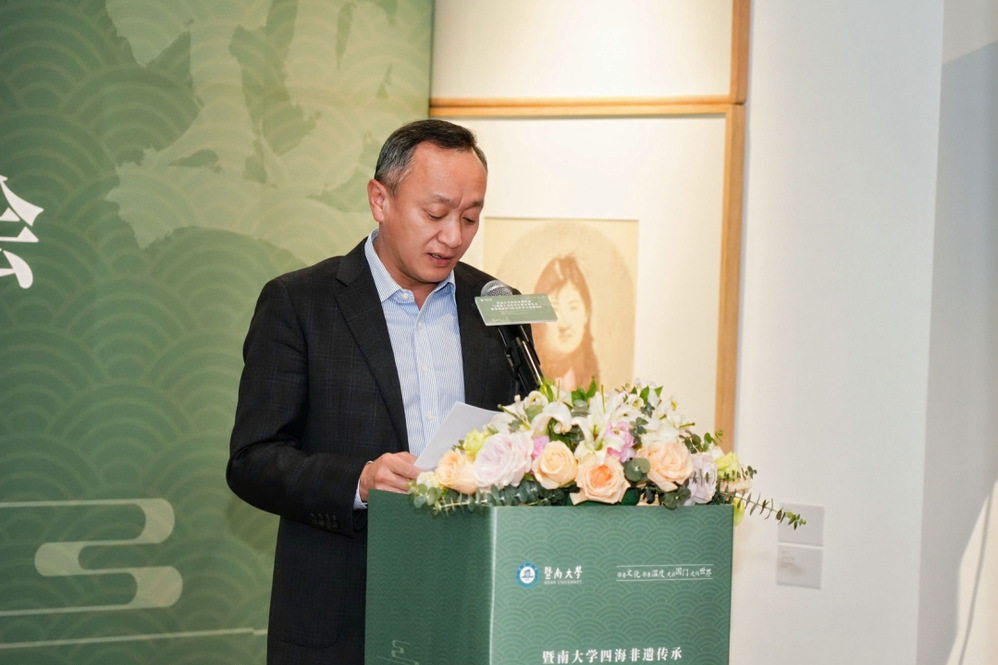
Sun Yu, Deputy Secretary of the Party Committee of Jinan University, made a speech
Sun Yu, Deputy Secretary of the Party Committee of Jinan University, emphasized that Jinan University has always been committed to cultural inheritance and innovation. This training program will inject new academic strength and youth vitality into the protection of intangible cultural heritage. Kang Tiandong, Deputy Director of the Sports, Health and Arts Department of the Education Department of Guangdong Province, stated that intangible cultural heritage is the root and soul of Chinese culture, and inheriting intangible cultural heritage requires the participation of more young people and the exploration of cross-border innovation.
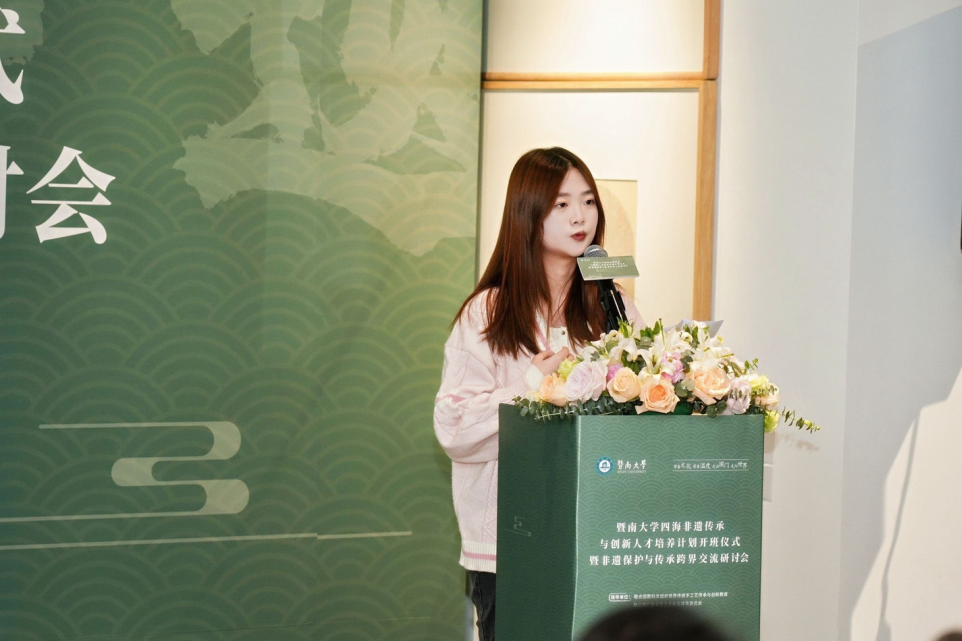
Speech by Tan Meien, a student from Hong Kong, China
The appointment ceremony for project consultants and mentors was held at the event site, and the student representatives were awarded plaques. Tan Meien, a student from Hong Kong, China, stated in her speech on behalf of the students that she will take practical actions to inherit the beauty of Chinese culture and promote intangible cultural heritage to a broader stage.
Viewpoint collision: Cross border dialogue inspires new paths for inheritance
The cross-border exchange seminar on the protection and inheritance of intangible cultural heritage on that day covered four major themes, inviting intangible cultural heritage inheritors, cultural institution leaders, and academic experts to exchange ideas on stage and engage in multidimensional ideological collisions. Professor Chen Ping, Dean of the Institute of Cultural Heritage and Creative Industries at Jinan University, gave a keynote speech titled Making Heritage the Best Way to Tell China's Story, elaborating on the important significance of intangible cultural heritage in international communication. She pointed out, Telling Chinese stories well relies on cultural foundations, and intangible cultural heritage is an important carrier of Chinese stories
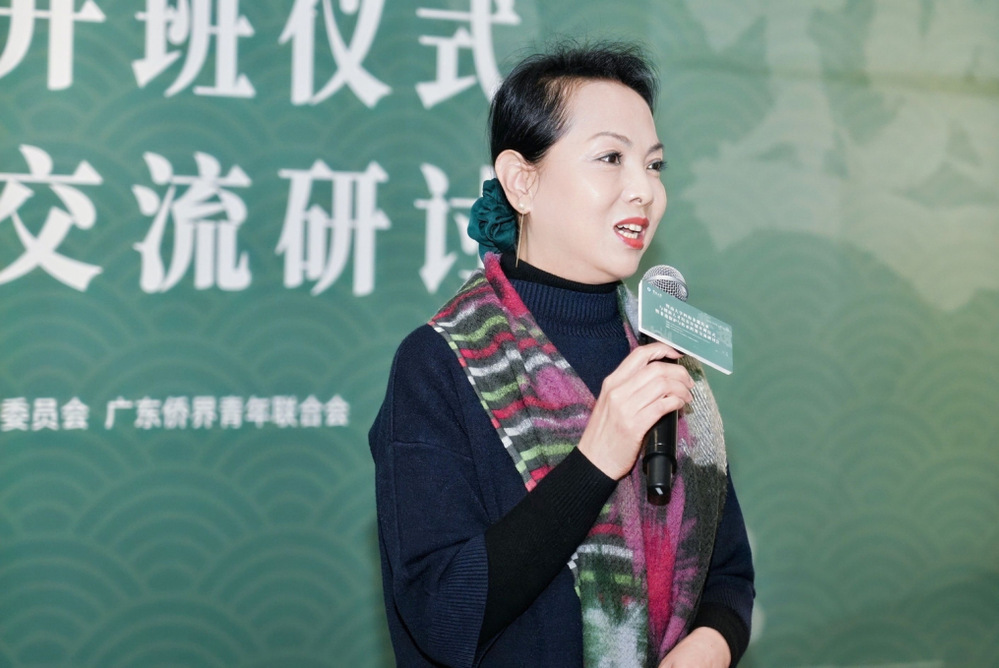
Professor Chen Ping, Dean of the Institute of Cultural Heritage and Creative Industries at Jinan University
The roundtable forum held lively discussions on four themes: Inheritance and Innovation of Intangible Cultural Heritage, Modern Inheritance and International Communication of Intangible Cultural Heritage, Cross border Integration of Intangible Cultural Heritage, and Intangible Cultural Heritage and Youth Inheritance.
Ye Zhihai, Vice Dean of the Cultural Heritage and Creative Industry Research Institute of Jinan University, presided over the theme session of Intangible Cultural Heritage Inheritance and Innovation. Guests such as Cai Zebin, Director of the Industry Research Department of Guangzhou Cultural Tourism Industry Promotion Center, and Liang Huoquan, President of Guangzhou Arts and Crafts Association, shared their experiences and challenges in the industrialization and youth dissemination of intangible cultural heritage projects.
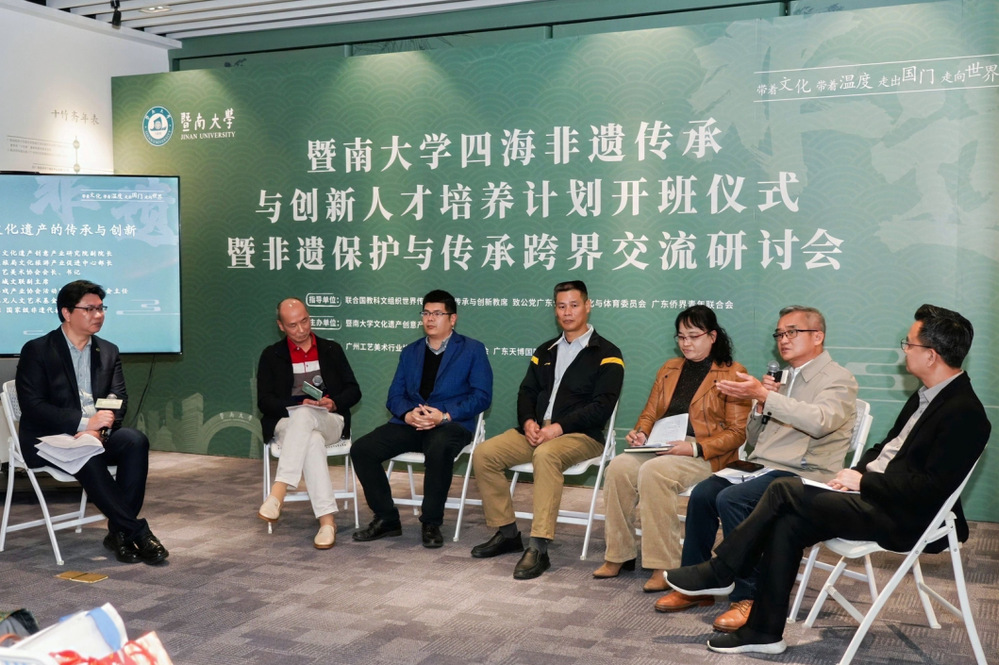
Discussion on the theme of Inheritance and Innovation of Intangible Cultural Heritage
The theme session of Modern Inheritance and International Communication focuses on how to promote Lingnan intangible cultural heritage internationally, presided over by Liang Zhuoquan, a member of the Guangdong Intangible Cultural Heritage Promotion Association and vice chairman of the Guangzhou Cultural and Historical Association. He pointed out at the beginning that intangible cultural heritage not only needs to be protected, but also needs to be disseminated through international language and forms, making the world hear the voice of China. Guests such as Chen Suisheng, President of the Guangdong Film and Television Culture Promotion Association, and Kong Yuan, a national tea critic, discussed the path of international dissemination and proposed to fully utilize digital technology, film and television works, and other means to revitalize traditional culture in the context of globalization.
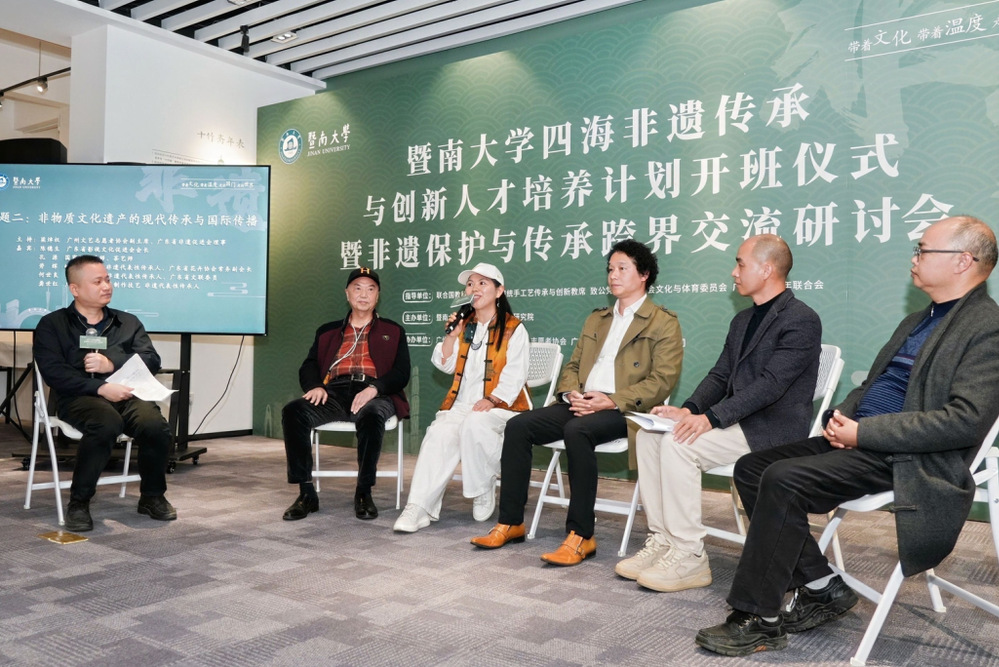
Discussion on the theme of Modern Inheritance and International Communication
In the discussion on the theme of Cross border Integration, Gao Xia, President of the Guangdong Public Culture Promotion Association, emphasized the importance of cross-border in the development of intangible cultural heritage. Cross border integration is not about cutting apart tradition, but about making traditional culture shine with new brilliance. Inheritors from projects such as Guangxiu, Landiao, and Cai Lifo Quan will jointly explore how traditional handicrafts can be combined with modern design and digital technology to expand more application scenarios.
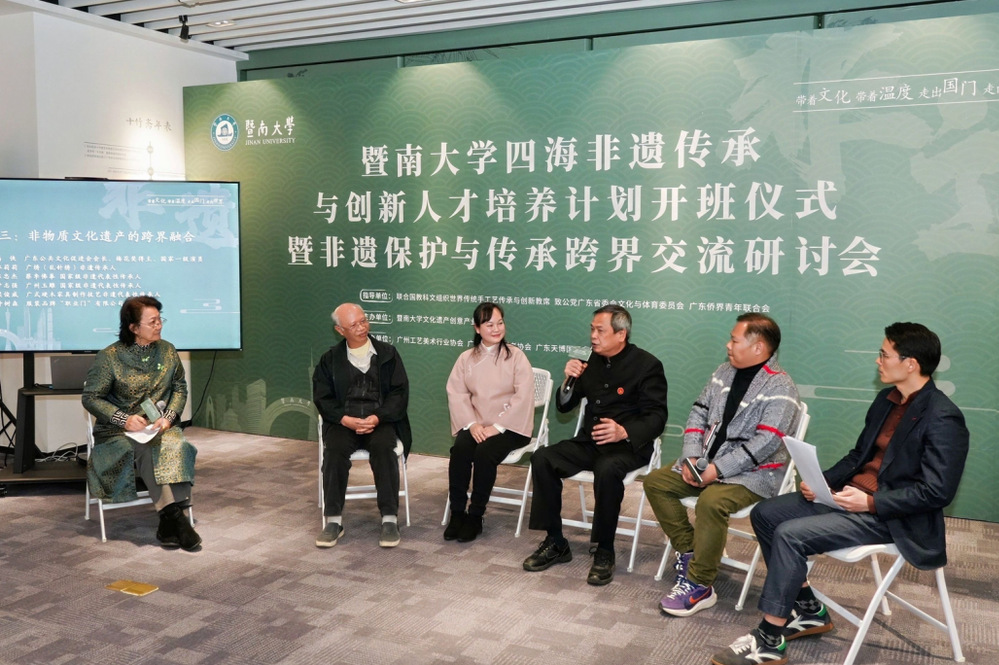
Discussion on the theme of Cross border Integration
Dr. Liu Lulu, a young teacher at Jinan University, presided over a thematic discussion on Intangible Cultural Heritage and Youth Inheritance, focusing on the power of the younger generation in intangible cultural heritage inheritance. Student representatives Zhang Jingle and Hong Kaiwei expressed their hope to use innovative methods to make intangible cultural heritage more down-to-earth and to make more young people fall in love with it.
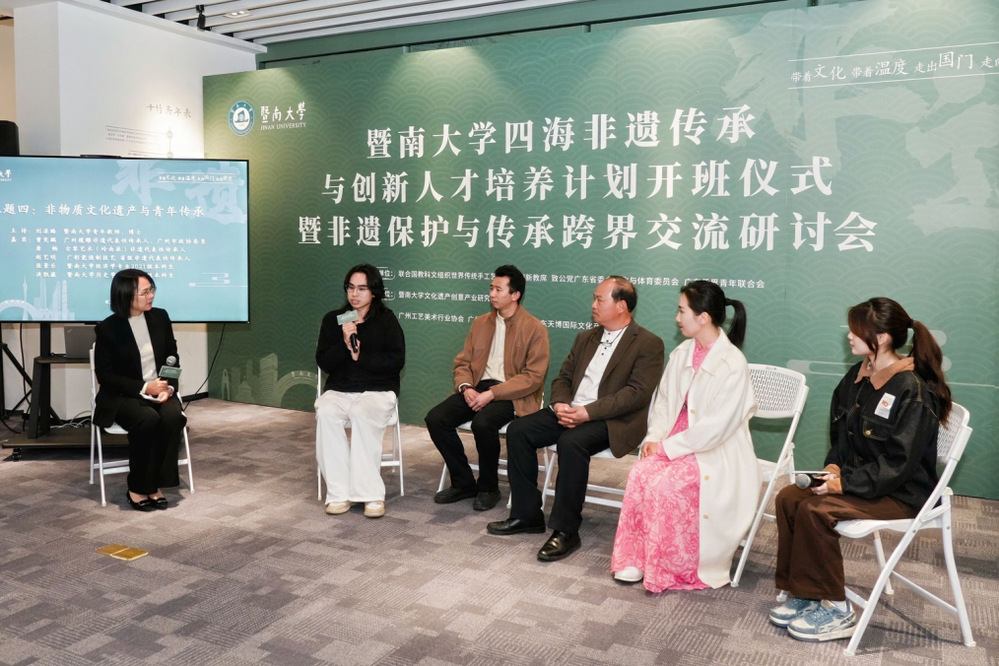
Discussion on the theme of Intangible Cultural Heritage and Youth Inheritance
Continuous Inheritance: Cross border Integration Ignites New Vitality of Intangible Cultural Heritage
Intangible cultural heritage is the crystallization of the wisdom of the Chinese nation, and cross-border integration is the future direction of innovation in intangible cultural heritage. At this seminar, the attendees unanimously agreed that intangible cultural heritage needs to embrace the new era while maintaining its cultural roots, and inject fresh blood into traditional skills through integration with digitalization, cultural and creative industries, tourism, and other industries. The Four Seas Intangible Cultural Heritage Inheritance and Innovation Talent Training Program is a new starting point, and we hope that in the future, all sectors can work together to make intangible cultural heritage shine brighter on the stage of the new era.
