

The Mid-autumn Day
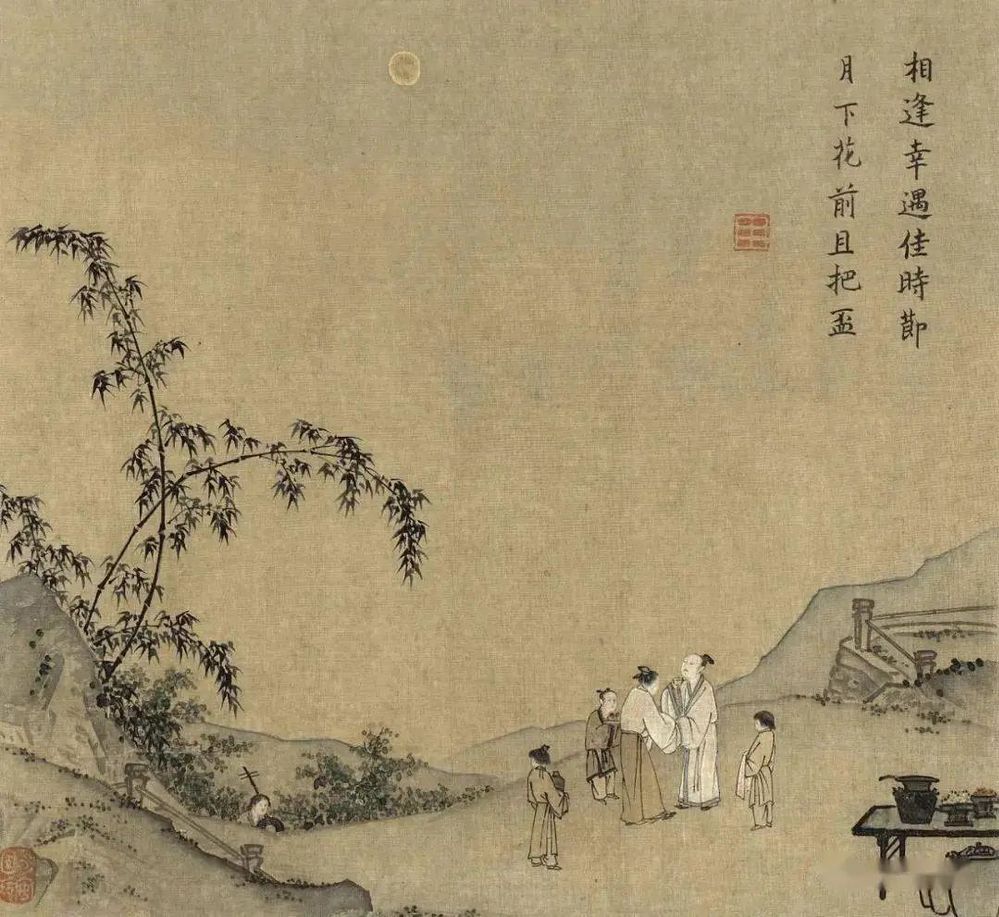
▲Song Mayuan's Cup Picture Under the Moon collected by Tianjin Museum
The 15th day of the eighth lunar month is the traditional Mid Autumn Festival in China. According to the interpretation of the ancient Chinese calendar, August is the second month of autumn, known as Zhongqiu, and the fifteenth day of August is also in the middle of Zhongqiu, so it is called Mid Autumn Festival. The Mid-Autumn Festival is also called Reunion Festival because the moon is full and symbolizes reunion.
Mid-Autumn Festival originated in ancient times, popularized in the Han Dynasty, shaped in the early Tang Dynasty, and prevailed after the Song Dynasty. There have been numerous customs and legends surrounding the Mid Autumn Festival since ancient times. The Mid Autumn Festival is also the season for harvesting autumn fruits. Every household should prepare delicious food and share the joy of the harvest; Appreciating the moon with lanterns, celebrating family reunion, and expressing homesickness and longing for relatives, has formed customs such as worshiping the moon, admiring the moon, eating mooncakes, and drinking osmanthus wine.
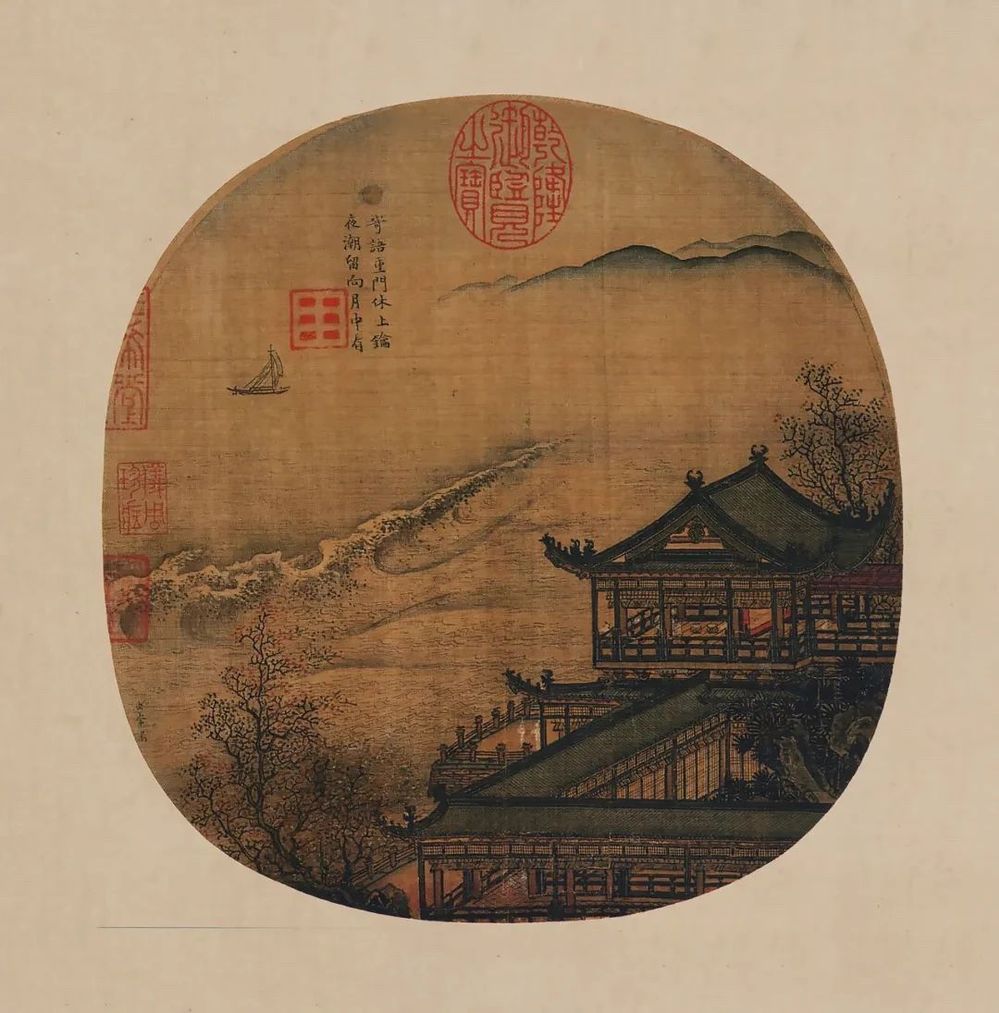
▲Song Li Song's Watching Tides on a Moon Night
The Mid-Autumn Festival is a traditional festival that Chinese people attach great importance to. What did the ancients do during the Mid Autumn Festival? The royal family can sing and dance with birds and swallows, and the people can gather together as a family. As for literati and ink artists, the bright moonlight has inspired many talented individuals to express their longing for their hometown and loved ones on paper and pen, leaving behind many precious works about the Mid Autumn Festival for future generations. Today, let's take a look at the famous paintings passed down through generations and see how ancient people celebrated the Mid Autumn Festival.
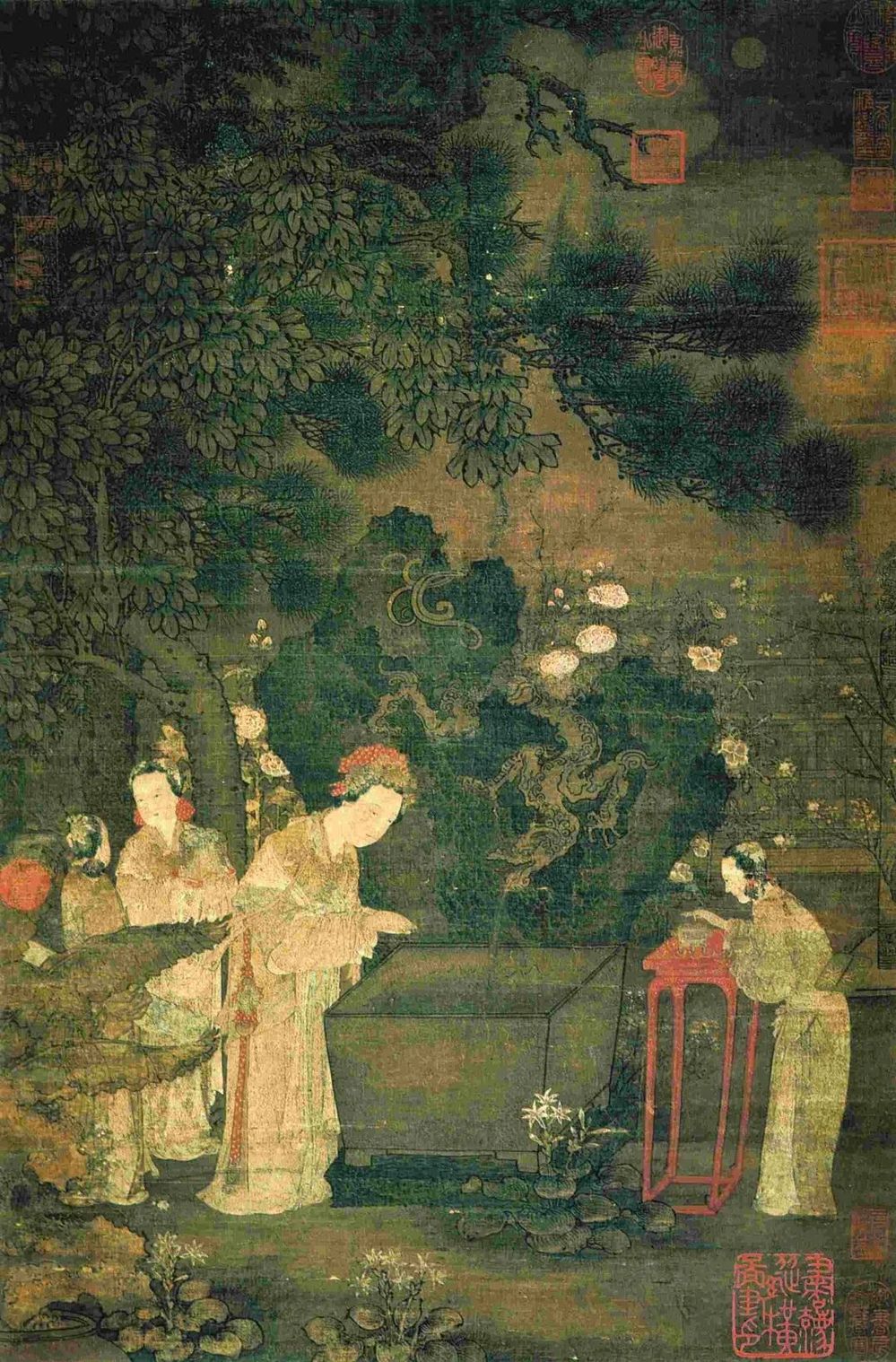
▲Moon Washing Picture from the Five Dynasties period | housed in the National Palace Museum in Taipei
The scene of Moon Washing Picture should be the backyard of a wealthy family's courtyard, with winding paths leading to secluded surroundings and lush pine and cypress trees, full of vitality. The bright moon hangs high in the sky, casting a silver glow, and the feeling of refreshing autumn air is strong. The coiled dragon on the strange stone is lowering its head to release water, spitting it into the pool causing ripples, and the moon's shadow reflects in the blue water. A dressed woman was attracted by the jade toad in the water and reached out her jade hand to hold it. The three maidservants beside them, either burning incense at the table, holding objects, or playing musical instruments, had solemn and calm expressions. This painting shows the ancient custom of worshipping the moon and praying for blessings during the Mid Autumn Festival.
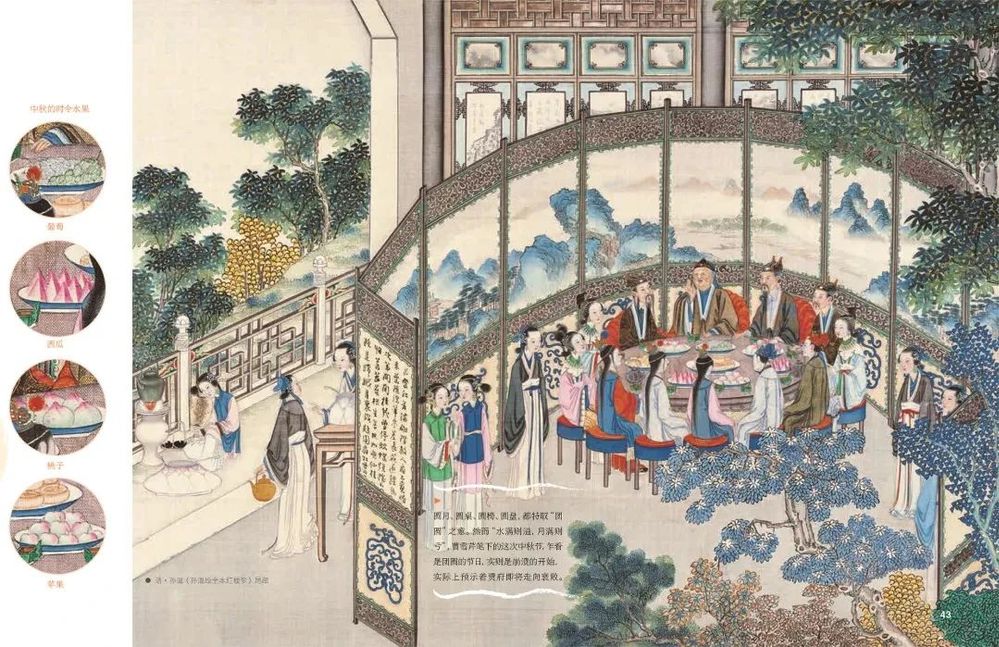
▲The Dream of Red Mansion
In ancient China, the Mid Autumn Festival banquet customs were most refined and elegant in the palace, and the Mid Autumn Festival banquet customs of the Jia family in Dream of the Red Chamber were also quite particular. This picture is taken from Sun Wen's painting A Dream of Red Mansions, a painter in the Qing Dynasty. It depicts the scene of what and how people in the Jia family eat on the Mid-Autumn Festival. The bright moon hung high, and everyone from the Jia family came to the Grand View Garden to admire the moon. Everyone sat around the table, with mooncakes placed in the middle of the table, surrounded by fruits and melons, and a screen placed behind them. These were all the norms of the Qing Dynasty's moon worship ceremony, indicating that the Jia family was extremely prosperous at that time.
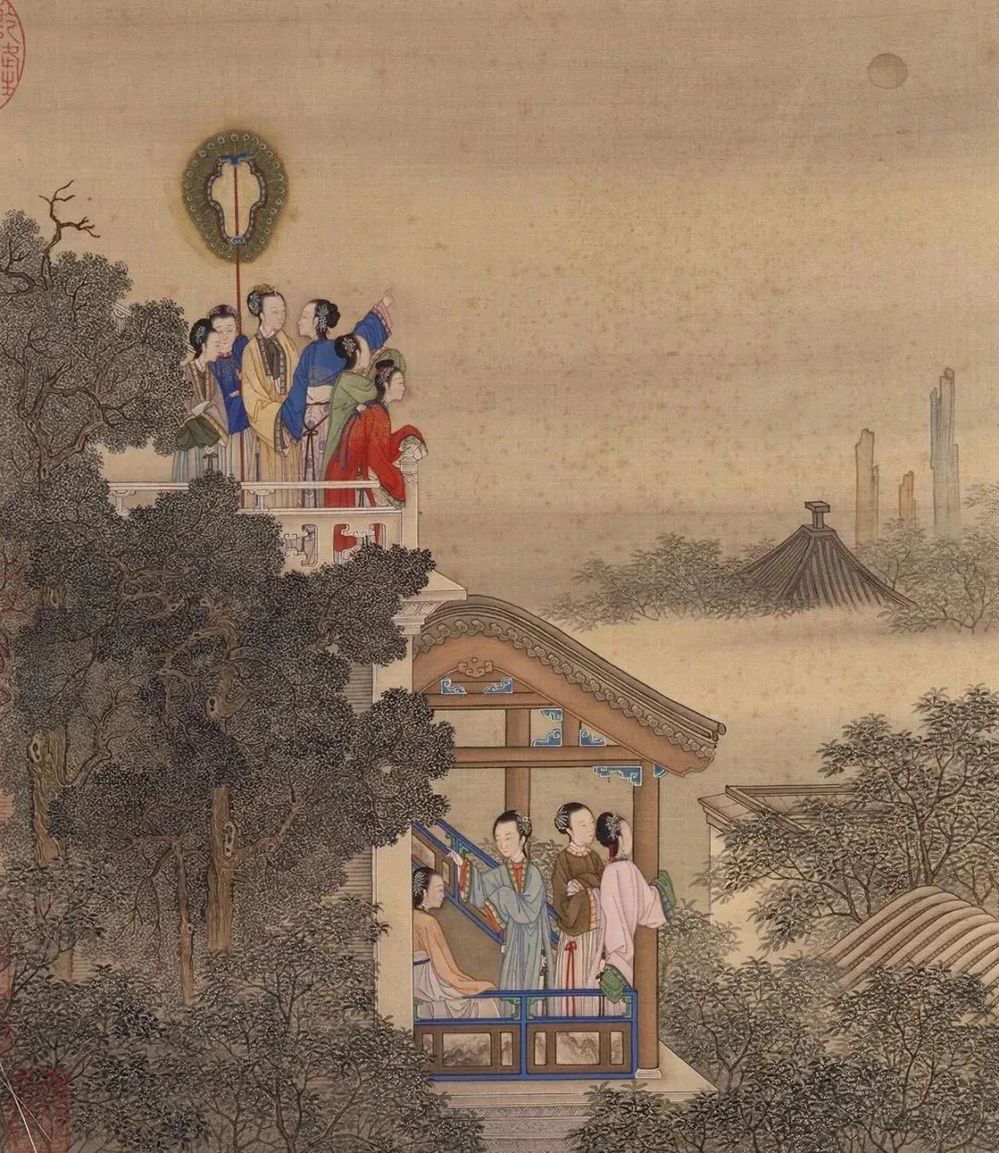
▲Moon Man Qing Travel Atlas
The book 'Moon Man Qing You Tu' depicts the deep palace life of palace concubines for 12 months a year. This scene is called August - Viewing the Moon at Qiongtai, depicting the scene on a Mid Autumn Festival night where wealthy ladies gather on a high platform, reciting poems and admiring the moon. The author's aesthetic orientation in character creation is based on the literati paintings of Tang Yin and Qiu Ying in the Ming Dynasty, pursuing a delicate and elegant mood. They marched in groups of three or five inside the pavilions and towers depicted by boundary paintings or under the flower stones with fine brushstrokes, showcasing a luxurious and leisurely palace life.
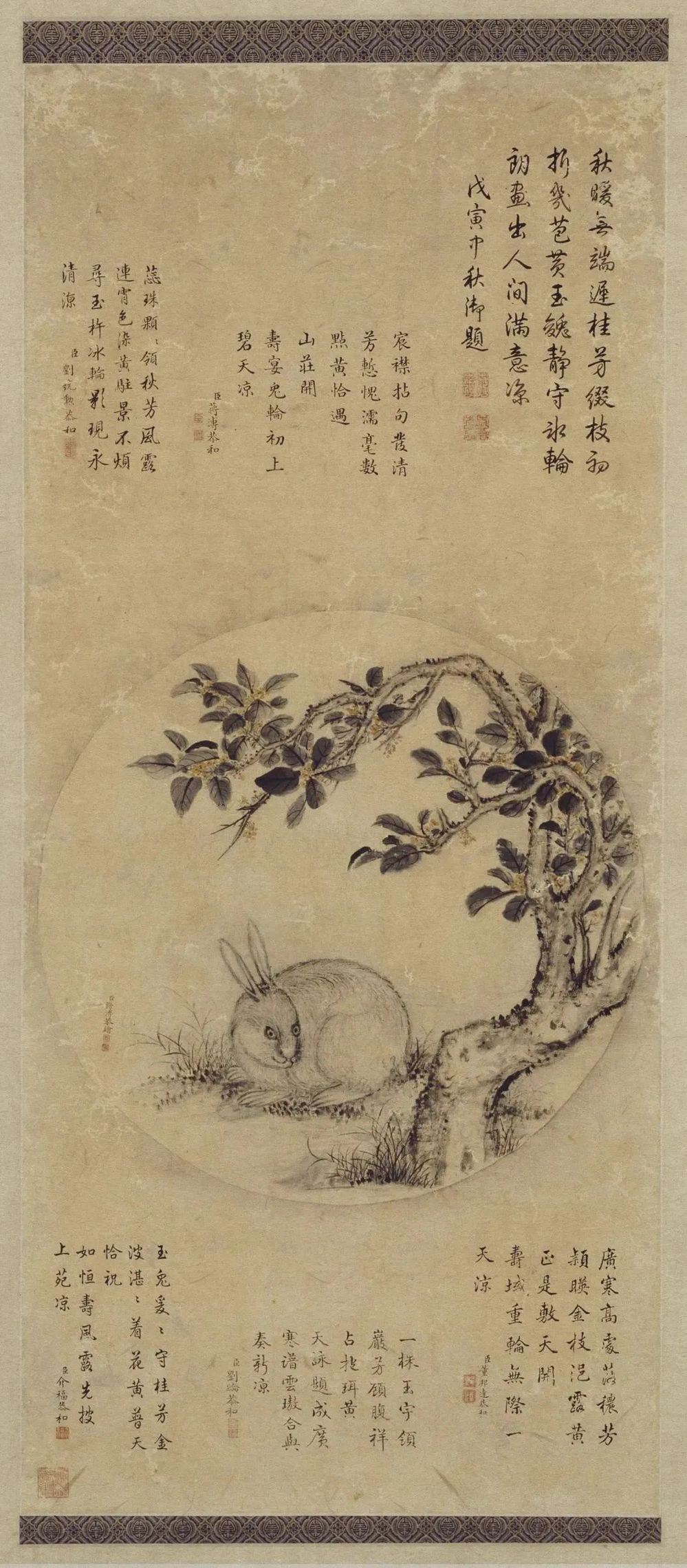
▲Qing | Jiang Pu's The Picture of the Guitu Rabbit in the Mid Moon
In ancient times, literati wrote poems and lyrics, often using jade rabbits to represent the moon. The painting of the Guitu Rabbit in the Mid Autumn Festival by Jiang Pu in the Qing Dynasty is also a famous painting with the theme of Mid Autumn Festival. This painting depicts the full moon with ink, which is vivid and lovely. The exquisite portrayal of the beautiful legends of the Jade Rabbit and the Osmanthus Tree in the middle of the moon is truly a beautiful folk art piece.
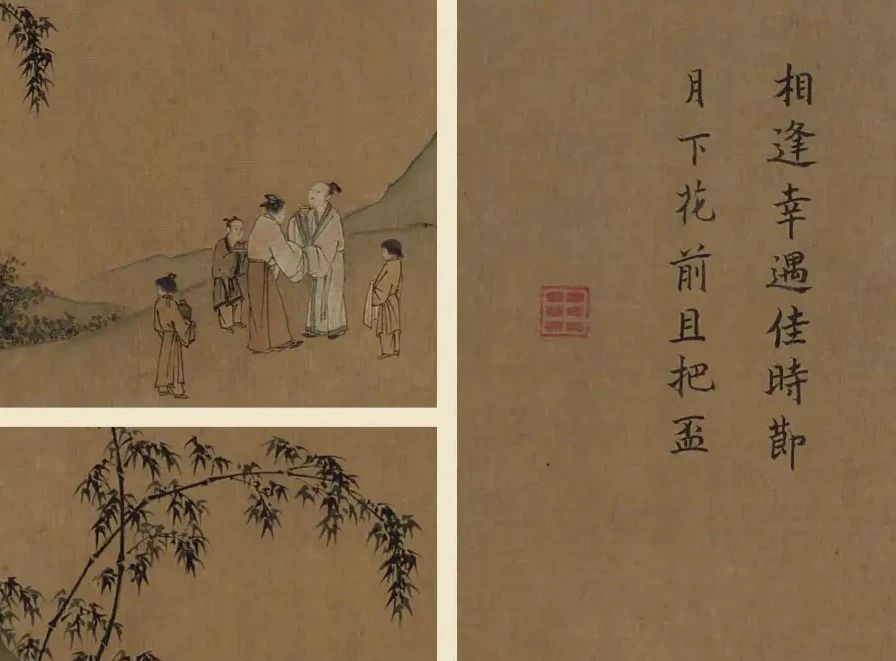
▲Song | Mayuan's Cup Picture under the Moon
The painting 'Cup Under the Moon' by the Southern Song Dynasty painter Ma Yuan is also a masterpiece that has been passed down through generations. The picture depicts a beautiful scene on the night of the 15th Mid Autumn Festival, where a round moon hangs high in the sky, and the sky and earth are bright and vast. The owner and long lost friends enjoy the moon together. Although the entire picture only depicts the six main and servant people, it contains various expressions and vivid brushwork, which is quite interesting. The open mountains and forests under the moon are elegant and quiet, with clear and elegant colors; The mountains and rocks are aged and free spirited, with sharp and precise strokes, firm and powerful.
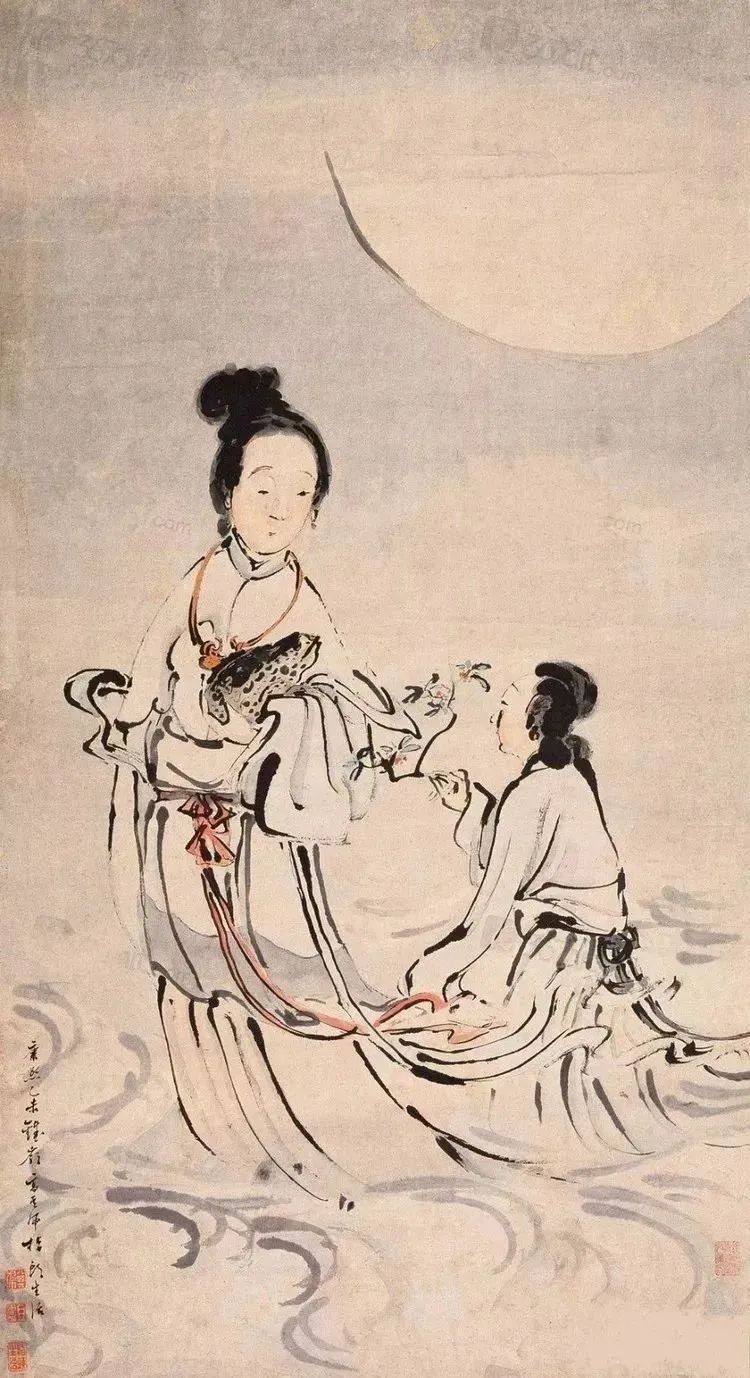
▲ Chang'e Toad Palace Fragrant Guitu
The painting Folding Guigui in the Toad Palace created by Gao Qipei, the founder of the Finger Painting School in the Qing Dynasty, in 1715 depicts the scene of Chang'e holding a toad and a jade rabbit and handing over Guizhi in the Heavenly Palace. In the era of the imperial examination, obtaining a successful title was also known as Chan Gong Zhe Gui. Chan Gong is also known as the Moon Palace, and climbing Zhe Yue Gong Gui means reaching the top of the imperial examination. This allusion comes from Han Qiao during the Western Jin Dynasty. When he was promoted to be a virtuous person and ranked first in strategy, Emperor Wu of Jin asked him to evaluate himself. He said, I am like a laurel branch in the Moon Palace, a precious gem on the Kunlun Mountains. Later, people often used the laurel branch of Guanghan Palace to describe outstanding talents, which is the origin of The Toad Palace Plushes laurels. After the Tang Dynasty, with the prevalence of the imperial examination system, the phrase 'Chan Gong Zhe Gui' was used to metaphorically refer to those who passed the imperial examination and became successful candidates.
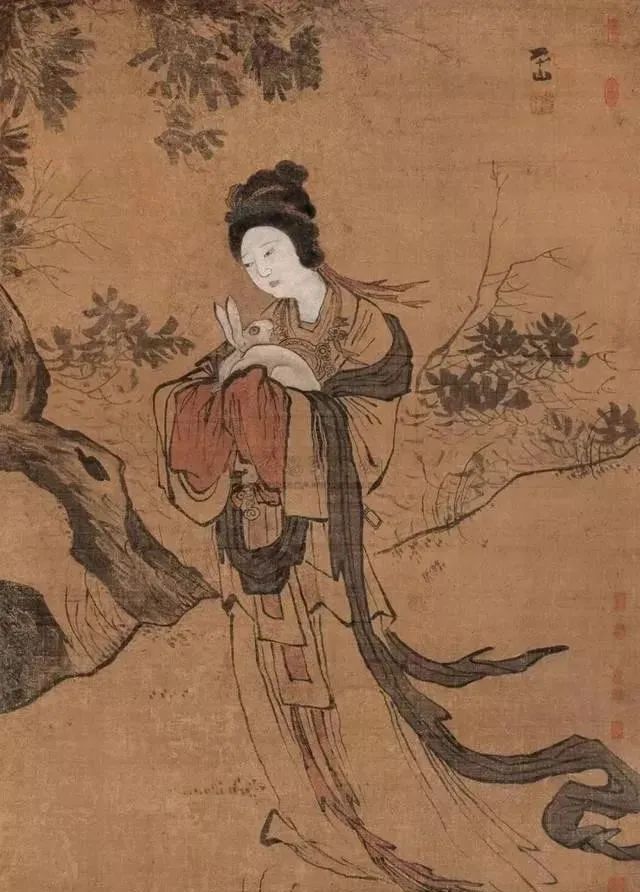
▲Ming | Zhang Road's Chang'e Map of the Moon Palace
The figures painted by Zhang Lu are characterized by a smooth and powerful brushwork, often depicting immortals, scholars, and fishermen. This painting of Chang'e in the Moon Palace has a simple and unadorned image, with simple clothing folds and a clear expression. Chang'e held the moon rabbit in her arms, and their eye contact revealed a sense of tenderness and love.
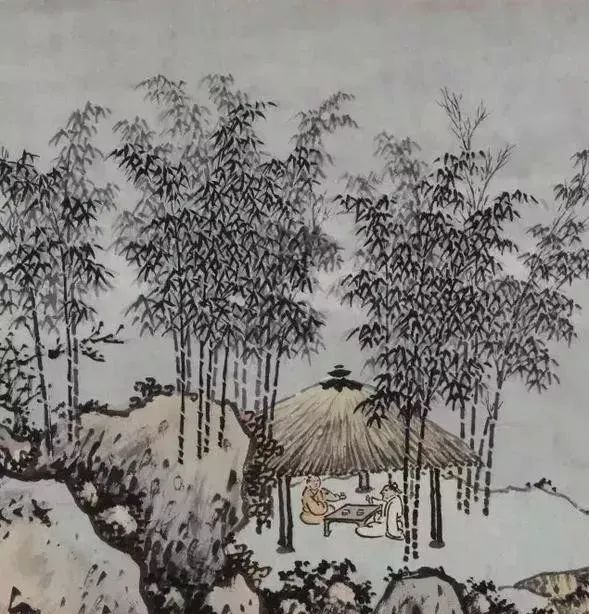
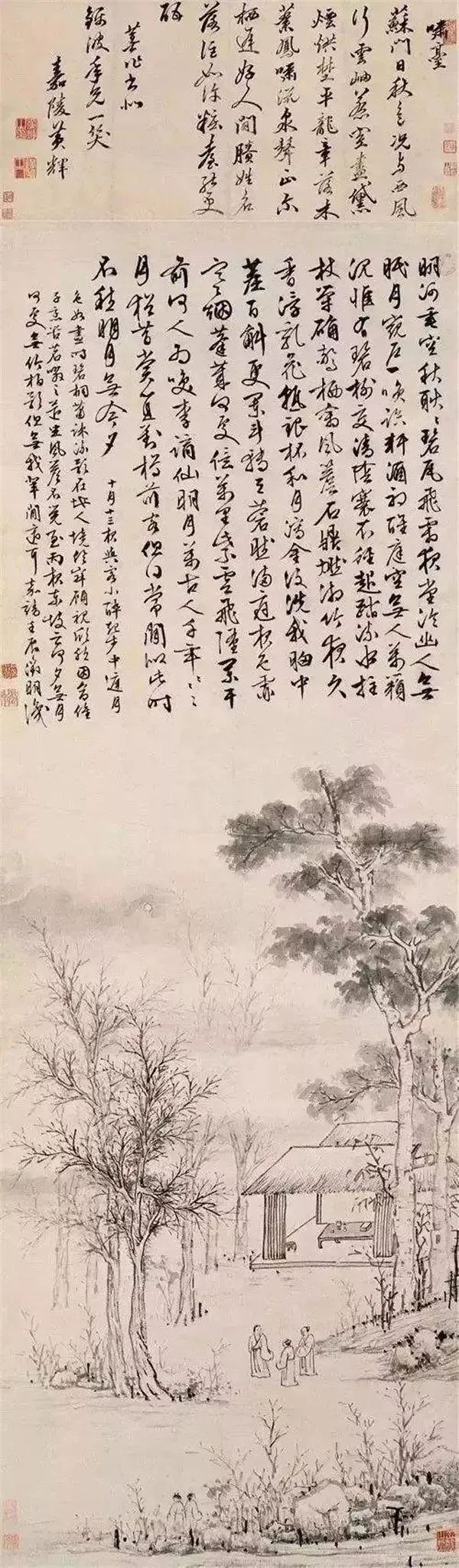
▲Ming | Shen Zhou's Mid Autumn Moon Appreciation Picture at Zhuzhuang
This long scroll Mid Autumn Moon Appreciation Picture of Youzhu Village consists of two parts: picture and calligraphy. In the picture, the bamboo tree bridge pavilion, with the moon hanging high, depicts Shen Zhou's peaceful pavilion in the Youzhu Villa on the Mid-Autumn Festival, drinking with friends and enjoying the moon. In the calligraphy section, Shen Zhou expressed his complex emotions while admiring the moon in the form of seven character regulated poetry. The entire volume of calligraphy, painting, poetry, and prose complement each other to form a chapter.
▲Ming | Wuming's Walking Moon Map in the Courtyard
This picture is a visual record of Wen Zhengming and a guest enjoying the moon and chatting old stories in the courtyard after getting drunk. It should be noted that the theme of courtyard moonlight is rare in Chinese painting works throughout history, especially when it comes to the theme of literary interviews with Fu Yueye.
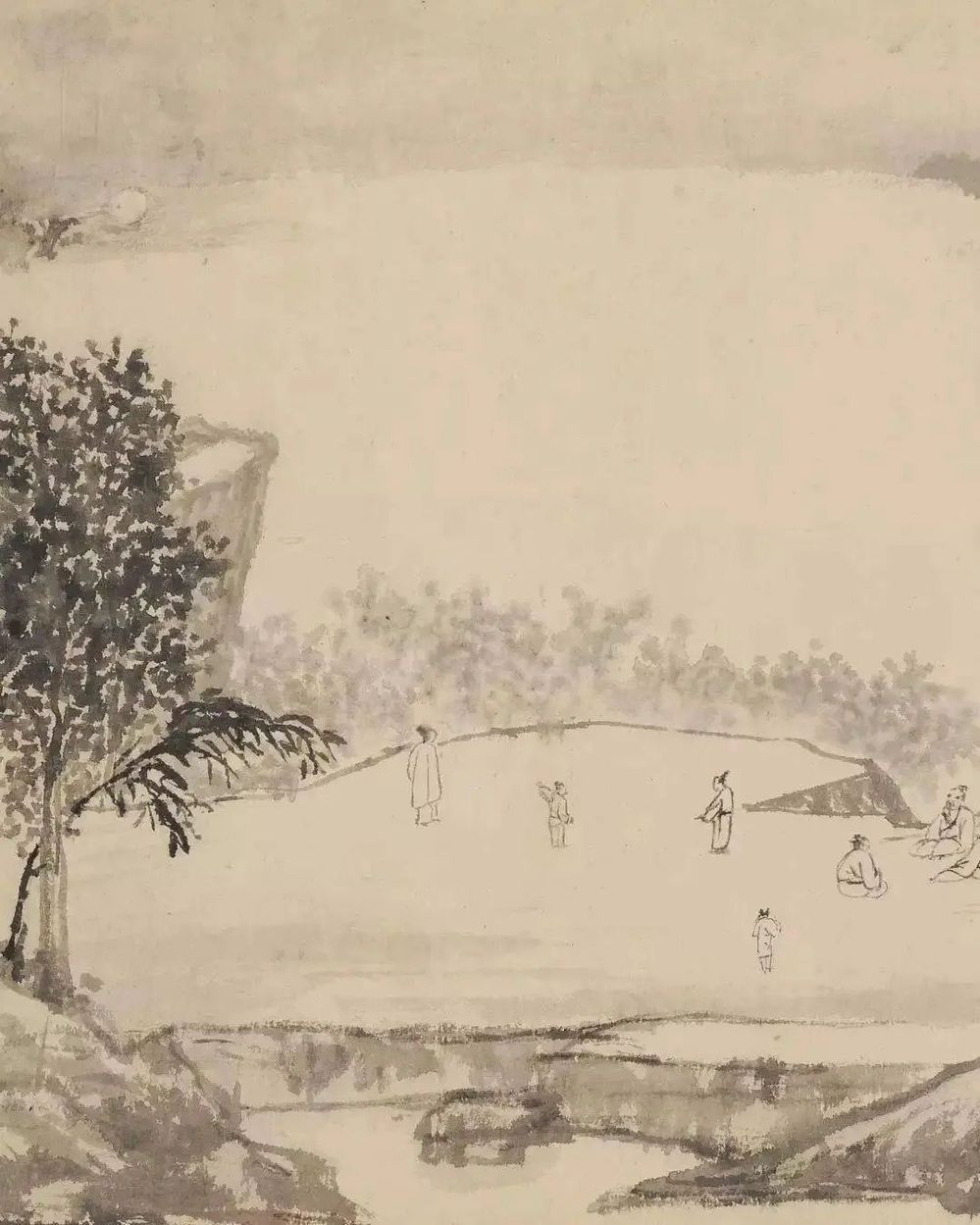
▲Part of Mid Autumn Moon Appreciation by Ming Wuming
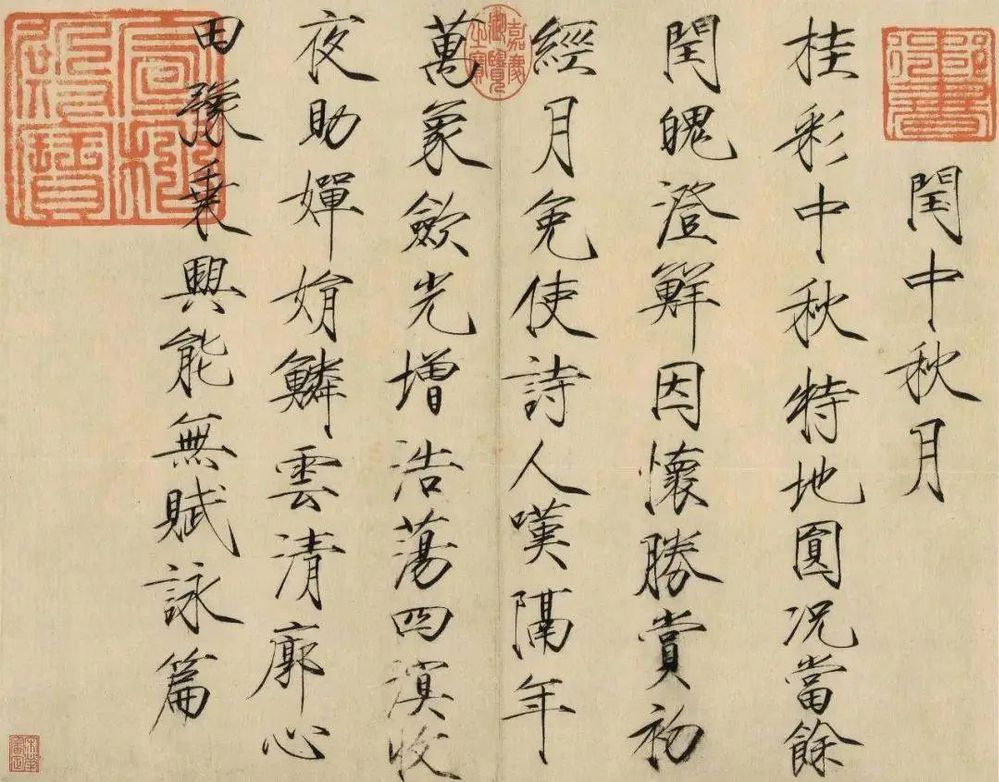
▲Song | Zhaoji's Poetry Collection on the Mid Autumn Festival Moon
When it comes to literary gatherings, one cannot help but mention some Mid Autumn banquets of literary emperors. Especially during a Mid Autumn Festival banquet, Emperor Huizong of Song, Zhao Ji, who excelled in calligraphy, painting, painting, painting, and painting, created a poetic poem called Leap Mid Autumn Moon on the spot. The strokes of the work are thin and delicate like tendons, stretching and elegant, yet tall and powerful, with a vivid and lively charm that does not lose its richness, nor does it show any signs of childishness or weakness. It has a strong literary atmosphere.
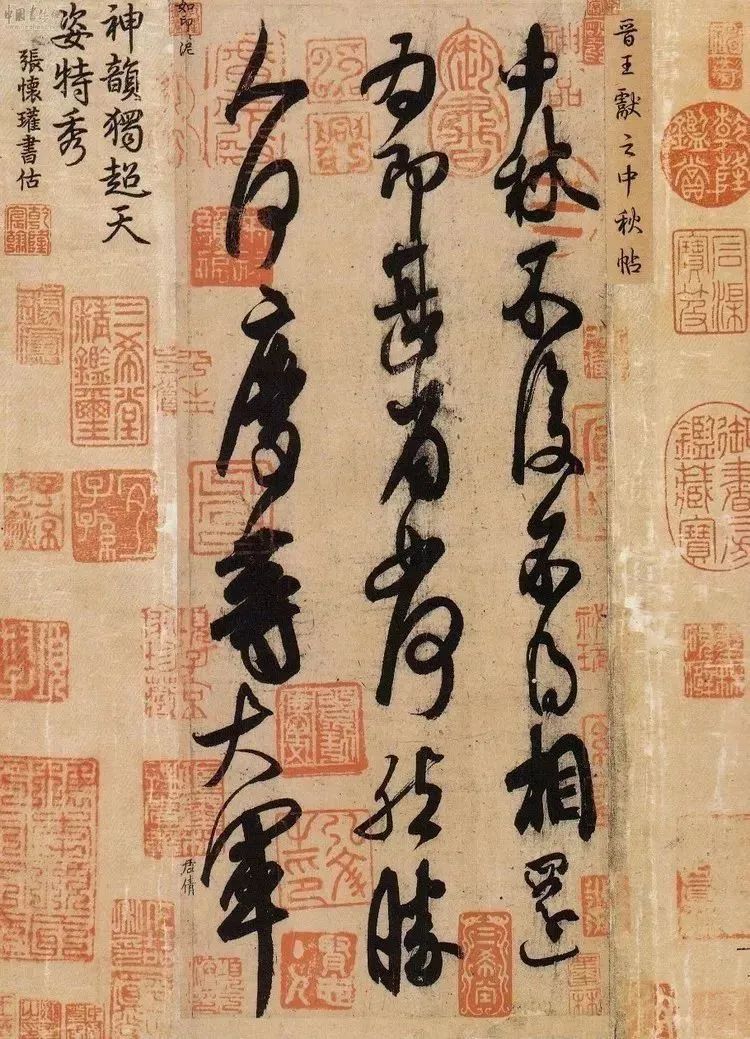
▲The Mid Autumn Annals by Wang Xianzhi of the Eastern Jin Dynasty
The Zhongqiu Tie is an incomplete version of the Baojin Zhai Fa Tie and December Cutting Tie . The original Tie had six characters before the Mid Autumn Festival : December Cutting Until Not . The paper was written on bamboo paper, which was not fashionable to produce during the Eastern Jin Dynasty and did not appear until the Northern Song Dynasty. From the strokes, it can be seen that the brush used was a soft, heart-shaped brush, while the Jin Dynasty used a hard, heart-shaped brush with poor water absorption. The lifting, pressing, and turning of the brush were often not flexible and could not produce sharp strokes. The effect of such a smooth, round, coherent, flowing, and elegant brush could not be achieved. In the Daguanlu by Wu Sheng of the Qing Dynasty, it is said: The calligraphy of this trace is ancient and thick, with a fresh and smooth black color, but it is as big as a fat maid. Although it is not filled with hooks, it may have been imitated by Song people. According to contemporary calligraphy and painting appraisers, most believe that it was created by Song Mi Fu, so it is equally valuable. The Zhongqiu Tie, also known as the December Tie, is a cursive script passed down from generation to generation by Wang Xianzhi of the Eastern Jin Dynasty. Originally consisting of 32 characters in five elements, two elements were later removed, leaving only 22 characters in three elements. During the reign of Emperor Qianlong of the Qing Dynasty, it was collected in the imperial palace and was named Sanxi along with the Kuaixue Shiqing Tie and Boyuan Tie. Therefore, Emperor Qianlong named the imperial study Sanxi Hall.
The Zhongqiu Tie is an incomplete version of the Baojin Zhai Fa Tie and December Cutting Tie . The original Tie had six characters before the Mid Autumn Festival : December Cutting Until Not . The paper was written on bamboo paper, which was not fashionable to produce during the Eastern Jin Dynasty and did not appear until the Northern Song Dynasty. From the strokes, it can be seen that the brush used was a soft, heart-shaped brush, while the Jin Dynasty used a hard, heart-shaped brush with poor water absorption. The lifting, pressing, and turning of the brush were often not flexible and could not produce sharp strokes. The effect of such a smooth, round, coherent, flowing, and elegant brush could not be achieved. In the Daguanlu by Wu Sheng of the Qing Dynasty, it is said: The calligraphy of this trace is ancient and thick, with a fresh and smooth black color, but it is as big as a fat maid. Although it is not filled with hooks, it may have been imitated by Song people. According to contemporary calligraphy and painting appraisers, most believe that it was created by Song Mi Fu, so it is equally valuable.
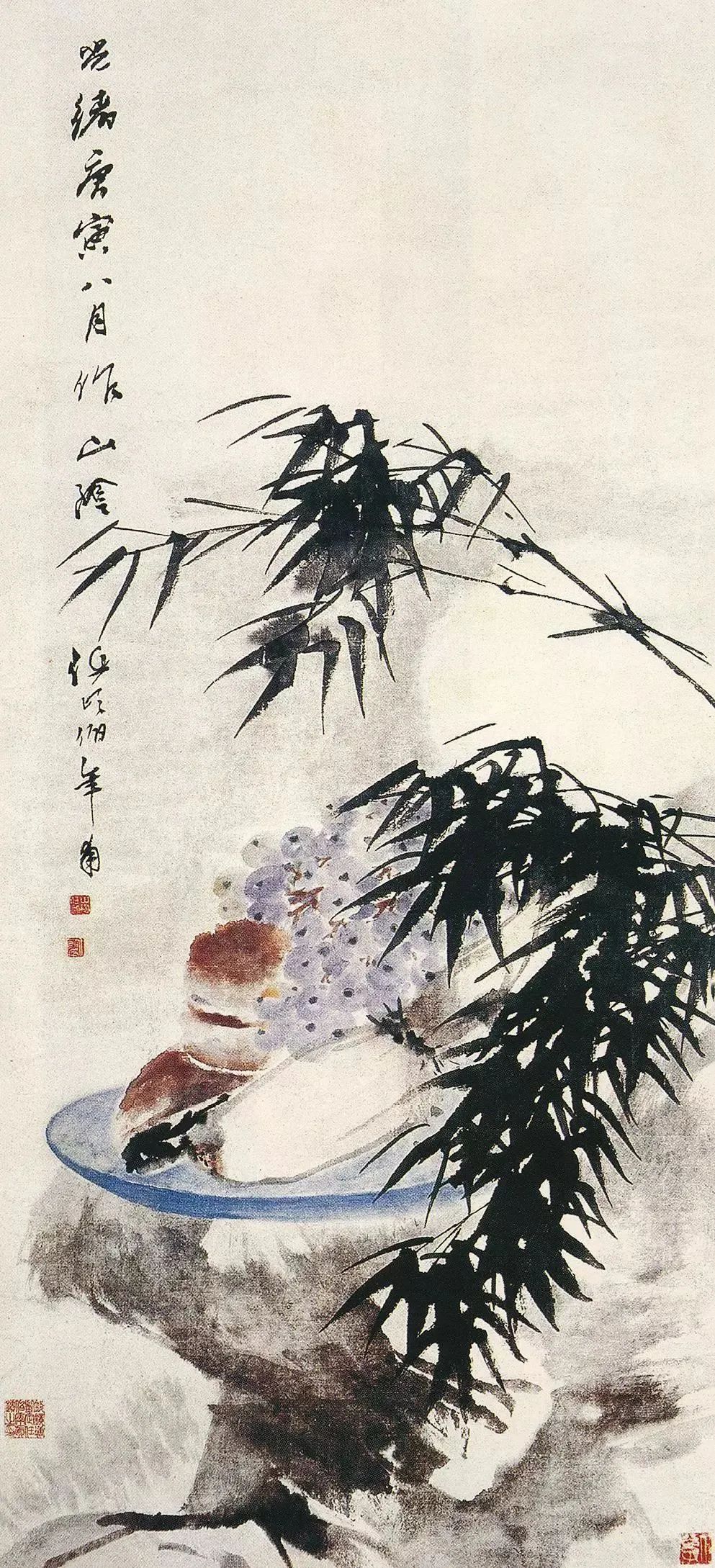
▲Ren Bonian's Mid Autumn Festival Picture
On the screen, the moonlight shines like silver, and in addition to mooncakes and tender lotus roots, there are also fresh fruits such as pomegranate and tangerine in the vermilion colored disc. A squatting white rabbit is depicted below the fruit platter, with a sparkling red finishing touch that adds poetic charm and charm to the Mid Autumn Festival. From Ren Bonian's two Qing Gong Tu, we can see that moon cakes, lotus roots and fresh fruits are all necessary delicacies for the Mid-Autumn Festival.
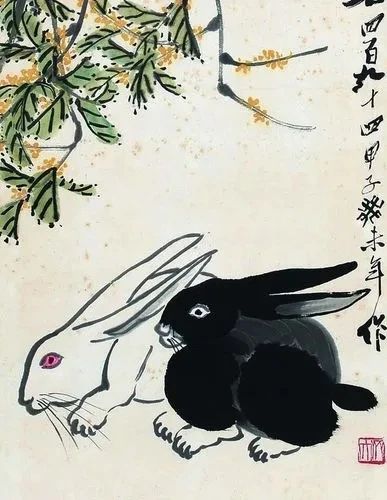
▲Part of Qi Baishi's Dan Gui Shuang Tu
Master Qi Baishi's Twin Rabbits of Dan Gui depicts the osmanthus flowers in a freehand brushwork style, with vibrant ink colors and thick strokes of leaf veins. Under the golden osmanthus tree, two rabbits are leisurely and charming, complementing each other with charm.
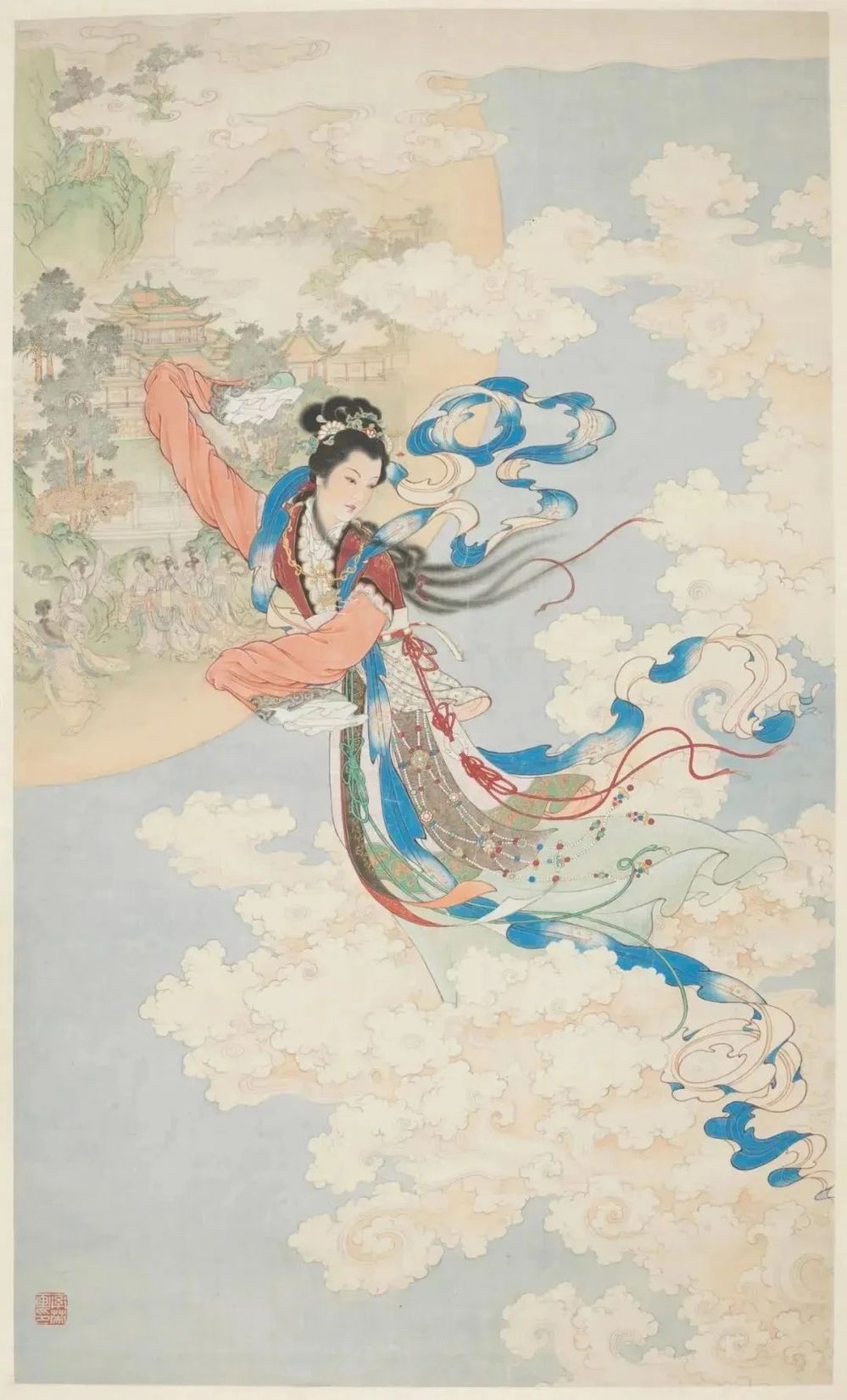
▲Ren Shuiying's Chang'e Flying to the Moon Chinese Painting 1955, National Art Museum of China
Chang'e Flying to the Moon is a beautiful myth that has been widely circulated in Chinese folk culture since ancient times. Chang'e is the embodiment of gentle beauty, and the works of painter Ren Ruoying are based on this ancient and beautiful mythological story. This work incorporates the techniques of ancient Chinese murals and adopts decorative Chinese gongbi techniques. The Moon Palace Wonderland and Courtyard Palace faintly emerge from the moon, accompanied by fairy music and dance, adding a touch of romantic and beautiful atmosphere to the picture. The length and twists of the blue wind belt on Chang'e's body enhance the drifting momentum, highlighting the dynamic artistic effect of Chang'e flying towards the Moon Palace.
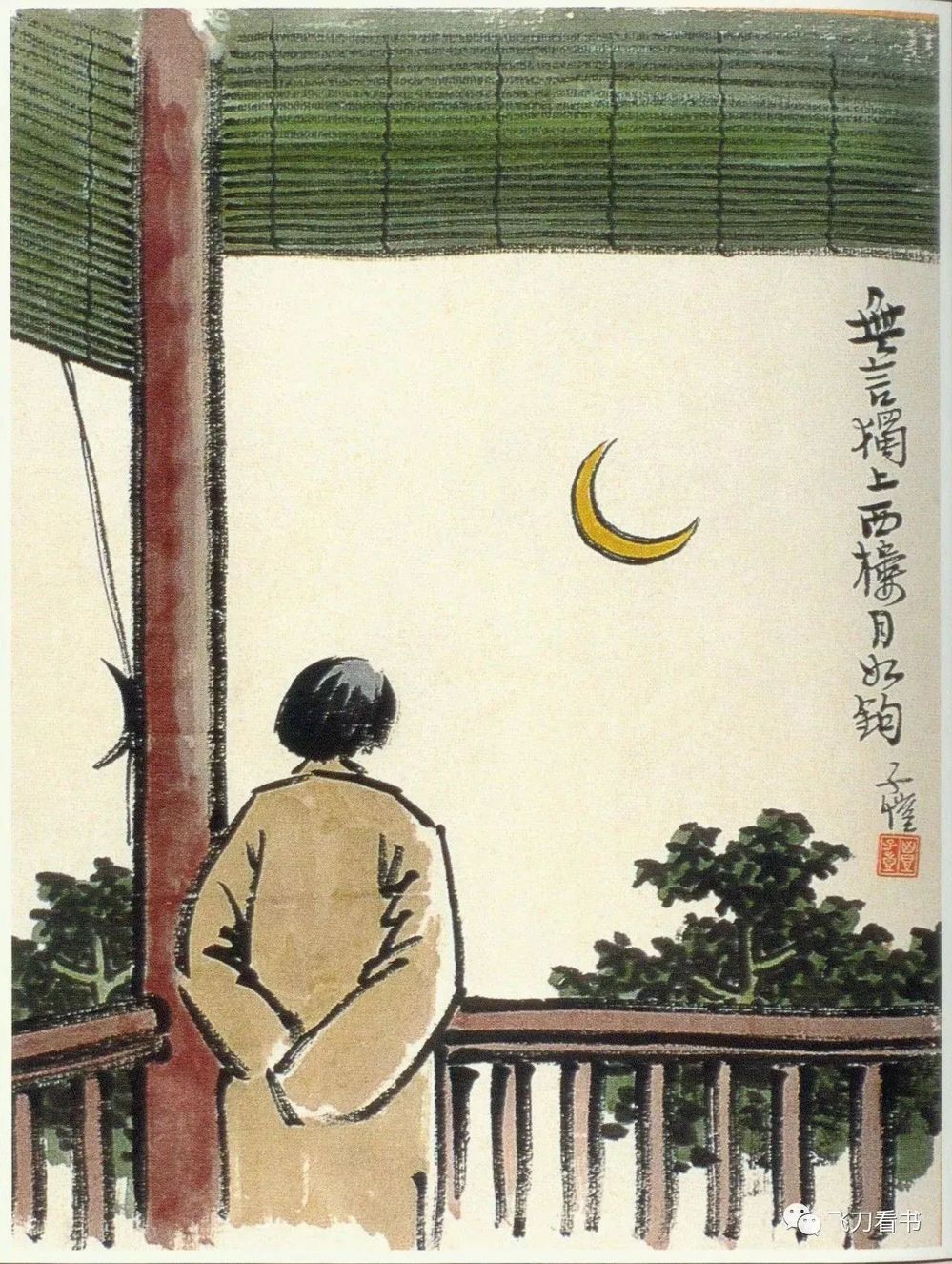
▲Feng Zikai's Silent Alone on the West Tower, Moon Like a Hook
There are many colored ink paintings of admiring the moon by Feng Zikai. This painting, Silent Alone on the West Tower, Moon Like a Hook, depicts loneliness and longing? All kinds of emotions are expressed in silence.
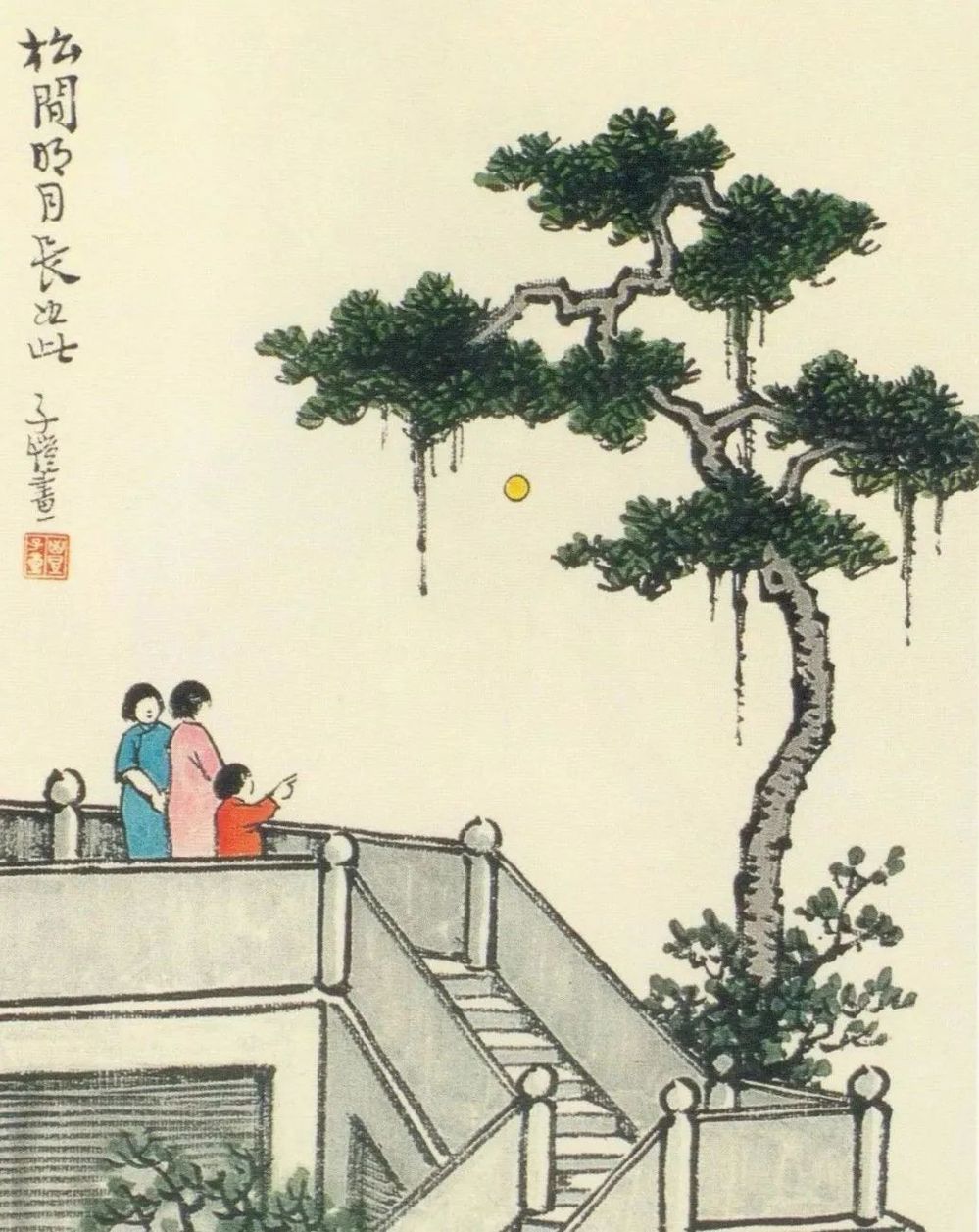
▲Feng Zikai's' The Bright Moon Among the Pine Trees Looks Like This'
The majority of these colored ink paintings were created during the Anti Japanese War, when Feng Zikai and his family left their hometowns and migrated from Guilin and Yishan in Guangxi to Guiyang and Zunyi in Guizhou, and finally entered Chongqing. The moonlight in this painting 'The Moon Among the Pine Trees Grows Like This' conveys a strong sense of homesickness.
Today's people do not see the moon of ancient times. This month once shone upon the ancients. Despite the changing times, the longing for the old and the longing for reunion have lasted forever. Wishing you a happy Mid Autumn Festival.
